
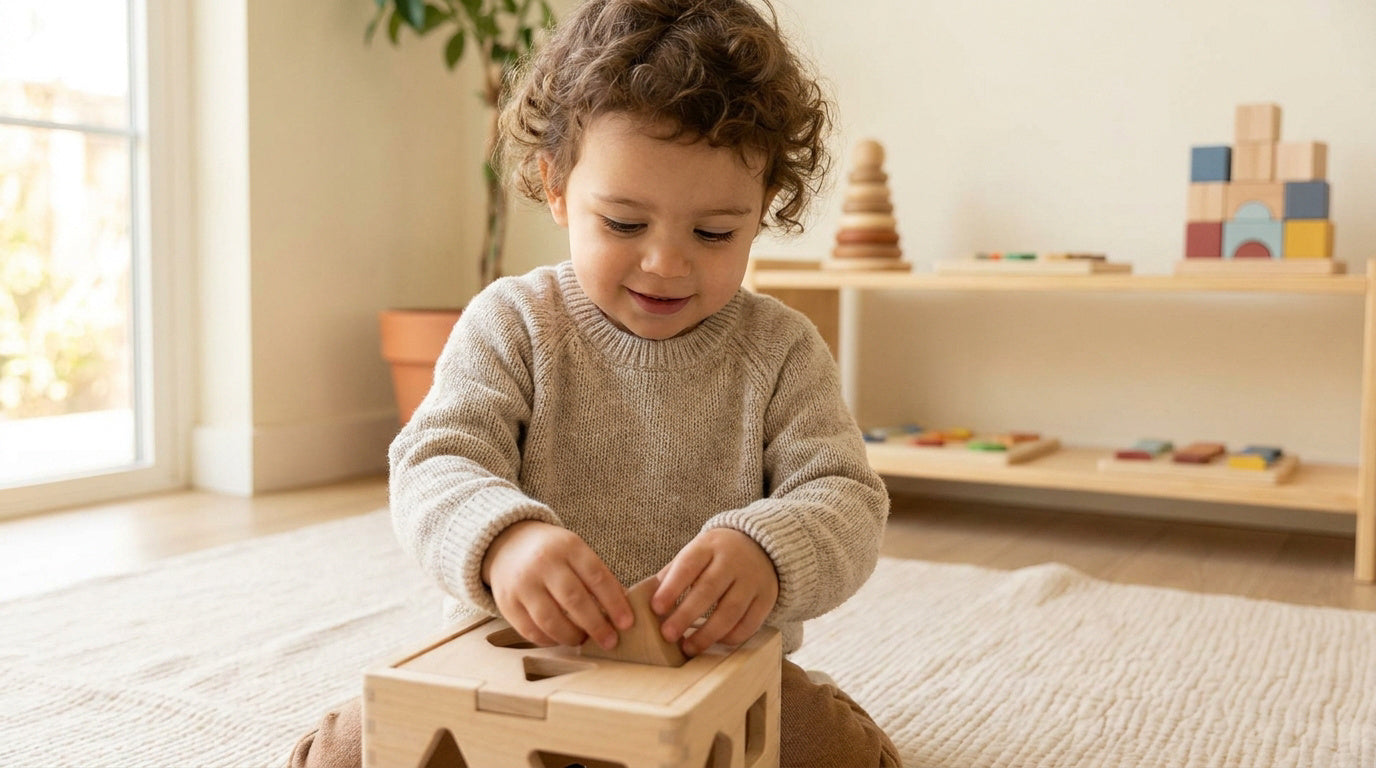

At age 2, your child is going through a sensitive period where their fine motor skills and need for order dictate their daily learning. But how can you identify a Montessori toy for a 2-year-old that will truly channel their energy while respecting the principles of concept isolation and self-correction?
We often end up accumulating noisy plastic objects that saturate attention without fostering real autonomy. We have selected the most effective materials to transform every manipulation into a cognitive victory, and we help you structure this learning environment with precision.
- Bead kit: a Montessori toy for early learning at age 2
- Magnetic tangram: introduction to shapes and colors
- Busy board: mastering everyday gestures
- DIY kit: stimulating creativity and psychomotricity
- Balancing game: stimulating spatial imagination
- Animal tower: balance through playful learning
- Wooden beehive: learning colors through play
- Car track: developing coordination and concentration
- Counting board: a playful introduction to mathematics
- Monkey scale: understanding quantities and addition
- Dinosaur track: a learning tool for explorers
- Car adventure: interactive platform for logic
- How to choose the best Montessori toy for a 2-year-old?
Bead kit: a Montessori toy for early learning at age 2
At age 2, the child enters a sensitive period for fine motor skills and order. Wooden materials promote autonomy and hand-eye coordination. Prioritize natural materials and regular rotation to maintain interest.
The bead kit actively engages the thumb-index pincer grasp. This material isolates a single difficulty to promote deep concentration. It is the perfect tool to refine daily gestural precision.
Choose certified large beads to ensure total safety. This will allow you to stimulate your child's fine motor skills with uncompromising quality.
Magnetic tangram: introduction to shapes and colors
After refining their movements with the beads, your child can explore more complex geometric structures.
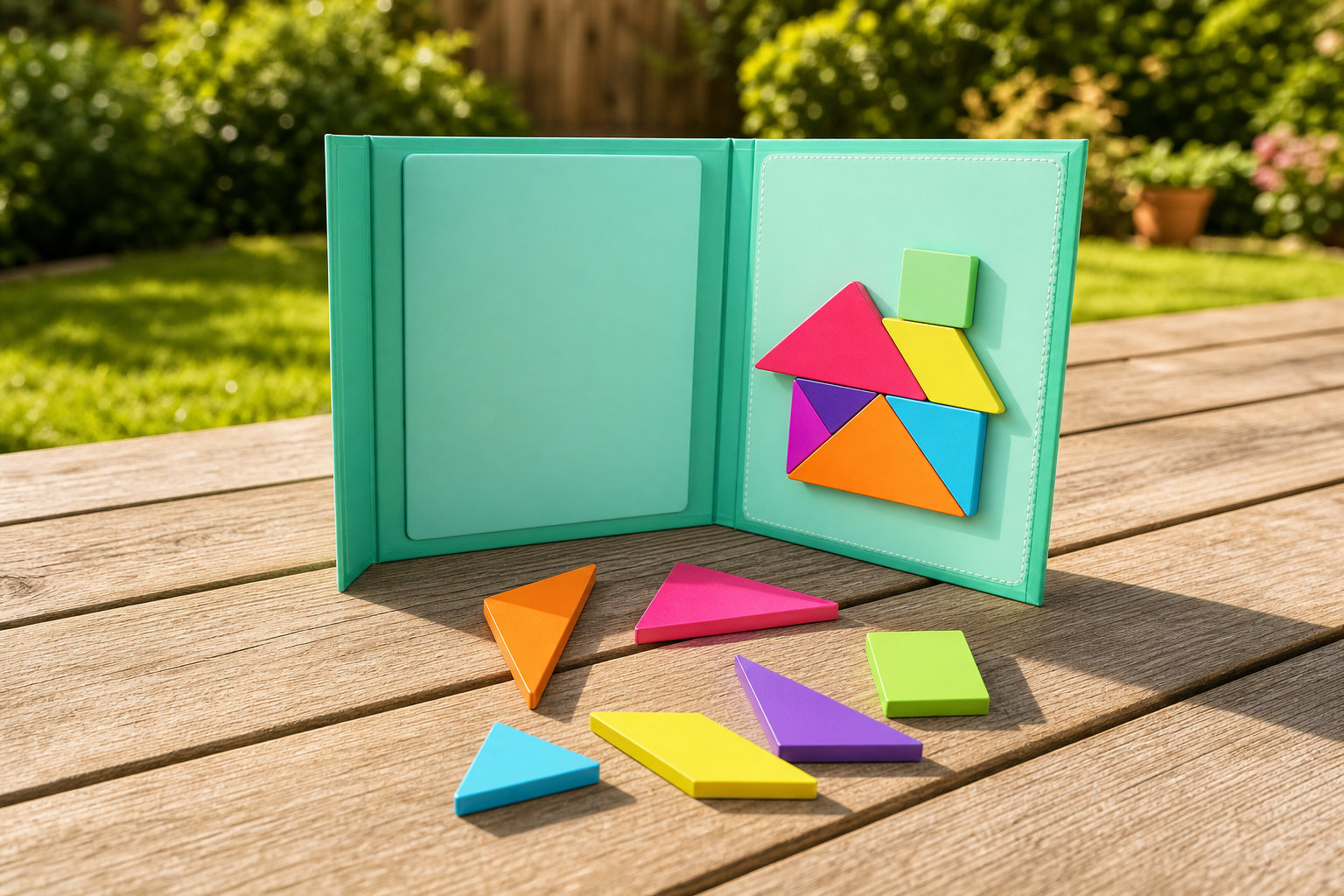
The tangram allows children to manipulate triangles and squares. Magnetism helps stabilize the pieces. Here is an excellent magnetic puzzle.

This game develops spatial vision. Your little one creates simple figures like houses or animals.
Busy board: mastering everyday gestures
Geometry is a stage, but autonomy also involves mastering the objects around us.
The busy board includes latches, zippers, and buttons. It is the core of Montessori practical life. The child practices without real frustration.
A child who has succeeded in buttoning their clothes all by themselves feels an immense sense of inner pride.
By manipulating these mechanisms, you offer your little explorer the opportunity to perfect their fine motor skills. This durable natural wooden support turns every latch into a concrete victory for their independence.
DIY kit: stimulating creativity and psychomotricity
In addition to everyday gestures, screwing and assembling requires greater gripping strength.
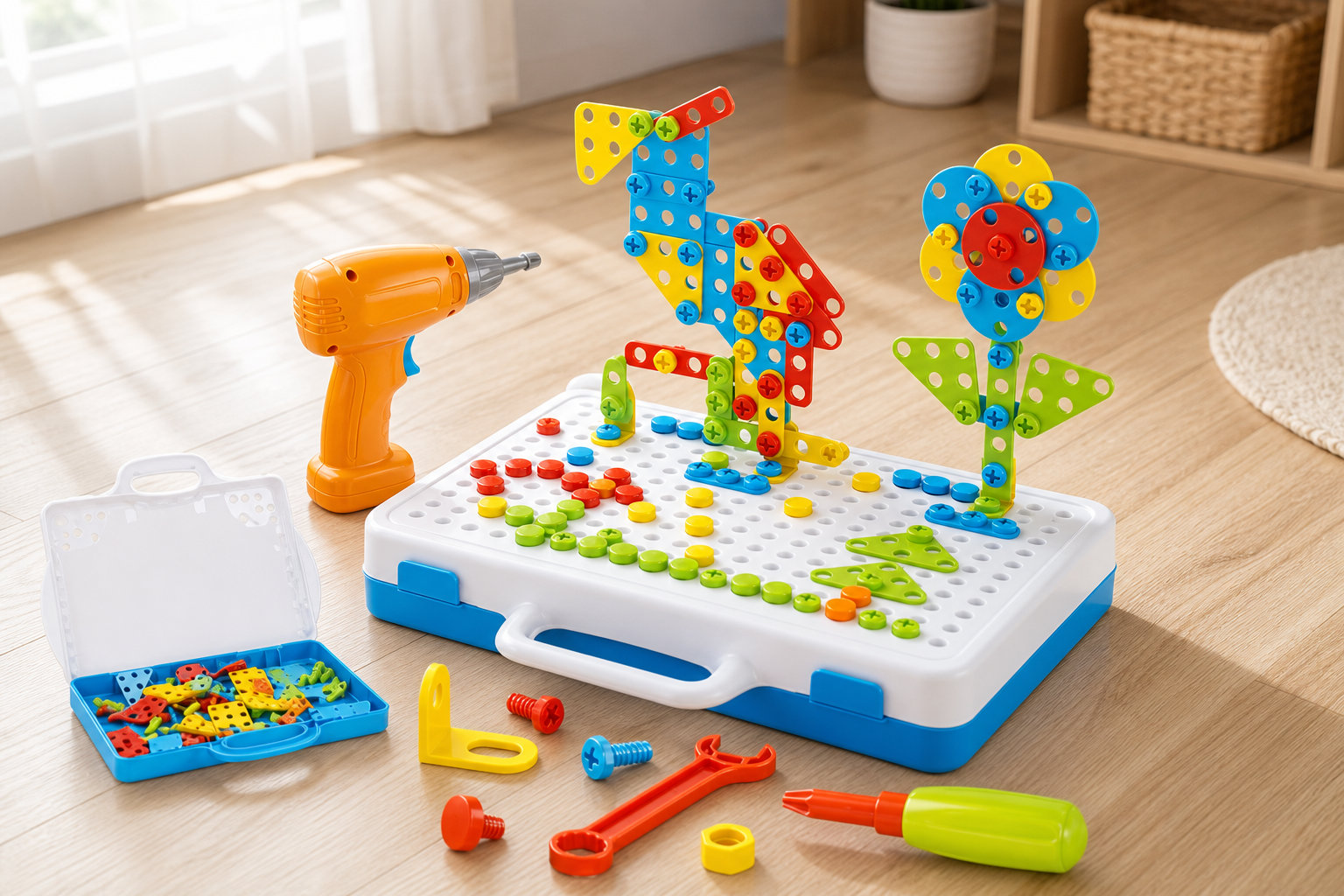
A wooden workbench allows for the use of adapted tools. Hitting with a hammer or screwing in nuts strengthens hand muscles. It is rewarding for them.

These activities indirectly prepare them for writing. The coordination between eye and hand becomes more fluid.
Balancing game: stimulating spatial imagination
Beyond strength, precision requires a keen understanding of gravity.
Stacking blocks requires calm. By manipulating these balancing games, the child learns patience and constructive failure. Each tower that wobbles becomes a lesson in perseverance.

The block that falls offers immediate feedback. The child understands their error on their own without adult intervention, promoting real autonomy.
You will observe concrete benefits during these independent work sessions:
- Intense concentration
- Frustration management
- Understanding the center of gravity
Animal tower: balance through playful learning
Balance becomes even more fun when it features familiar characters.
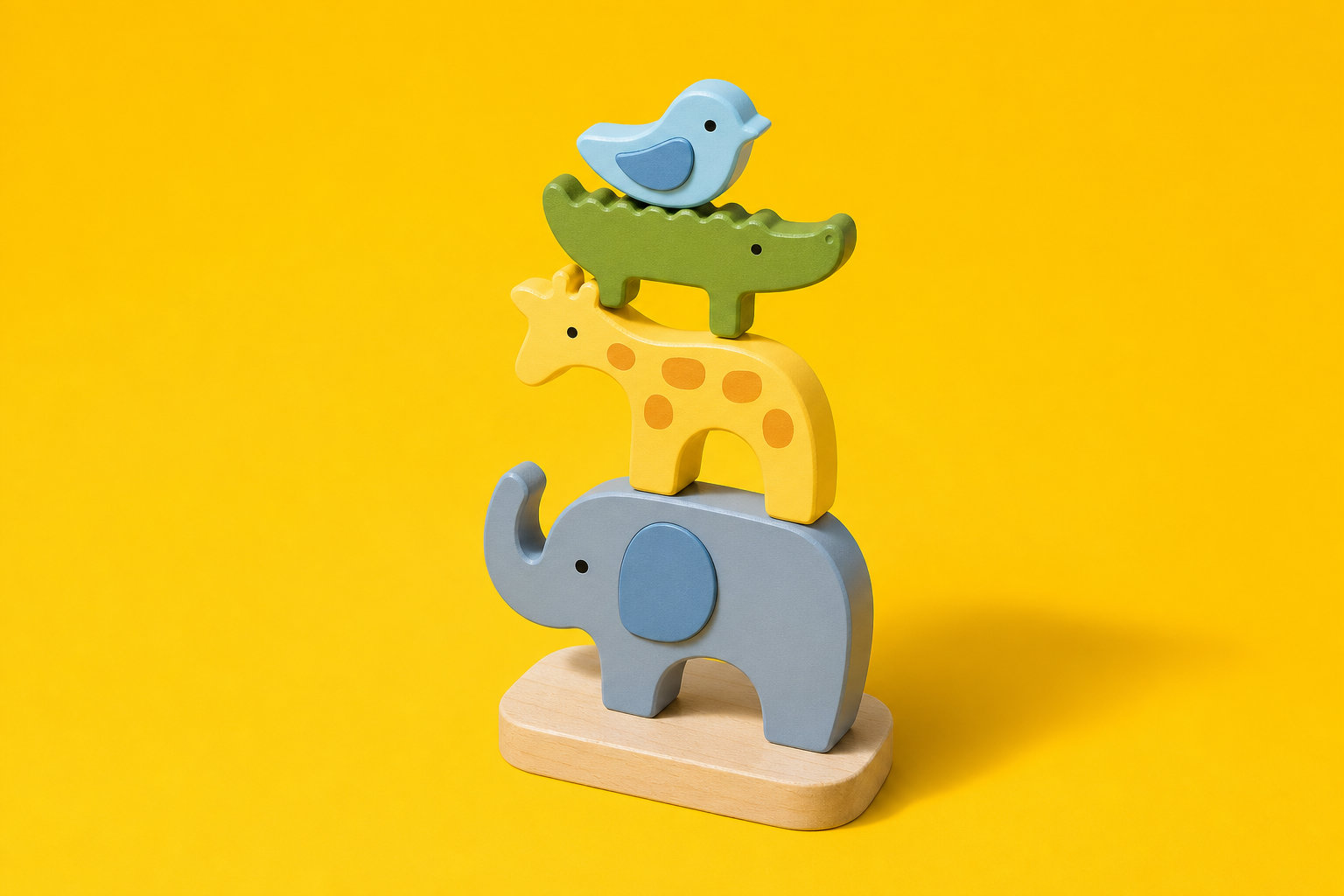
Using animal figurines makes the exercise concrete. Your child names the species while stacking them. It is an excellent tool for enriching their vocabulary.
Wood offers a pleasant texture. The durability of this material ensures years of play.
Wooden beehive: learning colors through play
Matching objects requires visual analysis that the wooden beehive greatly facilitates.
The child must place each bee in the corresponding cell. They often use wooden tweezers. This works on recognizing primary and secondary colors.
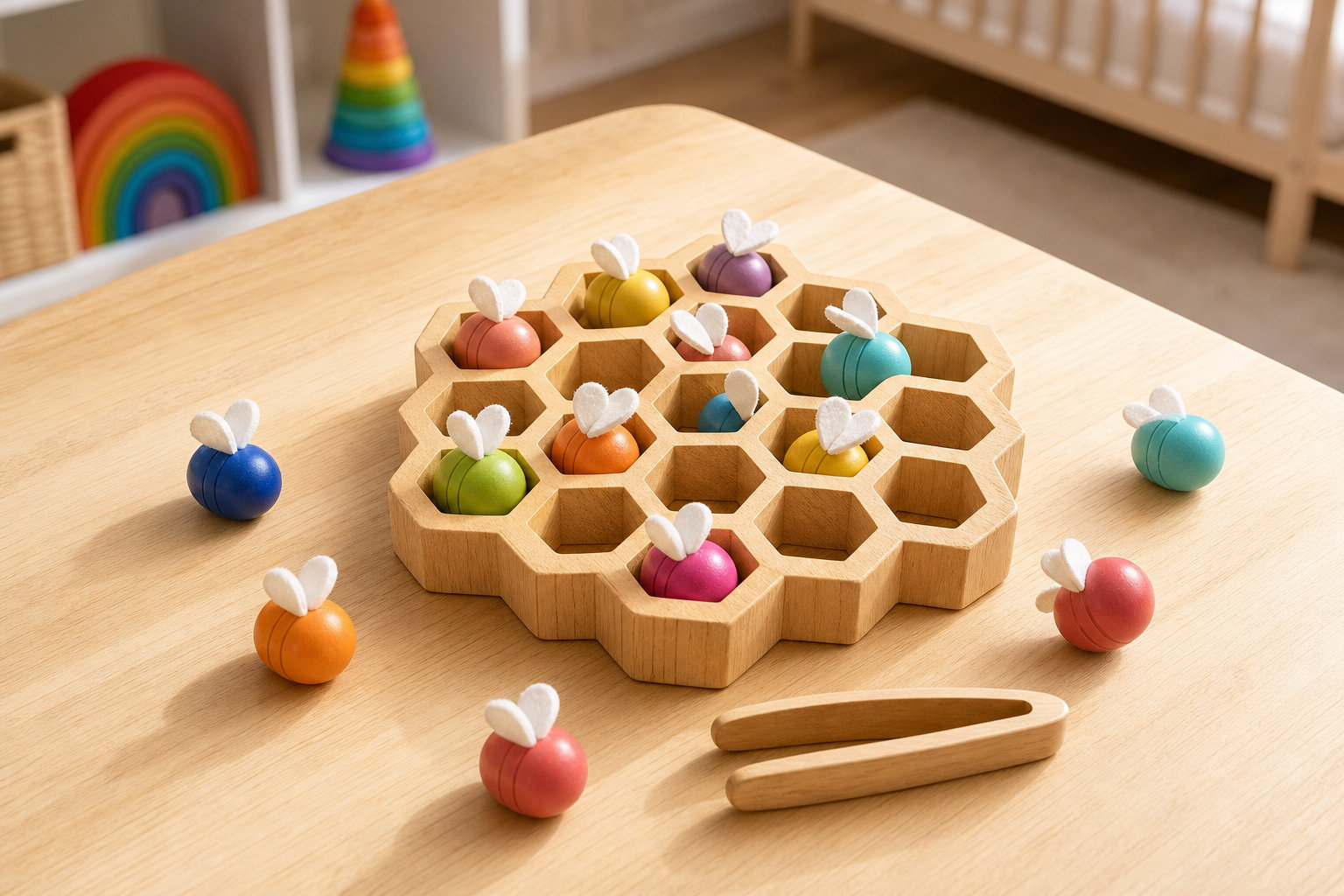
Sorting is a soothing activity. Discover our selection of Montessori wooden toys.
Car track: developing coordination and concentration
The dynamic movement of cars captures attention in a different way than static toys.
Following a car with their eyes develops visual tracking. Manipulating this car track constitutes a distant preparation for reading. Your children naturally stimulate their eye muscles this way.

Ramps require an understanding of cause and effect. The child repeats the action tirelessly to observe the movement.
Counting board: a playful introduction to mathematics
Before manipulating numbers, the child must experience quantities physically.
The counting board uses rings or tokens. A written symbol is associated with a real quantity. It is the mathematical mind being awakened gently.

Abstraction comes later. For now, your little one is counting their fingers and wooden objects.
Monkey balance scale: understanding quantities and addition
The concept of numerical weight and balance becomes concrete with an interactive scale.
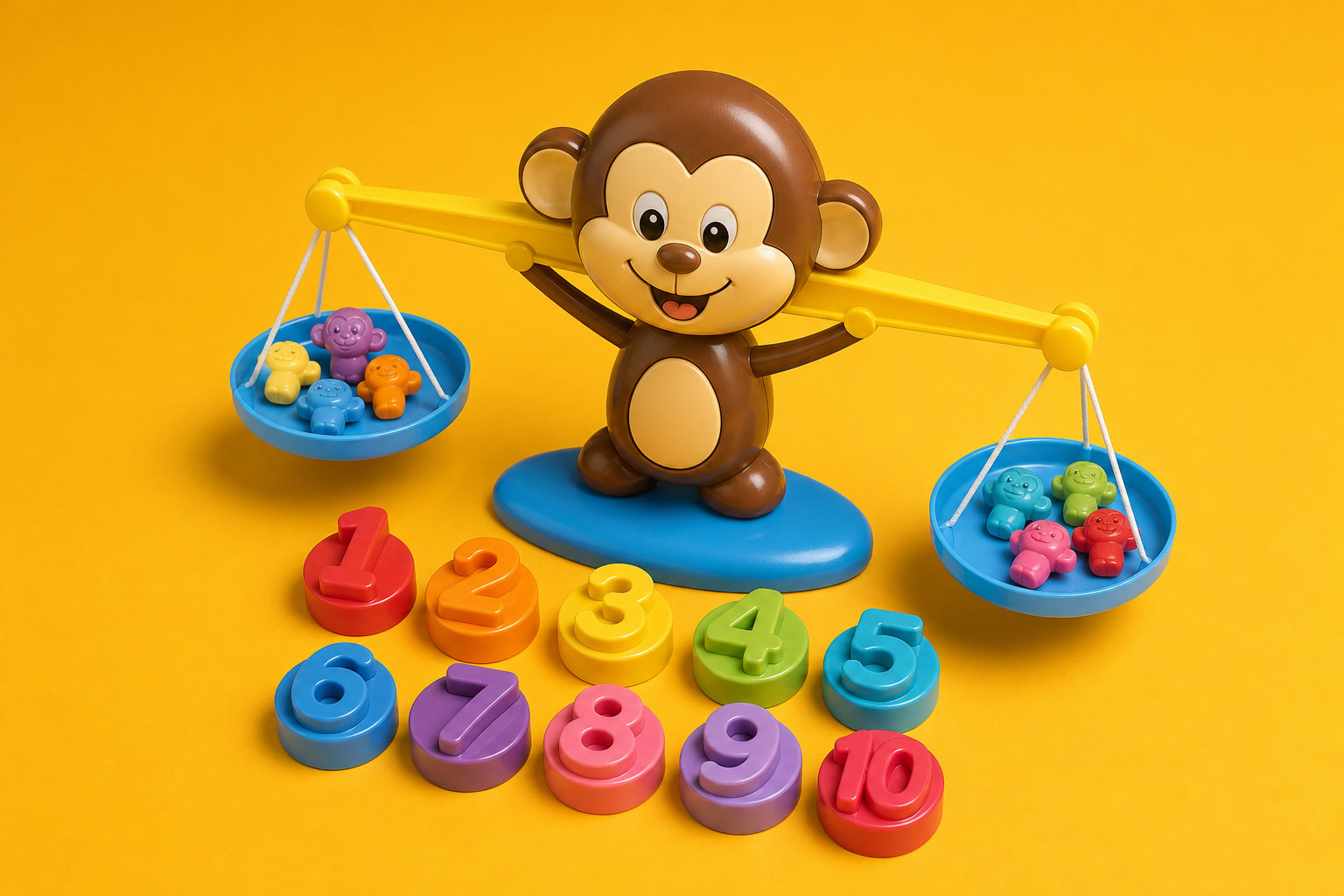
If you place the number 3 on one tray, you must place exactly three little monkeys on the other. The scale then balances perfectly. It is an autonomous check for errors.

Start with small numbers, from 1 to 3, so as not to overwhelm your child and prioritize the physical equivalence of weight.
Your child does not need your intervention at all to validate their success. The material provides an immediate and rewarding visual response.
Dinosaur track: an educational aid for explorers
Imagination joins the treasure hunt with creatures from another time.
This dinosaur track stimulates symbolic play. The child invents stories while manipulating the vehicles. This setting promotes total immersion in a captivating prehistoric universe.

The obstacles on the track require thought. Levers must be operated to make the convoy advance.
Car adventure: interactive platform for logic
For children who love to solve problems, mechanical platforms are ideal.
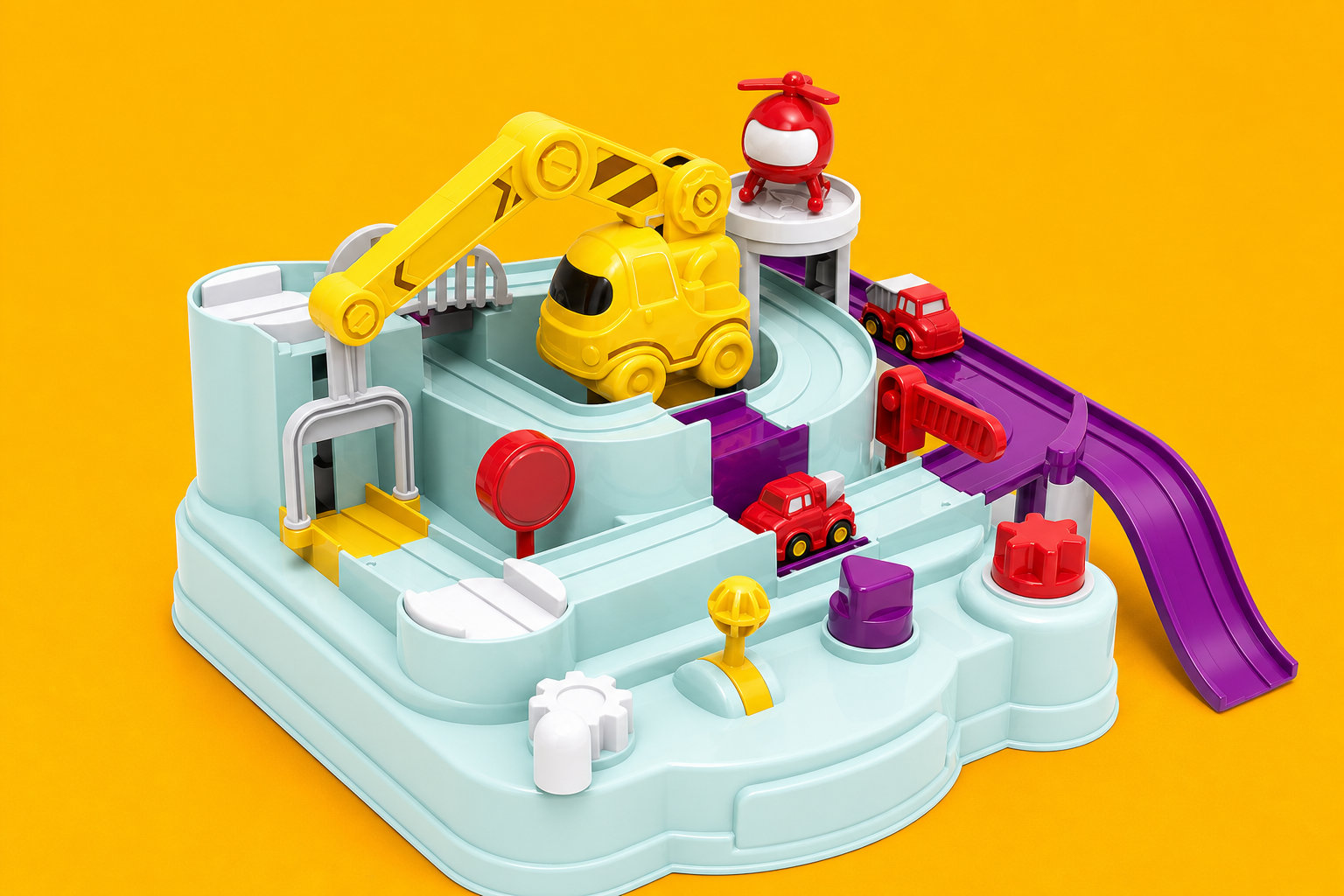
The car adventure requires complex coordination. You will observe your child linking precise logical actions. Each button activates a specific function of the course.

Perseverance becomes a tangible skill here. The child finally understands that their manipulations truly transform their environment.
How to choose the best Montessori toy for a 2-year-old?
Buying a toy is one thing, but knowing why you are choosing it is another.
Material quality and compliance with standards
Choose natural wood and non-toxic paints. Safety remains your absolute priority for a little explorer.
High-quality materials last a long time. They respect your child's health.

Adult support and material rotation
Observe your child without intervening too quickly. Let them find the solution on their own. Change the available toys every two weeks. This avoids boredom and stimulates curiosity. Store the rest in a closed cupboard.
| Criteria | Montessori | Classic |
|---|---|---|
| Material | Wood | Plastic |
| Goal | Learning | Entertainment |
| Autonomy | Self-correction | Assistance |
| Durability | High | Limited |
Investing in a Montessori toy for a 2-year-old guarantees lasting sensory awakening thanks to natural wood and the isolation of concepts. Promote autonomy through material rotation and adapted challenges such as busy boards or sorting games. Give your child pedagogical excellence now to build their future confidence.
FAQ
What criteria should I prioritize when choosing a Montessori toy for a 2-year-old?
To ensure optimal awakening, you must place paramount importance on safety and material quality. We recommend selecting natural wood aids, compliant with EN71 standards, using non-toxic, water-based paints. An excellent Montessori toy should isolate a single concept (shape, color, or size) to foster concentration without overwhelming your little explorer's senses.
Autonomy is also a central pillar: the material must incorporate error control, allowing the child to perceive their successes and adjustments without systematic intervention from an adult. Favor robust and durable objects that respect the pace of individual development and encourage fine motor skills, such as nesting or practical life games.
How to set up an effective pedagogical material rotation?
Material rotation is an expert strategy to maintain your child's curiosity and engagement. We advise you to limit the number of visible toys to about 8 varied items, while storing the rest in a closed space. Carefully observe your child's interactions: if a toy causes excessive frustration or, conversely, marked disinterest, it is time to replace it with a new challenge adapted to their current skills.
On average, a renewal every one to two weeks helps prevent boredom and promotes deep concentration. This structured method transforms the play environment into a dynamic space that evolves in perfect symbiosis with your child's progress, thus ensuring constant and orderly cognitive stimulation.
What are the concrete benefits of threading beads for development?
The bead-threading activity is an excellent exercise for refining the thumb-index pincer grasp and eye-hand coordination. By manipulating these elements, your child develops remarkable patience and precision of movement that indirectly prepare the hand muscles for writing. It is a complete educational aid that combines sensory awakening with an introduction to logical sequences.
Beyond fine motor skills, this material promotes learning shapes and colors in a concrete way. By using FSC™ certified wooden beads, you offer your child a noble and safe tactile experience, while stimulating their imagination through the creation of simple structures or organized color sequences.
Why is the magnetic tangram recommended from 24 months?
The magnetic tangram is an ideal introduction to spatial geometry and problem solving. Thanks to magnetism, the pieces stabilize easily, which reduces frustration related to still-developing motor skills. Your child learns to identify triangles, squares, and parallelograms while exercising their spatial vision to reproduce familiar figures.
This interactive support encourages perseverance and creativity. By manipulating these shapes to build houses or animals, your little one develops structured logical thinking. It is a valuable tool for reinforcing self-confidence, as every successful assembly brings immediate and tangible gratification to the child.
How does the busy board promote daily autonomy?
The busy board, or activity board, is the heart of Montessori practical life. It brings together real mechanisms such as latches, buttons, and zippers, allowing your child to practice everyday actions in a safe setting. This repeated manipulation transforms complex tasks into acquired skills, thus reinforcing their sense of independence.
By mastering these devices, the child gains dexterity and assurance. Each success, such as managing to operate a latch or buttoning an element, nourishes a deep inner pride. It is a pedagogical investment that prepares your child to take care of themselves and their environment with increasing efficiency.