
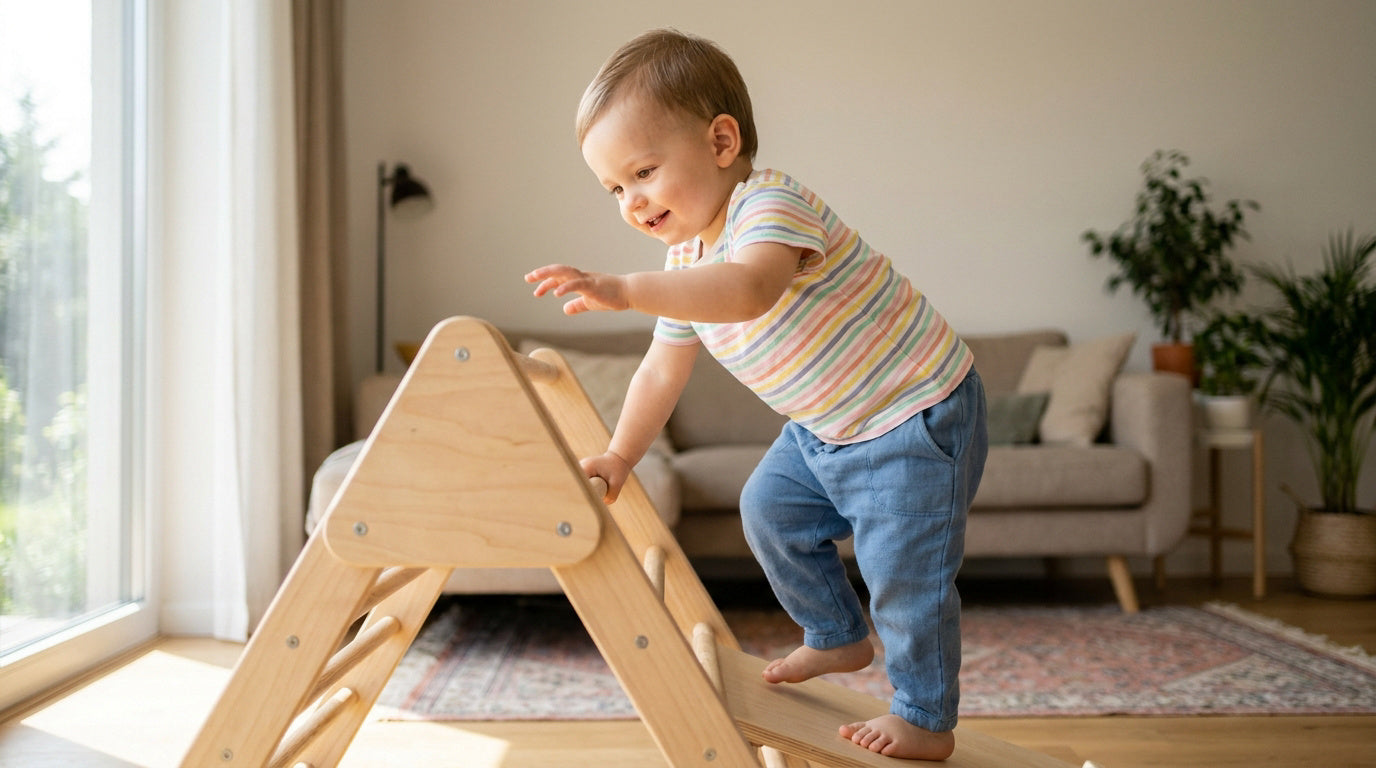

As soon as your infant starts to pull themselves up with curiosity, the Pikler triangle becomes a valuable ally for their psychomotor development. However, many parents hesitate about the right time to introduce this free-movement tool, fearing premature use or, conversely, missing a key development milestone. We often end up doubting a toddler's ability to master a climbing structure on their own.
In this article, we break down exactly what age to prioritize for the Pikler triangle to ensure safe and progressive exploration. We will guide you in adapting each motor challenge to your child's real needs, from 6 months up to 5 years old.
- Pikler triangle: what age? Introduction from 6 months for free movement
- Montessori brain-building blocks: the logic challenge from age 3
- Montessori DIY construction toy: forging manual precision
- Montessori animal magnetic maze game: developing patience
- Wooden Montessori magnetic fishing game: learning while having fun
- Montessori magic tissue box: tactile stimulation for infants
- How to ensure the safety and longevity of your equipment?
Pikler triangle: what age? Introduction from 6 months for free movement
The Pikler triangle can be used from 6 months to support standing up. It promotes balance and muscle strength without adult intervention, secured by a floor mat and a sturdy natural wood structure. This tool stimulates their first contact with the rungs.
Motor development from the first attempts to stand (6-12 months)
Your infant will grasp the rungs to pull themselves up with determination. The texture of the natural wood provides reassuring grip. This design is well-suited for small hands.
Remain a supportive observer without intervening physically. Let your child explore their limits autonomously to build solid self-confidence.
It is essential to place a shock-absorbing mat under the stable structure to ensure optimal safety.
Growing autonomy and climbing challenges (1-3 years)
Children move past the standing stage to climb their first steps. They gain overall coordination and spatial confidence.
Add ramps or slides to make the courses more complex. This renews interest in the equipment and engages different muscle groups.
Offer fine motor activities for 4-year-olds to complement this learning.
Montessori brain-building blocks: the logic challenge from age 3
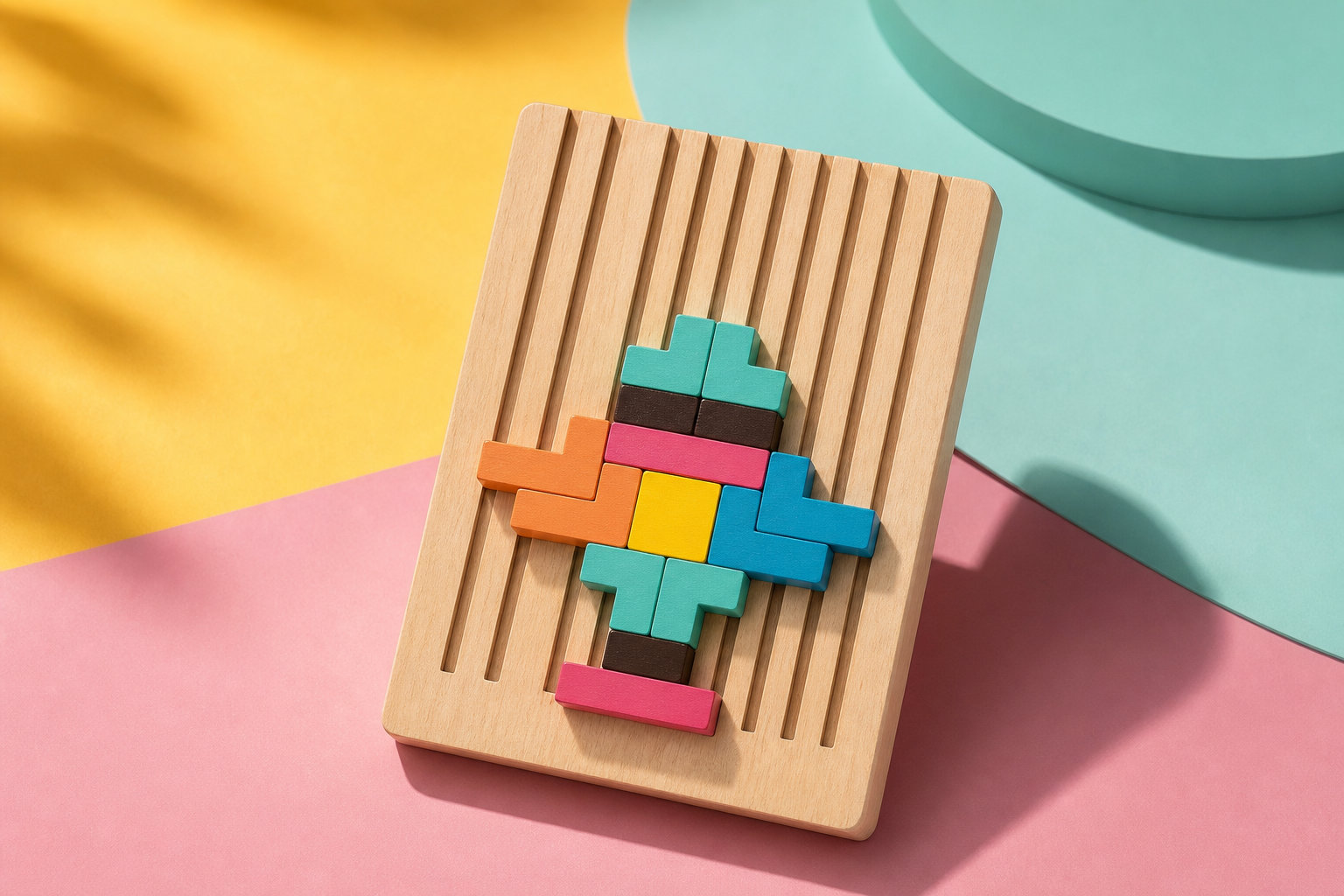
After the triangle, it’s time for some brain gymnastics. This 3D puzzle inspired by Tetris encourages anticipating the placement of shapes. Montessori brain-building blocks make logic exciting.

Children progress through trial and error. They develop patience and solve complex problems autonomously. It is a rewarding intellectual exploration.
Physically manipulating geometric shapes helps anchor spatial concepts much more effectively than any screen ever will.
These shapes anchor spatial concepts. The tactile approach ensures long-term memory retention. It is a cornerstone for their future cognitive agility.
Montessori DIY construction toy: forging manual precision
Logic is refined when children assemble pieces to create their own structures.
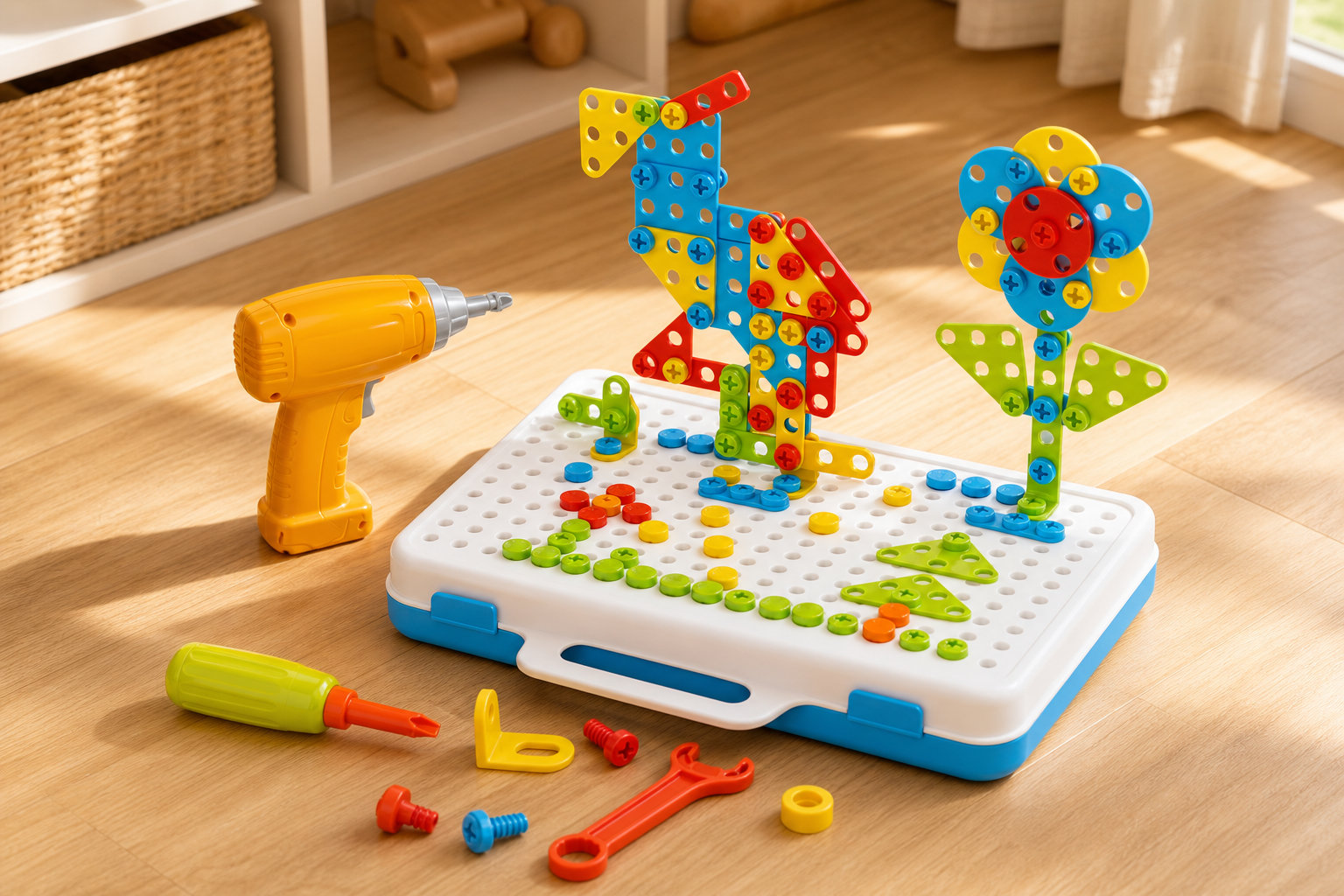
Introduce this screwing material as soon as possible. This Montessori DIY construction toy offers concrete manipulation. Your child experiments with real technical gestures.
- Improvement of the thumb-index pincer grasp
- Hand-eye coordination
- Tool learning
- Creativity development

The portable case allows this learning to continue anywhere. It is an ideal tool for maintaining manual precision while traveling.
These games prepare hands for future writing movements. Finger musculature is gradually strengthened in this way.
Montessori animal magnetic maze game: developing patience
While DIY requires strength, the maze requires Olympian calm. The stylus guides the beads with precision. Animal themes capture immediate attention. It is an exercise in pure control.

Fluid movement ensures success.
Magnetic gesture control teaches the child that slowness is sometimes the key to success in achieving their goal.
The child manages frustration with brilliance. If the bead detaches, they start again gently. They thus forge a valuable resilience.
Wooden Montessori magnetic fishing game: learning while having fun
Along the same magnetic lines, fishing allows combining precise movement with the acquisition of fundamental knowledge.
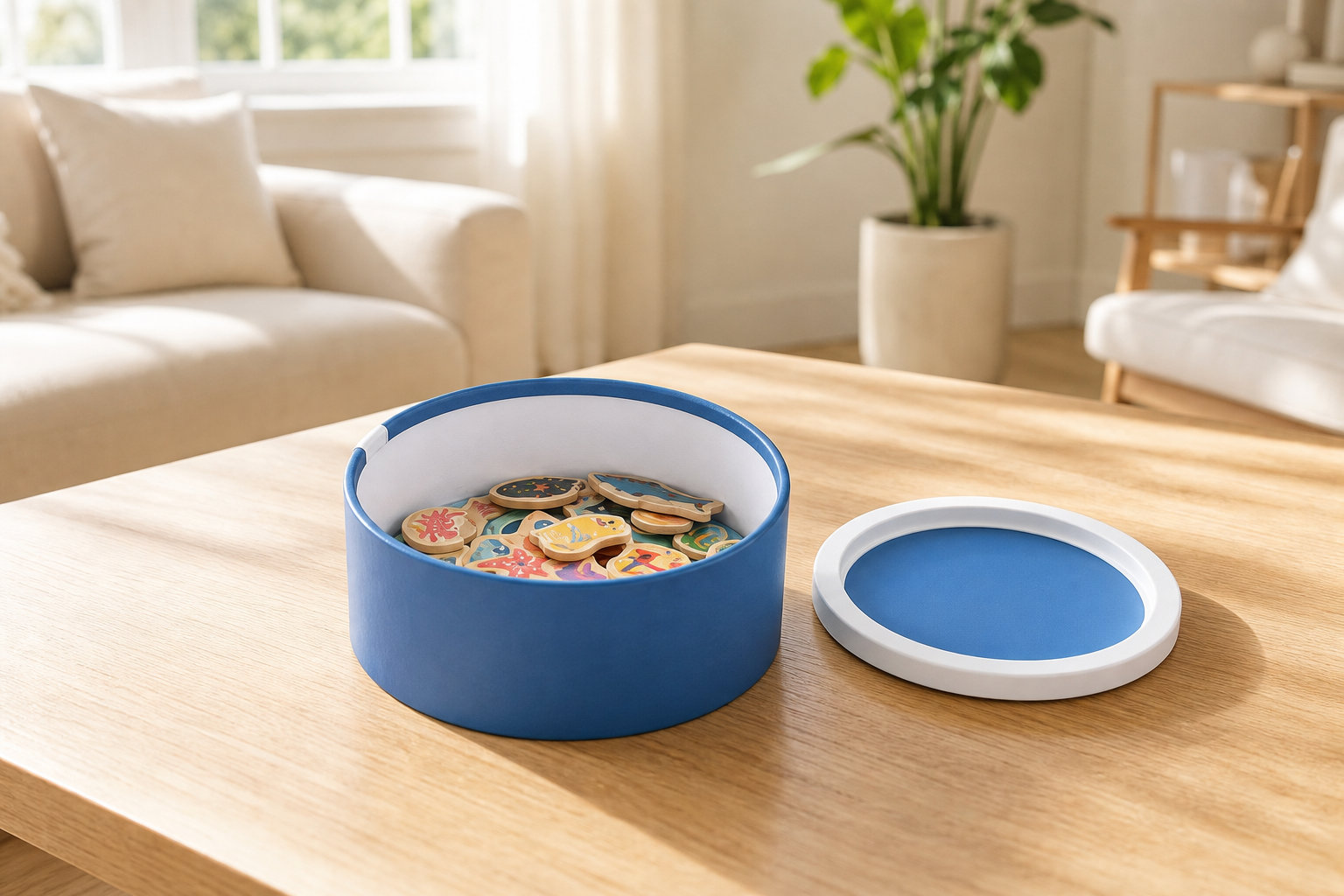
We offer this high-quality, sustainable wood material. This Montessori magnetic fishing game ensures exemplary sturdiness for your child.

Each catch helps identify colors, numbers, and letters. Learning becomes a rewarding victory for the little fisherman.
- Ergonomic magnetic rods
- Numbered fish
- Non-toxic, high-quality wood
This game stimulates first sharing interactions. It is ideally suited for moments of connection between children or with parents.
Montessori magic tissue box: tactile stimulation for infants
For the little ones who aren't fishing yet, sensory exploration begins with simple pulling and touching motions.

This box contains cloths with varied and captivating textures. Your infant will love pulling out the colorful veils. They thus imitate a daily gesture that is often forbidden. It is a safe and playful exploration.

Physical contact is paramount here. We know it changes everything.
The surprise of discovering a new texture under their fingertips stimulates the neural connections related to the sense of touch.
The item far surpasses regular paper. It is a remarkable eco-friendly alternative. You encourage their fine motor skills. Above all, you avoid unnecessary waste.
How to ensure the safety and durability of your equipment?
Whether it's climbing or handling blocks, the quality of the environment and the maintenance of the equipment remain your best allies.
Create a protective and stimulating environment at home
Use thick mats under the structure to cushion falls. Your child will feel reassured in their bold explorations.
Clear the space around the modules. No furniture with sharp corners should remain here to free up the landing zone.
Check the fasteners monthly. This check ensures stability, which is vital for intensive use by little climbers.
Ensure visual supervision without directing movements. Let autonomy express itself naturally under your watchful, caring gaze.
Maintain the structure for maximum wood longevity
Choose foldable models to protect the wood from moisture. This will help you avoid premature wear and tear on your equipment.

Clean with a soft, damp cloth without harsh products. They alter the natural surface of durable solid wood.
| Criteria | Simple | Modular | Tip |
|---|---|---|---|
| Age | 6m - 3 years | 2 - 5 years | By height |
| Space | Fixed | Foldable | Measure |
| Price | Affordable | Premium | Beech wood |
From 6 months old, this solid wood support secures the first attempts to stand and autonomous climbing up to age 5. Install a cushioning mat now to transform your space into an evolutionary exploration ground. Give your child the motor freedom provided by the Pikler triangle to build their confidence for the long term.
FAQ
At what point is it appropriate to introduce the Pikler triangle to your child?
You can introduce this climbing structure as soon as your little one begins to move autonomously, generally around 6 months. At this age, they will use it as a stable support to pull themselves up, strengthen their legs, and discover standing with complete confidence.
Until what age can your child use this motor skills structure?
The Pikler triangle accompanies your child through their first years, often until age 3 or 5 depending on the model and added accessories. While infants use it to pull themselves up, young children see it as a complex balance challenge or turn it into a hideout for their creative role-playing games.
How to ensure optimal safety when using the triangle?
To ensure serene exploration, we recommend placing the triangle on a stable and cushioning surface, such as a thick floor mat. Also, ensure the surrounding space is clear of any furniture with sharp corners and perform regular checks of the fasteners to maintain impeccable sturdiness.
What are the concrete benefits of the Pikler triangle for motor development?
This tool is a real catalyst for autonomy that strengthens overall coordination, balance, and muscle strength. By climbing at their own pace, your child learns to assess risks for themselves, which builds strong confidence in their physical abilities and valuable emotional resilience.
How to maintain your wooden structure so it lasts over time?
We recommend simple cleaning with a soft, slightly damp cloth and neutral soap, avoiding harsh chemicals that could alter the natural wood. A monthly check of the screw tightness ensures the longevity of the equipment, allowing the whole family to enjoy it for many years.