
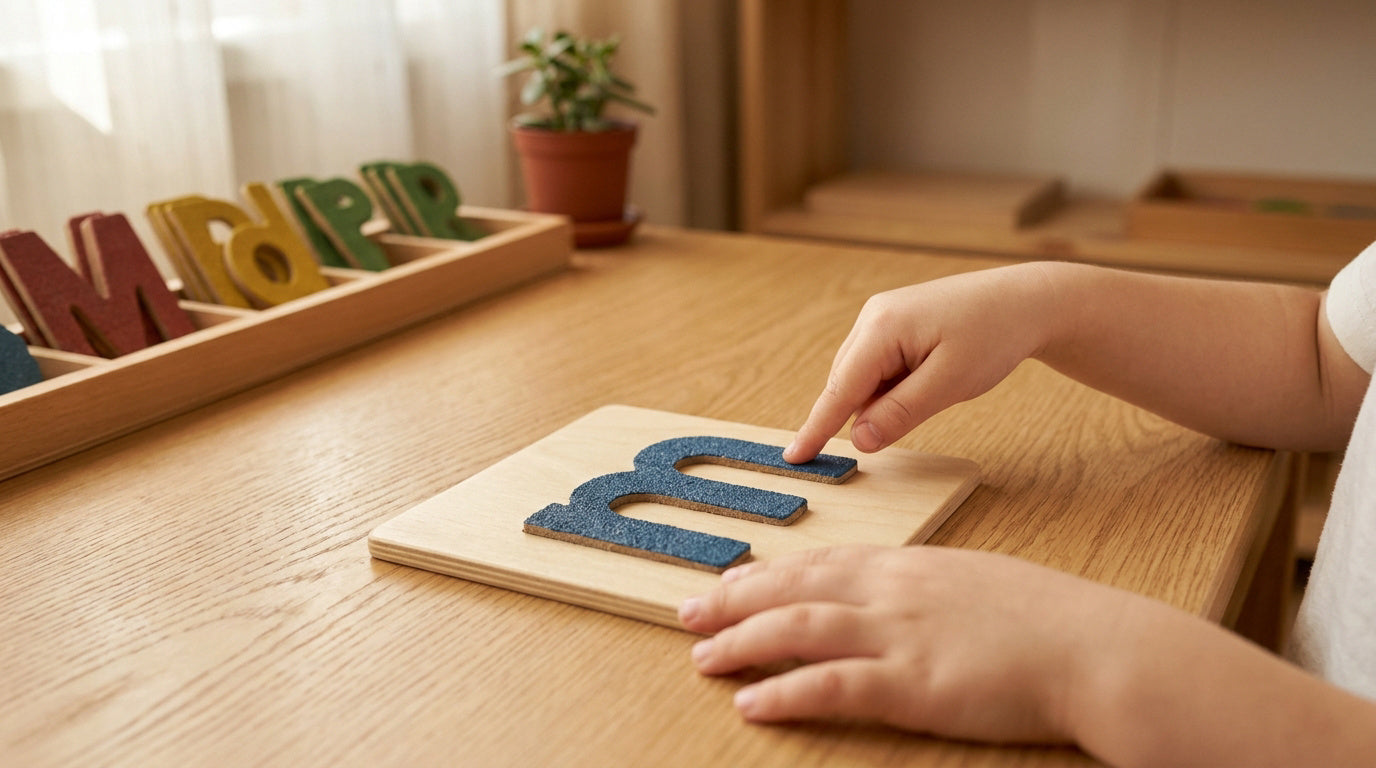

The acquisition of written language relies on precise sensory synergy, where 80% of memorization in young children occurs through direct manipulation. However, many traditional methods struggle with the abstraction of symbols, leaving students helpless when faced with letters that are, to them, merely inert lines on paper.
The use of Montessori sandpaper letters helps overcome this difficulty by anchoring each grapheme in muscular and tactile memory. We analyze here how this material transforms learning to read into a concrete and lasting experience, to help you effectively guide your children’s first steps.
- Why Montessori sandpaper letters transform learning to read
- The Montessori wooden board: an excellent surface for tracing
- 3 steps to successfully introduce sandpaper letters
- Beyond touch: how to consolidate skills at home
Why Montessori sandpaper letters transform learning to read
Sandpaper letters simultaneously stimulate sight, hearing, and touch to set graphemes. This sensory material prepares the writing gesture via a lasting muscular imprint and effective kinesthetic memorization from age 3.
The child uses their senses to permanently anchor language symbols in their mind.
Sensory awakening: touching, seeing, and hearing simultaneously
The child engages their visual, auditory, and kinesthetic memories. They see the shape, hear the sound, and feel the rough texture simultaneously for optimal memorization.
This relief creates a lasting muscular imprint. This process facilitates the retention of complex graphemes through precise repetition of the tactile trace.
The effectiveness relies on this multisensory stimulation. The body learns quickly and retains information better over the long term.
Preparing the mind through phonological awareness
The child must first isolate sounds orally. This phonological awareness is the foundation for using Montessori sandpaper letters: the key step in learning to read.
This material ensures a transition to writing. It allows you to introduce your child to learning to read the Montessori way.
The ideal age is around 3 and a half. Always respect the child's sensitive periods.
The Montessori wooden board: an excellent surface for tracing
But beyond the method, the quality of the physical support directly influences the precision of the gesture and the child's enjoyment.
A robust tool to encourage fine wrist motor skills
Discover the Montessori wooden board from Royaume Montessori. Its sturdy design guarantees perfect stability. It is a reliable partner for tracing.

The rigidity of the wood supports the precision of the movement. This fixed surface prevents any slipping. It thus optimizes the development of fine motor skills.
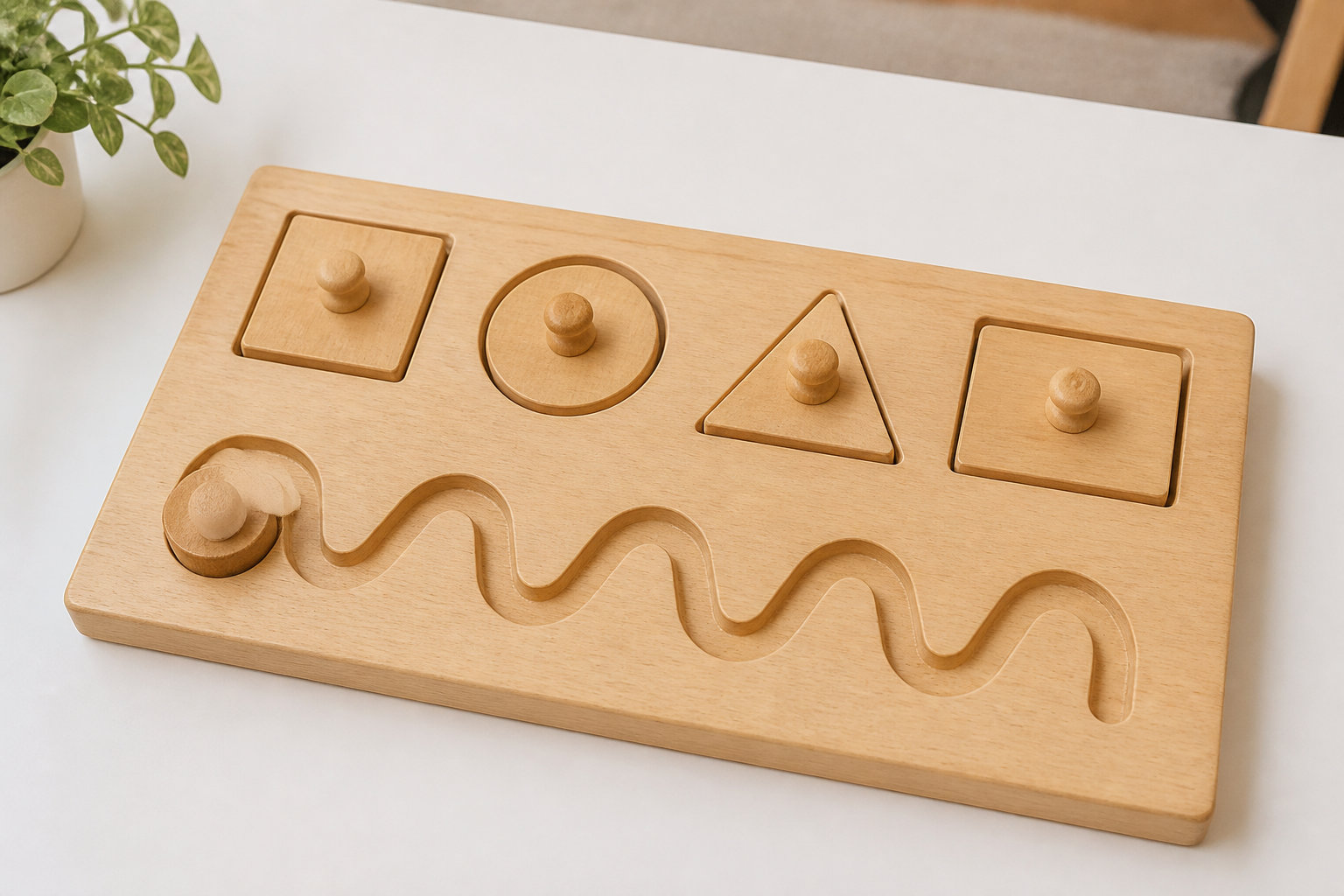
Natural wood offers exemplary durability. Its simple aesthetic calms the mind. Here are its major assets:
- Floor stability
- Warm touch
- Durability
The importance of color coding in distinguishing sounds
Montessori sandpaper letters: the key step to learning to read relies on contrasts. Blue identifies vowels. Pink signals consonants.
This color code visually structures each word. The child assimilates recurring patterns effortlessly. Reading becomes fluid and natural.
Green marks complex phonograms. It is an advanced stage of the pedagogical progression.
| Color | Sound Type | Role |
|---|---|---|
| Pink | Consonants | Structure |
| Blue | Vowels | Sound core |
| Green | Phonograms | Complex sounds |
3 steps to successfully introduce sandpaper letters
Once the material is in hand, you must follow a precise protocol to guarantee memorization without confusion.
The three-period lesson: the secret to effective memorization
The presentation relies on three phases: naming, recognition, and recall. This methodical structure constitutes the fundamental pillar of any precise Montessori approach.
Favor short sequences to maintain attention. A session should not exceed ten minutes to remain effective.
The ultimate step is reached when the child names the letter without assistance. This three-period lesson then validates full acquisition of the symbol.
Guiding the gesture: the two-finger tracing technique
Invite the child to use their index and middle fingers on the relief. They prepare the future pencil grip. The touch should remain firm.
Scrupulously respect the natural direction of the stroke. Following the arrows prevents bad motor habits and facilitates future muscle memory.
The movement of the hand tracing the sandpaper letter etches the symbol into the child's muscular memory well before paper is used.
The choice dilemma: cursive or print letters?
Cursive promotes the fluid connection of words. Conversely, print letters help decode commercial books more easily.
In France, prioritizing cursive letters often proves more consistent. It prepares the child for the graphic requirements of the traditional school system.
The important thing remains overall consistency. Choose a single model and stick with it to avoid any confusion.
Beyond touch: how to consolidate skills at home
Tactile tracing is only one step; you must then transform this perception into an ability for autonomous expression.
From the sand tray to the movable alphabet: the logical sequence
The sand tray allows for practice without fear. The child traces letters with their finger. They erase their attempts and start over with pleasure.

Use the movable alphabet to compose words. It is the tool for the explosion into writing. Progress then toward lined slates.
Creating an atmosphere conducive to autonomous exploration
Arrange a quiet and orderly space. The material must remain accessible on a low shelf. This promotes a simple and quick setup.
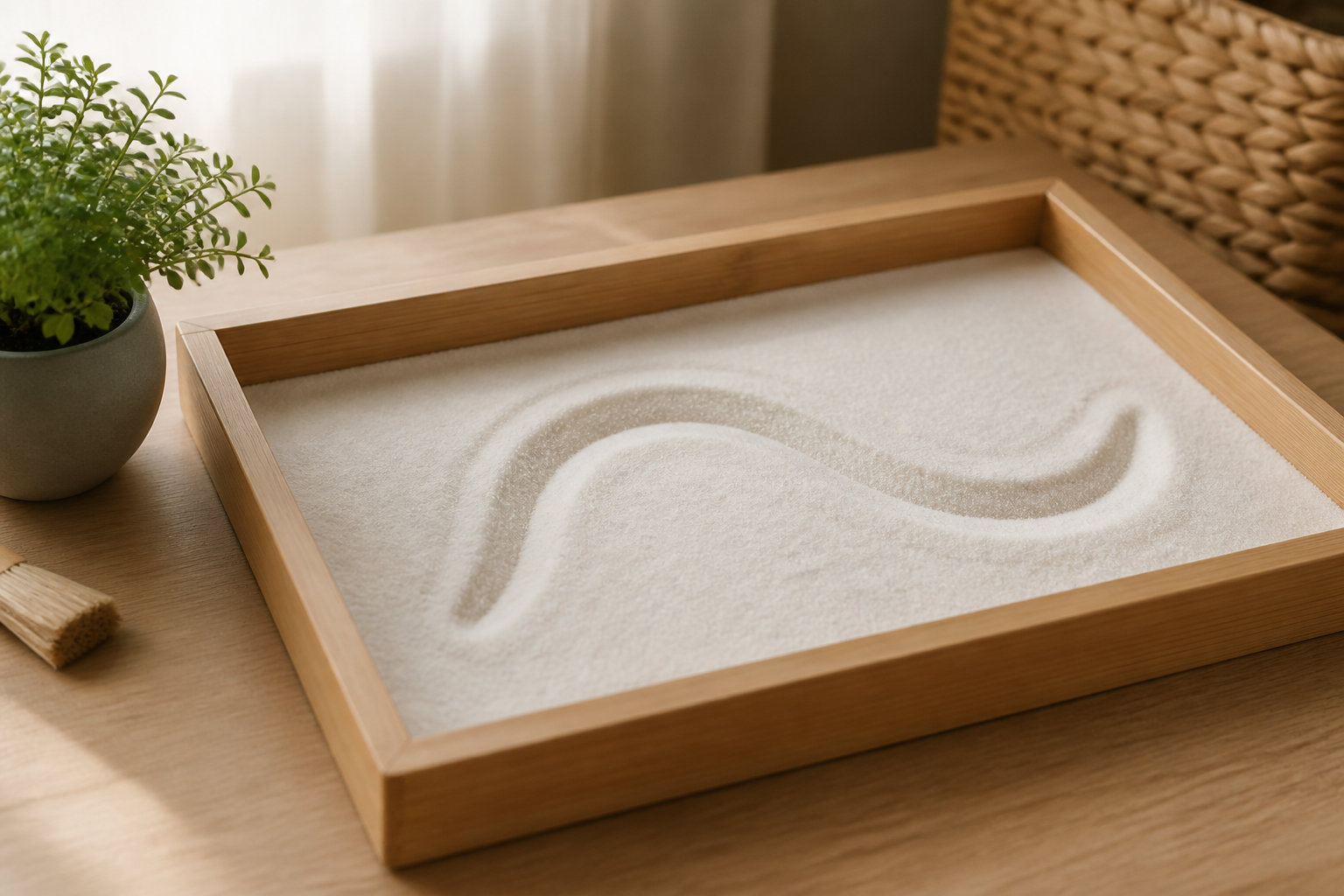
The child should be able to choose their activity alone. Emphasize concentration and autonomy. Let them explore without unnecessary interruption.
Common mistakes to avoid to preserve motivation
Do not introduce too many letters simultaneously. Avoid correcting tracing errors directly. Preserve the child's confidence.
Respect your child's rhythm. If interest wanes, put the material away. Motivation is the primary engine.
By simultaneously stimulating sight, hearing, and touch, Montessori sandpaper letters create a lasting muscle memory essential for writing. Integrate the three-period lesson now to transform this sensory awakening into fluid reading. Give your child this key to independence to anchor their future academic success.
FAQ
What is the fundamental role of sandpaper letters in reading readiness?
Sandpaper letters are a pivotal stage of the Montessori method, designed to transform the abstraction of language into a concrete sensory experience. By simultaneously engaging sight, hearing, and touch, this material allows your child to imprint graphemes indelibly. This multisensory approach respects the individual pace of every child, turning the effort of learning into a playful and highly rewarding exploration.
The major objective is to establish a neural connection between the perceived sound (the phoneme) and its graphic representation. Thanks to the tactile relief, the child engraves the symbol into their muscle memory, which naturally prepares the writing gesture long before picking up a pen and paper.
Why prefer cursive letters during this sensory learning process?
The choice of cursive letters follows a logic of fluidity and continuity of movement. Unlike print letters, cursive promotes natural connections between characters, thus avoiding jerky movements when tracing. In France, this model is particularly recommended as it corresponds to the standards of handwriting and greatly facilitates the child's formation of complete words.
However, using print letters remains useful for familiarizing the mind with the printed characters found in commercial books. The key lies in the consistency of your guidance: we advise you to select one reference model and stick to it in order to guarantee memorization without confusion for your child.
How is the material presented using the three-period lesson?
To ensure perfect assimilation, we use the three-period lesson, a rigorous technique inherited from the work of Edouard Séguin. The first phase consists of the introduction: you name the sound of the letter while tracing it, then you invite your child to reproduce this gesture. The second phase is the association phase, where you ask the child to identify a letter among several ("Can you show me the 's'?").
Finally, the third period is that of verbal recall, where the child must be able to spontaneously name the sound associated with the shape they are touching. This structured progression makes it possible to validate the acquisition of knowledge with certainty, while preserving the student's motivation and concentration within a supportive framework.
Which tools should be used to extend the experience after the sandpaper letters?
Once the symbols are internalized, the logical next step is to move from sensory tracing to independent composition. The use of a sand tray offers an ideal transition: it is an experimental space where no mistakes are possible, and where the child can erase and restart their tracing endlessly. This reinforces the precision of fine motor skills in the wrist within a safe environment.
The next step is the introduction of the movable alphabet, which often marks "the explosion of writing." This tool allows your child to compose their first words by manipulating physical letters, even before perfectly mastering the pencil grip. These complementary activities ensure a lasting consolidation of acquired skills and foster increasing autonomy in the world of the written word.
What are the mistakes to avoid to maintain the child's interest?
Vigilance is required to preserve the joy of learning. The most frequent mistake consists of introducing too many letters simultaneously, which risks overwhelming the child's cognitive capacities. We recommend presenting only two or three letters at a time, ensuring that they are distinct in both shape and sound to avoid any interference.
It is also crucial to never directly correct a clumsy trace. If the child makes a mistake, simply repeat the presentation during a later session. Respecting your child's rhythm and sensitive period is the secret to a successful education; if interest wanes, know how to put the material away and come back to it later, when curiosity is at its peak again.
Pour passer à la pratique
Les jouets qui vont avec cet article
Tous les jouets 3-5 ans

Livraison offerte dès 50 € · Retour 20 jours