
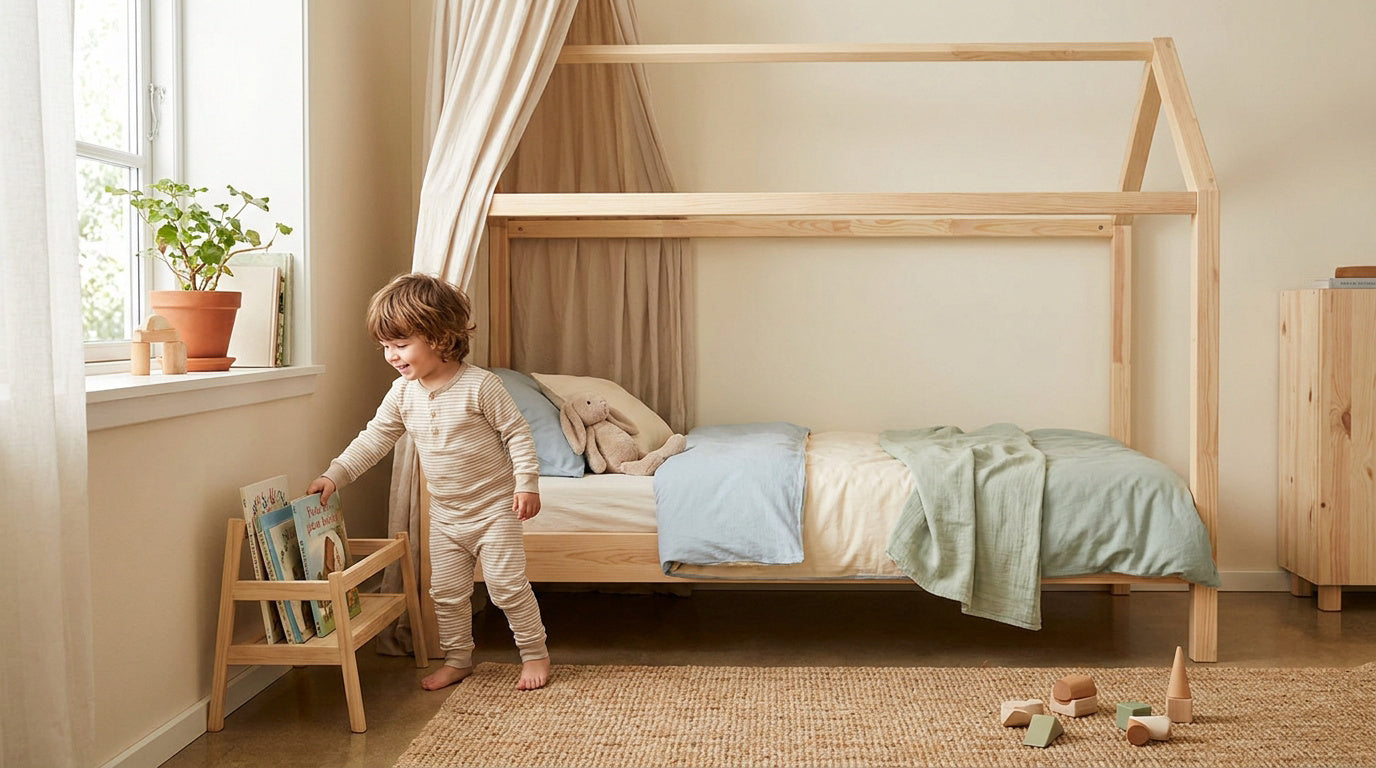
Montessori pedagogy advocates for an environment where the child can move without hindrance to forge their identity. By removing traditional crib bars in favor of a floor-level structure, you provide your little one with total freedom of movement from their first months. However, the transition to an open space often raises legitimate questions about nighttime safety and setting boundaries.
This article analyzes every montessori floor bed review to guide you in setting up a secure cocoon. We break down the motor benefits and essential accessories to transform the bedroom into a real catalyst for your child's autonomy.
- Why choose a Montessori floor bed and its accessories?
- 3-strand braided baby bed bumper
- White, brown, and green braided bed bumper
- Beige and white braided bed bumper
- White, brown, and pink braided bed bumper
- Portable bed reducer
- Psychological and motor benefits of sleeping on the floor
- Safety guide for a risk-free Montessori bedroom
- Succeeding in the transition: ideal age and bedtime rituals
- Managing challenges: nighttime wake-ups and the need for containment
- Practical setup and bed maintenance
Why choose a Montessori floor bed and its accessories?
The Montessori floor bed promotes motor autonomy from 6 months by removing the bars. The use of braided bumpers and firm mattresses secures this space of freedom, thereby facilitating the transition toward independent sleep.
The awakening of autonomy from an early age
Freedom of movement strengthens the feeling of competence. Your child explores their environment without physical constraints. This bodily ease builds a positive perception.
Easy access to the sleeping area occurs without parental intervention. Your little one decides for themselves when to rest. They thus become fully in control of their own sleep.
This approach respects the Royaume Montessori philosophy. This comprehensive vision places the child's natural rhythm at the heart of their nights.
Safety reinforced by adapted accessories
Soft protections gently define the space. The braids prevent bumps against the wooden structure. They create a reassuring visual frame for your toddler.
The transition between the crib and the floor bed happens progressively. The change occurs without a brutal break. Your child retains their usual sensory landmarks.
- Protection against the cold of the wall.
- Visual boundary for the resting area.
- Tactile comfort and "house" aesthetic.
The choice of materials remains paramount. Always prioritize natural and breathable textiles.
3-strand braided baby bed bumper
Beyond the structure, comfort comes through modular protective elements like the three-strand braid.
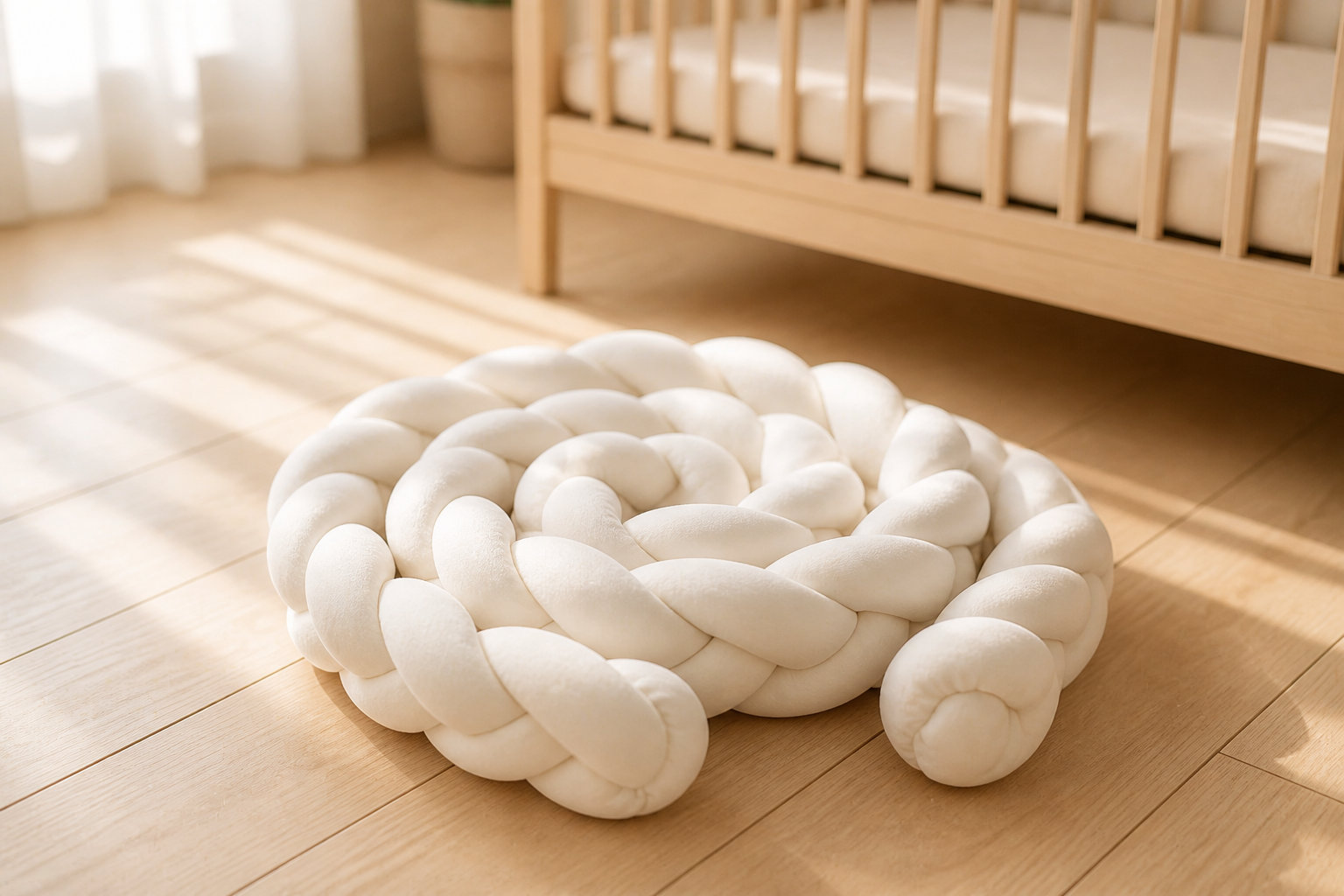
This textile protection consists of several intertwined strands forming a plush barrier. Its flexible structure allows it to perfectly follow the contours of the sleeping area. It therefore adapts easily to all shapes of children's beds. This device effectively prevents the risk of limbs getting stuck between the slats.

You can now discover our 3-strand braided baby bed bumper. This model combines aesthetics and practicality for your interior. It precisely meets the safety needs of demanding parents.
The bed bumper transforms a standard bed into a cozy and secure nest, essential for the restless nights of toddlers.
Maintenance of this accessory proves to be particularly simple on a daily basis. The selected materials are generally machine-washable without alteration. This guarantees perfect hygiene in the child's room.
You will also appreciate the wide variety of colors available. There are neutral or more vibrant tones to suit your decor desires.
White, brown, and green braided bed bumper
For a woodland ambiance, chromatic harmonies play a leading role. This white, brown, and green model creates a soothing atmosphere. These shades evoke the calm of nature. They integrate perfectly into a Scandinavian-style bedroom.

You can acquire this white, brown, and green braided bed bumper for your child. This accessory combines aesthetics and protection. It adapts to the dimensions of Montessori beds.

Handcrafted construction guarantees maximum durability. The carefully intertwined strands ensure flawless hold. The texture remains soft for the sensitive skin of babies.
This braid also serves as a positioning cushion during playtime. It effectively supports the back of a seated child. It is a versatile choice for their daily motor development.
The harmony of natural colors promotes peaceful falling asleep by reducing aggressive visual stimulation.
Beige and white braided bed bumper
If you prefer absolute sobriety, the beige and white duo remains a timeless classic.

The minimalist design of this accessory brings natural warmth without cluttering your decor. The white brightens up the resting space gently. It is an ideal versatile choice for both girls and boys.
You can choose this beige and white braided bed bumper to secure sleep. This element combines aesthetics and protective comfort. Its texture immediately invites calm.

| Feature | Detail |
|---|---|
| Length | 200cm |
| Material | Cotton/Velvet |
| Colors | Beige/White |
| Use | Protection/Decor |
Place the braid along the cold wall for optimal insulation. It thermally protects the mattress placed on the floor. This simple act improves nighttime well-being.
The meticulous finishes guarantee great longevity. The invisible seams perfectly resist the repeated handling by your child.
White, brown, and pink braided bed bumper
For an extra touch of softness, the pink variant offers a cocoon of tenderness. This braid harmonizes an elegant powder pink with a very natural earthy brown. The whole composition creates a romantic atmosphere, conducive to soothing rest. It is the ideal accessory to complete a cocooning-style bedroom.

You can discover this specific model by visiting the page dedicated to the white, brown, and pink braided bed bumper. This element fits perfectly with light wood structures.

The feeling of containment is essential for a young child. This braid surrounds your little one like a true protective nest. It helps limit sudden movements that sometimes occur during restless dreams.
Here is what makes this accessory indispensable for your layout:
- Extreme softness to the touch
- Soothing and balanced colors
- Perfect adaptability to the house bed
- Ideal and practical birth gift
Your child's safety remains our absolute priority. The dyes used are certified non-toxic, guaranteeing no danger for curious babies who chew on their environment.
Portable bed reducer
Montessori autonomy can also be taken on the road thanks to portable sleeping solutions.
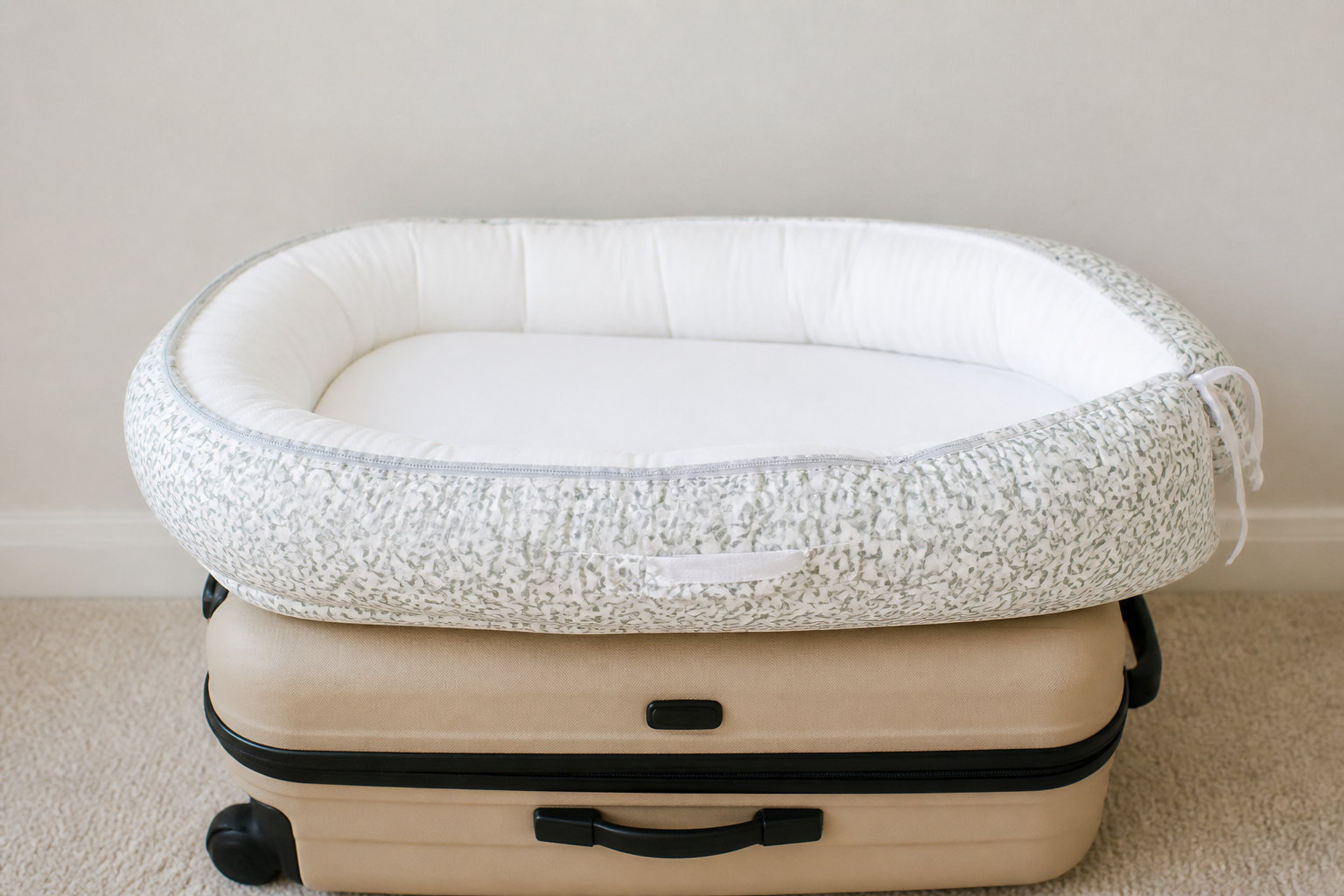
The portable reducer allows your baby to maintain sleep cues everywhere. It is a true secure spare bed for your newborn. Its lightweight structure slides easily into a suitcase, so you can travel with peace of mind.

By adopting this portable bed reducer, you offer an immediate protective cocoon. This accessory limits nocturnal startling by reproducing the reassuring sensation of the womb. This is why choosing a Montessori house bed for your child is a relevant decision.
Its ergonomic design keeps the baby in an optimal position. The raised edges effectively prevent accidental falls off the mattress. Safety remains our absolute priority for your nights.
This product can be used on the sofa as well as in a travel cot. It ensures a clean and familiar surface for the child, no matter the location. Its versatility truly simplifies your daily life as nomadic parents.
The cotton cover ensures ideal thermal regulation during the night. These breathable materials prevent any unnecessary overheating. Your child then enjoys deep and restorative sleep.
Psychological and motor benefits of floor sleeping
Sleeping as close to the floor as possible is not just a style choice; it is a major driver of development.
Sensory and cognitive development through exploration
The child observes their room without the filter of bars. Their depth perception refines quickly. This unobstructed view directly impacts their overall understanding of the surrounding space.
Being able to get out of bed stimulates natural curiosity. The child learns to manage their own movements. Each waking moment becomes an opportunity for motor learning. Autonomous discovery enhances their motor skills.
Cognition is fueled by this freedom. Free movement fosters early neural connections.
Creation of a reassuring and playful cocoon
The wooden structure symbolizes a personal little house. It is a refuge where the child feels in charge. This house aspect acts as a protective den for their imagination.
The playful side takes the drama out of bedtime. The bed is no longer a cage but a quiet playground. This space effectively calms tensions before sleep.
You can add a child's armchair to complete the reading corner. This reinforces the reassuring aspect of the area.
Strengthening the parent-child bond of trust
The parent sits on the floor next to the child. This physical proximity strengthens the bond. Caring support during quiet times is then greatly facilitated.
Reading a story together on the mattress creates precious memories. Power dynamics disappear in favor of interaction. Sharing at the child's level enhances these moments.
Mutual trust grows. The adult respects the child's pace, who in return feels heard.
Safety guide for a risk-free Montessori room
Freedom can only flourish in an environment rigorously secured by parents.
Mattress selection and firmness criteria
Recommend natural materials and density suited for support. A mattress that is too soft is dangerous for infants. Firmness ensures proper spine alignment. Opt for natural latex or coconut fiber.
Specify standard dimensions to avoid gaps with the structure. A poorly fitted mattress can trap little feet. Check the measurements carefully before purchasing.
Hygiene is also paramount. Use a breathable mattress protector to protect the bedding.
Aim for a density of 28 kg/m³ for foam. A thickness of 10 cm ensures long-lasting ergonomic support and optimal safety.
Cushioning falls and floor mats
Install cushioning mats around the sleeping area. Even at a low height, a fall can be a surprise. A thick mat secures nighttime tumbles.
Strategically position the bed in a room corner. This limits open sides and stabilizes the structure. The child feels better surrounded by walls.
Use a cat paw child cushion to cushion the corners.
Securing the room's overall environment
Check outlets and anchored furniture. Hide all electrical cords behind furniture. Secure shelves firmly to the wall. The entire room becomes the playground.
Offer solutions to limit access to stimulating toys at night. Store noisy objects in closed chests.
A secured Montessori room is a space where the parent can let the child explore without fear of a major accident.
Anchor your furniture and conceal cables. Why choose a Montessori house bed for your child? For their autonomy, provided the environment is foolproof.
Successfully navigating the transition: ideal age and bedtime rituals
Moving from a crib to a floor bed requires observation and a solid routine.
Identifying the right moment between 6 months and 3 years
Analyze signs of motor maturity. If the child tries to climb out of their crib, they are ready. Their desire to explore then exceeds the confines of the crib.
Observe if your child is trying to climb over the sides of their bed or shows intense motor curiosity.
Some babies seek autonomy as early as 10 months. Others prefer their cocoon until age 2. Carefully observe their reactions to change.
Never force the transition. Every child's pace is unique.
Establishing a soothing and structured routine
Detail the steps of the ritual to mark the end of playtime. Bath, reading, and cuddles form an effective triptych. Repetition creates security.
Predictability reassures the child without bars. Knowing what comes next prevents anxiety. The child stays in bed because they feel serene.

€33.90

€38.90
Use a Montessori safari mobile to promote calm. This accessory creates an atmosphere conducive to rest.
Using sign language for sleep
Offer simple signs to express fatigue. The "sleep" sign helps the child communicate. This reduces frustrations linked to misunderstanding.
Encourage the expression of physiological needs before crying starts. The child can sign their need for calm. Sign language strengthens emotional autonomy.
Signing with your child allows you to decode their sleep needs well before they know how to speak.
Adopting these gestures facilitates understanding and ensures peaceful nights.
Managing challenges: nighttime outings and need for containment
Despite good preparation, some obstacles like night wakings can occur.
Reacting to repeated nighttime bed escapes
If your child explores their room at night, lead them back without turning the interaction into a game. Remain neutral and silent while returning them to bed. Avoid turning on bright lights. The goal is to show that the night continues.
Handle these awakenings with kindness and firmness. Reassure your little one with a brief physical touch. Remind them calmly that it is time to sleep. This consistency is the key to restoring a serene sleep cycle.
Patience is your best ally. These testing phases are completely normal.
Adapting the space for children in search of boundaries
Analyze the need for physical containment via cushions or braids. Some children feel lost in a large space. Soft edges recreate a reassuring sense of a cocoon for them.
Offer partial barriers to secure without confining. A small wooden rail can visually reassure your child. It defines the sleeping area without blocking their passage or autonomy.
You can opt for a braided crib bumper to reinforce this feeling of safety.
Difference between a house bed and a classic floor bed
Compare the playful aspect of the wooden structure versus a simple mattress. The house bed invites dreaming and personal appropriation. The standalone mattress is more minimalist, functional, and focused on pure autonomy.
Evaluate the impact on your child's acceptance of the bed. An attractive design often facilitates commitment to the new bed. The child is proud of their night house, which calms the bedtime process.
Choose according to your budget and space. Both options respect the principles of Maria Montessori.
Practical arrangement and bedding maintenance
For the bed to remain a healthy place, a few maintenance and layout rules are necessary.
Preventing humidity and mold under the mattress
Use a thin slatted base for daily ventilation. Air must circulate under the mattress fibers. Lift it every morning if possible.
Tile floors promote condensation and cold. A low slatted base avoids these inconveniences. It protects your child's health.
Air the mattress daily and use a slatted base to prevent condensation on cold floors.
| Action | Frequency | Benefit |
|---|---|---|
| Air out | Daily | Remove moisture |
| Wash sheets | Weekly | Healthy hygiene |
| Flip mattress | Monthly | Prevent wear |
Organizing the play and awakening space
Structure the room into distinct zones. The rest corner must remain sober and calm. The play mat is located opposite.
Advise dimmed lighting accessible to the child. A nightlight reassures without waking. The child can turn it on themselves if they are afraid.

Follow these Montessori sleep tips. A controlled environment reduces nighttime anxiety in the long term.
Solutions for maintaining independence while traveling
Offer portable alternatives. The foldable floor mattress is perfect for vacations. It recreates the familiar setting away from home. The child finds their bearings instantly.
Recreate familiar reference points away from home. Bring their bed bumper or comfort object to reassure them.
Independence does not stop at the bedroom door. It accompanies the child on all their adventures.
By prioritizing motor independence and sensory security, you offer your child an environment conducive to their cognitive development. Adopt this low bed now to turn their nights into a calm ritual of independence. This Montessori house bed review confirms that a controlled space of freedom builds the confidence of tomorrow.
FAQ
What is a Montessori house bed and what are its fundamental principles?
Inspired by Maria Montessori's pedagogy, this bed is distinguished by a low structure, often positioned at floor level, and a total absence of bars. This specific design aims to remove physical obstacles to promote your child's autonomy and freedom of movement from an early age.
The goal is to create a stimulating environment where your little one can explore their room, decide to go to bed when they feel tired, and develop self-confidence. By transforming the bed into a truly playful den, you encourage their independence while respecting their natural biological rhythm.
What benefits does a floor bed bring to your child's development?
The Montessori bed offers substantial advantages for motor and cognitive awakening. By allowing your child to get in and out of bed on their own, you reinforce their sense of competence and free movement. Unlike traditional beds that impose dependency on adults, this solution frees up access to play and reading areas.
Psychologically, the panoramic view of the room offered by this bed reduces anxiety related to confinement. The house-shaped structure also stimulates imagination and symbolic play, transforming bedtime into a serene and rewarding stage for your child.
How to ensure optimal safety in a Montessori bedroom?
Safety relies on the rigorous organization of the overall environment. It is imperative to choose a firm mattress that fits the frame perfectly to avoid any dangerous gaps. We recommend securing the entire room: covering electrical outlets, anchoring furniture to the wall, and removing risky objects like curtain cords.
To cushion nighttime exits from bed, installing a thick rug or floor cushions is an excellent preventative solution. Finally, ensure that the materials used, especially wood varnishes and paints, are certified non-toxic (NF EN 71-3 standard) to preserve your little explorer's health.
Until what age can your child use a house bed?
The longevity of this furniture depends essentially on the dimensions chosen and your child's size. A standard 90x190 cm model can accompany your son or daughter from age 3 until their teenage years. More compact sizes, such as 70x140 cm, are generally suitable until the age of 5 or 6.
The signal for a change does not depend solely on age, but on concrete physical signs: if your child is outgrowing the mattress or if the structure shows signs of weakness, it is time to upgrade. For raised beds, note that the use of the upper sleeping area is strictly discouraged before age 6 for motor coordination reasons.
What criteria should be prioritized to choose a high-quality model?
For a durable and safe investment, we advise you to favor solid wood, such as pine or beech, known for its robustness. Ensure that safety rails, if present, are at least 16 cm above the mattress surface and that the spacing between elements does not exceed 6.5 cm to prevent any entrapment.
The safety of the components is also crucial: look for OEKO-TEX certifications for textiles and verify the sturdiness of the joints. A quality bed must be able to support significant dynamic loads without showing play in the fasteners, thus ensuring peaceful and secure nights in the long term.