

Development & Awakening
Which Montessori games for a 3-year-old? The step-by-step developmental guide
Entering the third year marks a fascinating transition. At age 3, a child is no longer a "toddler"; they become an explorer eager for language, precision, and social life. It is the age when Maria Montessori’s absorbent mind begins to structure itself in a more conscious way. To support this explosion of curiosity, the choice of games becomes crucial.
The 3-year-old stage: What really changes
At this age, gross motor skills are acquired, giving way to a quest for refining fine motor skills. The child seeks to imitate adults, understand symbols (letters, numbers), and enrich their vocabulary at a dazzling rate. It is the ideal moment to introduce Montessori games by age that stimulate without overwhelming.
3 key themes for development at age 3
1. The explosion of language and vocabulary
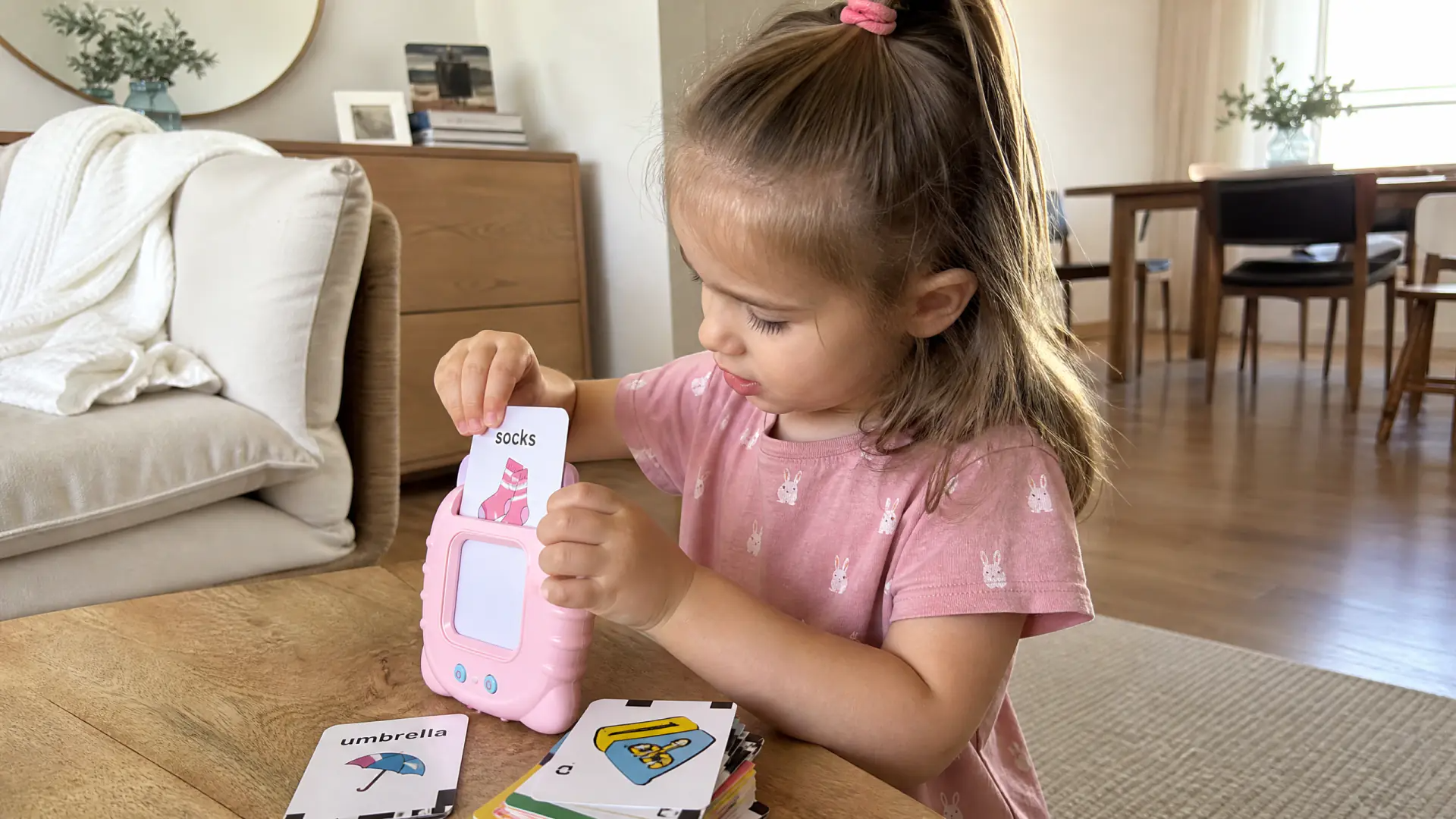
This is the golden age of speech. The child wants to put words to everything they see. Nomenclature card games or interactive tools are valuable allies for fueling this thirst for knowledge.
To enrich vocabulary in a fun and autonomous way, a talking tool is a true revolution.
Discover the Talking Flashcards →2. Practical life: Doing "like the grown-ups"
At 3 years old, the child wants to participate. Cutting fruit (with adapted tools), sweeping, getting dressed on their own. These activities are not chores to them, but games of self-construction. They develop confidence and coordination.
Always prioritize quality over quantity. A single beautiful, well-designed wooden object will captivate attention more than a chest filled with noisy plastic toys.
3. Logical thinking and initial sorting
Sorting by color, size, or shape becomes an exciting game. These exercises indirectly prepare for the mathematical mind. It is also the age where one begins to take interest in more complex structures, like tracks or circuits.
Developing precision and motor skills
Development at age 3 relies heavily on the hands. It is by manipulating, transferring, and sorting that the child builds their intelligence. To go further on this crucial subject, discover our complete guide to Montessori activities for fine motor skills.
Parent questions (FAQ)
On average, between 10 and 15 minutes on a chosen activity. But in an adapted Montessori environment, some children can enter a state of "polarization of attention" and remain focused for much longer.
No, toy rotation is essential. Leave 4 to 6 activities on low shelves and change them every 2 or 3 weeks to maintain interest.
Pour passer à la pratique
Les jouets qui vont avec cet article
 Personalized Wooden Name Puzzle for Children 33,90 €
 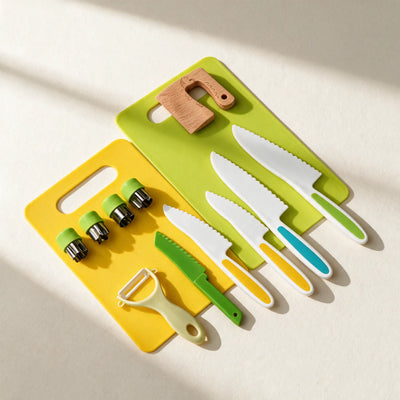 Children's kitchen kit 22,90 €
  Montessori 3-in-1 Sorting Box, Shapes and Colors 29,90 €
 Livraison offerte dès 50 € · Retour 20 jours