
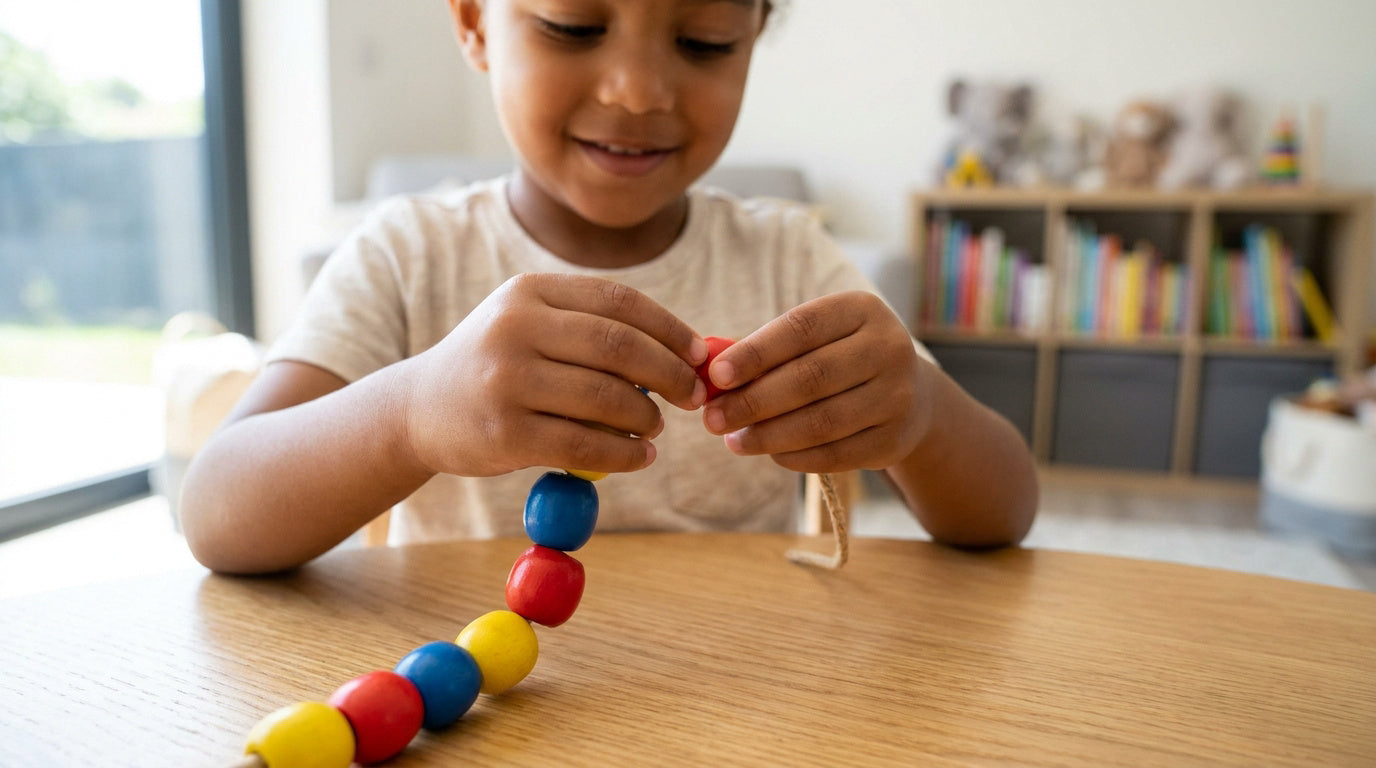

Fine motor skills rely on the precision of the small muscles in the hands, a technical foundation whose mastery before age 6 directly conditions the success of learning to write.
However, without appropriate stimulation, your child may struggle to coordinate their fingers or stabilize their strokes. We have selected the best fine motor activities for 4-year-olds to enhance their dexterity and independence while having fun. Let's break down these playful solutions together.
- Fine motor activities for 4-year-olds: a lever for development
- Montessori Bolt and Screwdriver Game for dexterity
- Inlay Puzzle for mastering volumes
- Montessori Busy Board for daily independence
- Montessori Car Track for hand-eye coordination
- Wooden Montessori Beehive for sensory awakening
- Magnetic Montessori Tangram for spatial creativity
- Montessori Tangram for geometric logic
- DIY Construction Game for muscular strength
- How to promote writing and independence?
Fine motor activities for 4-year-olds: a lever for development
Fine motor skills at age 4 rely on finger dissociation and trunk strength, preparing the child for writing. Pouring activities, buttoning, and using tongs strengthen hand muscles, which are essential for an effective pencil grip.
This technical mastery depends on a clear distinction between broad movements and digital precision.
Gross motor skills and fine motor skills are interdependent. Trunk stability and a strong shoulder girdle are the essential foundations for freeing up finger movement.
Distinguishing gross motor skills from precise gestures
Gross motor skills involve large muscles for running or jumping. Conversely, fine motor skills precisely target the phalanges for manipulating small objects.
The harmonious development of both spheres ensures total physical ease. Your child then gains valuable confidence during their daily explorations.
The role of postural control in manipulation
Without a stable seat, the wrist cannot work freely. Posture is the foundation of precision. Work on trunk stability to free up the gesture.
The shoulder girdle releases hand movement. A well-positioned child tires less quickly during fine motor activities for 4-year-olds.
Montessori Bolt and Screwdriver Game for dexterity
But beyond posture, the choice of fun tools radically transforms technical learning.
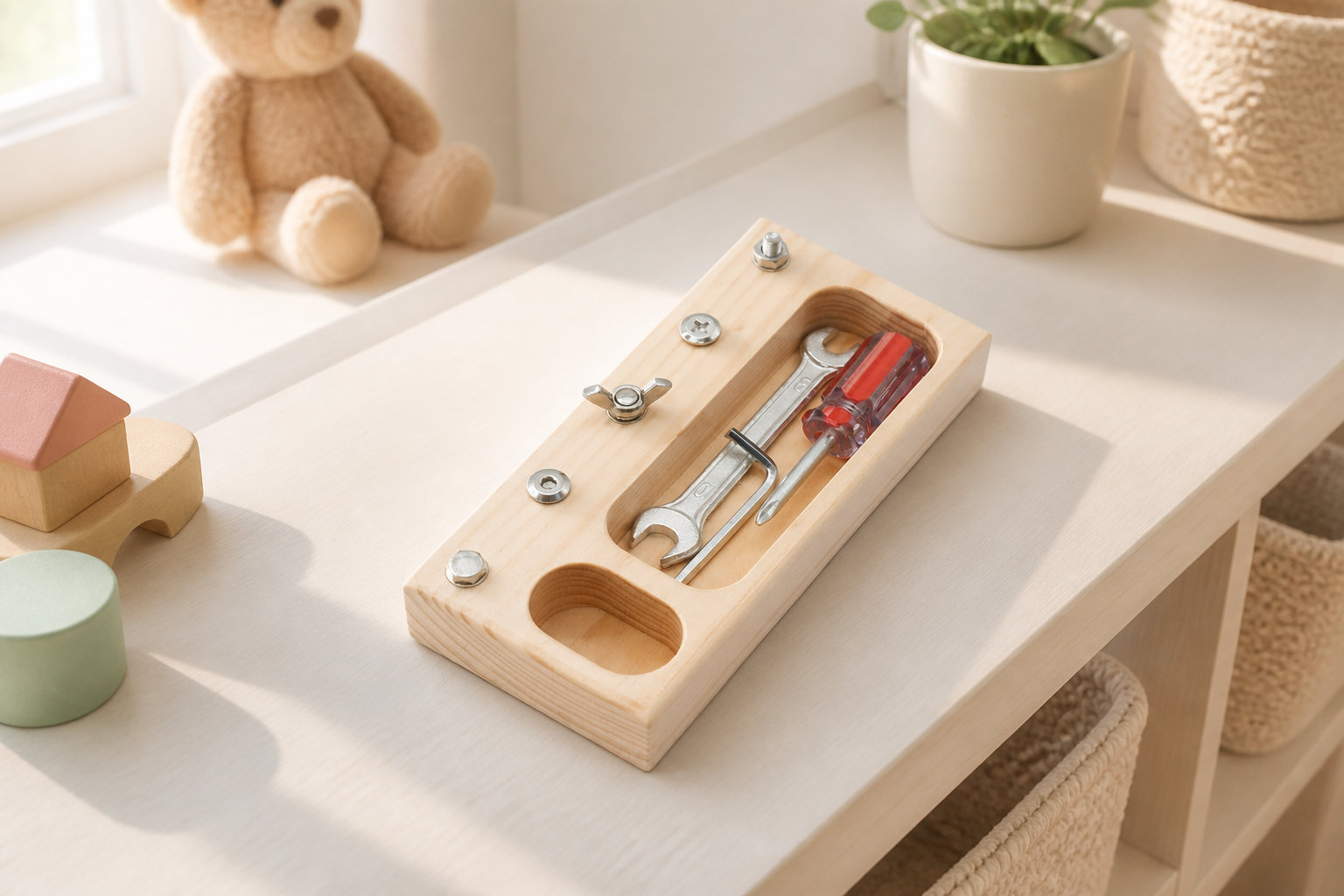
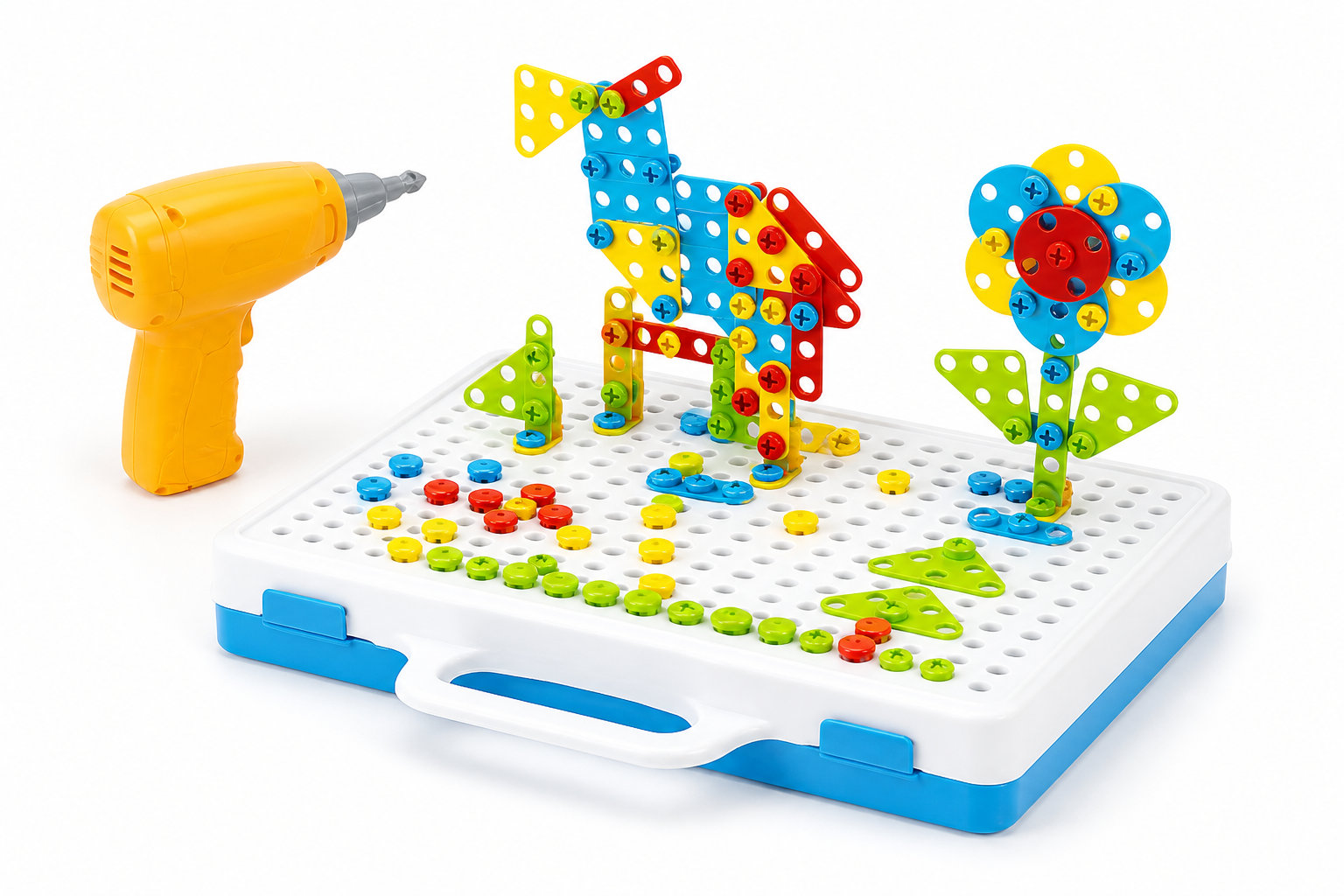
Screwing and unscrewing requires precise wrist rotation. This movement refines your child's thumb-index pincer grasp. It is a perfect exercise for strengthening their hands. You thus promote excellent hand-eye coordination in daily life.
To enrich these fine motor activities for 4-year-olds, we recommend this Montessori DIY Construction Game. This educational tool allows for manipulating concrete pieces. Your child then gains independence and confidence.
Inlay Puzzle for mastering volumes
If screwing builds muscle, inlaying refines the perception of shapes in space.
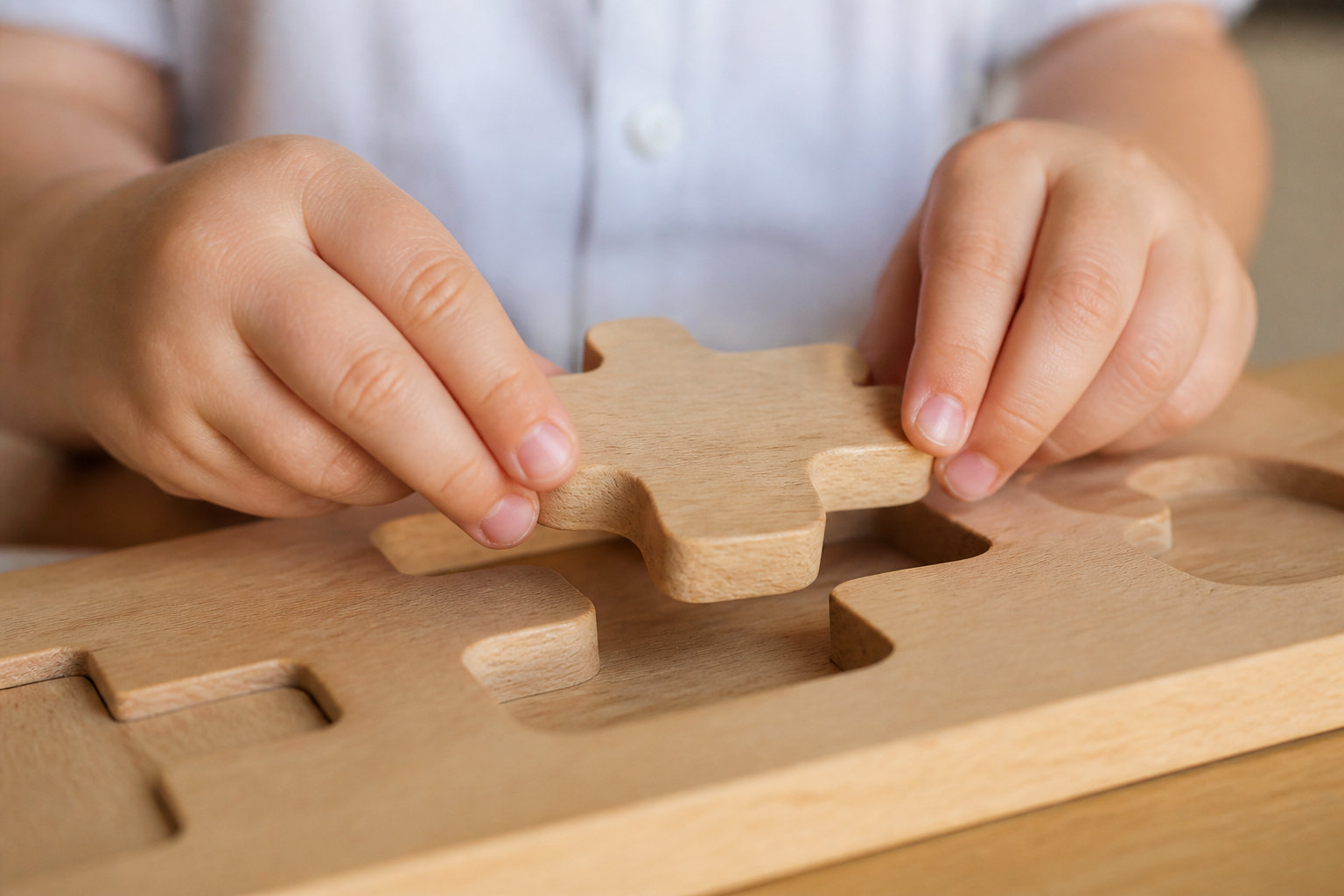
Grasping the knobs of the pieces engages your child precisely to refine their thumb-index pincer grasp. They must adjust their gesture according to the angle of the shape with rigor. This manipulation effectively coordinates movement and vision.
The puzzle is not just a patience game; it is a true workout for the small muscles of the hand.
These fine motor activities for 4-year-olds turn every inlay into a cognitive victory. By varying themes, you sustainably strengthen their confidence and concentration.
Montessori Busy Board for daily independence
In short, manipulating shapes leads logically to mastering everyday objects.
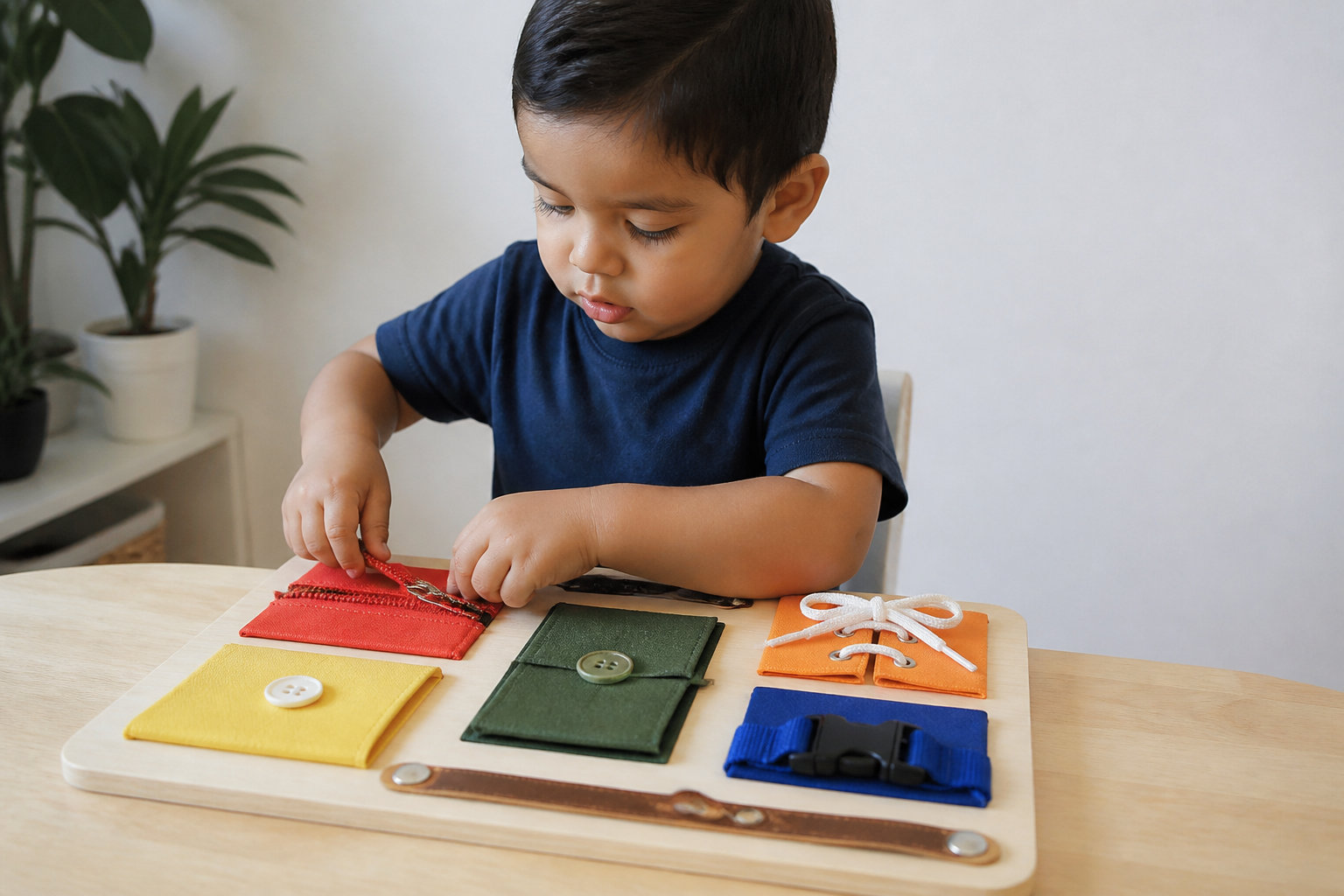
This activity board includes latches, zippers, and sturdy buttons. Each module faithfully reproduces a real dressing challenge. Your child thus practices without time pressure. These fine motor activities for 4-year-olds strengthen their daily independence.
Offering a Montessori Busy Board allows you to turn learning into pure pleasure. In fact, The Montessori Busy Board is a perfect gift to calmly support your little explorer's evolution.
Montessori Car Track for hand-eye coordination
However, agility is also developed through movement and dynamic visual tracking.
Placing vehicles delicately on the tracks requires surgical visual-motor precision. Your child must anticipate every turn of the journey while firmly stabilizing their arm. It is a formidable concentration exercise for anchoring their posture.
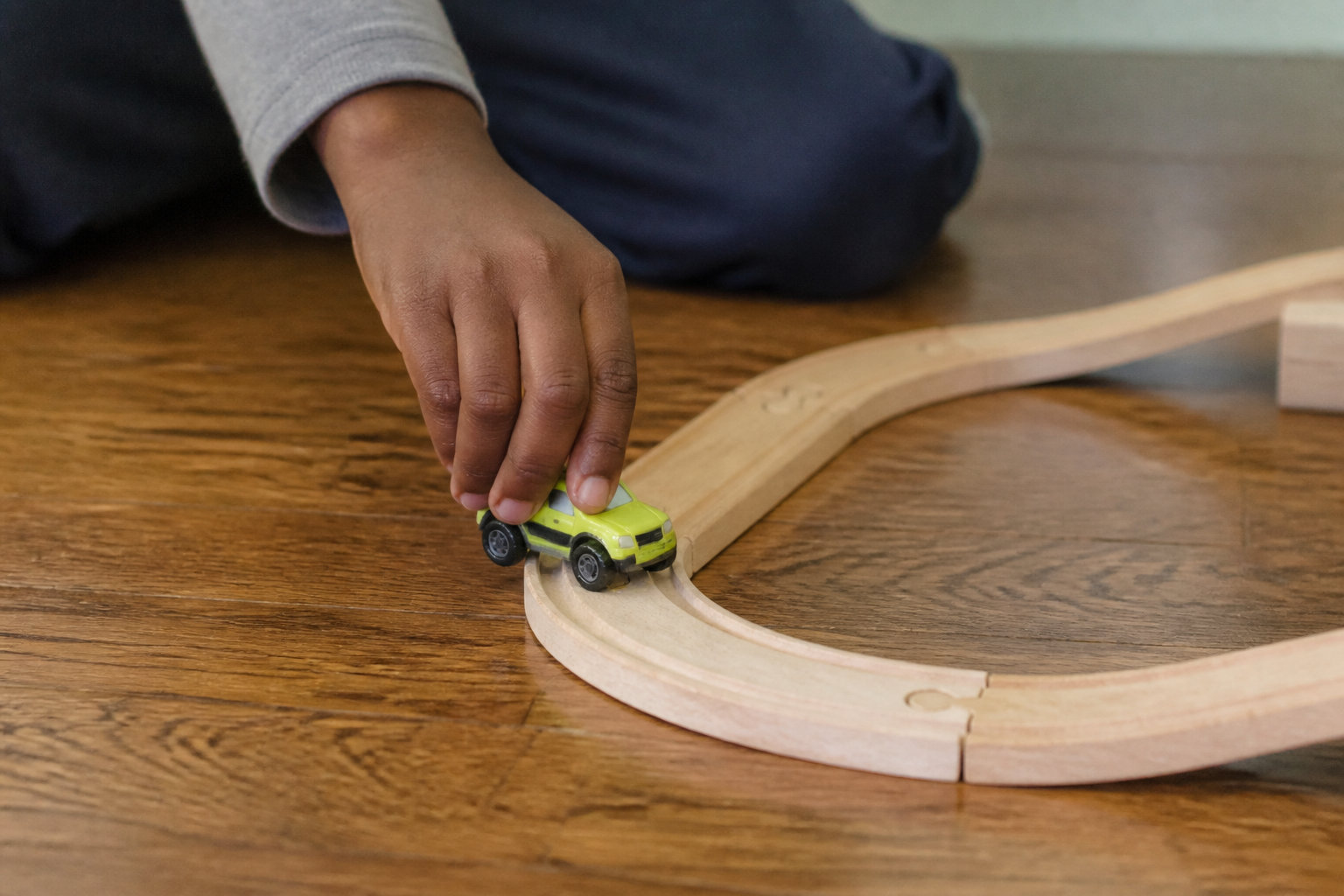
To refine these reflexes, we suggest you integrate this Montessori Car Track into their daily routine. This educational support transforms every race into a lesson in independence and manual mastery.
Wooden Montessori Beehive for sensory awakening
So, to vary the fun, using transfer tools like tongs becomes essential.
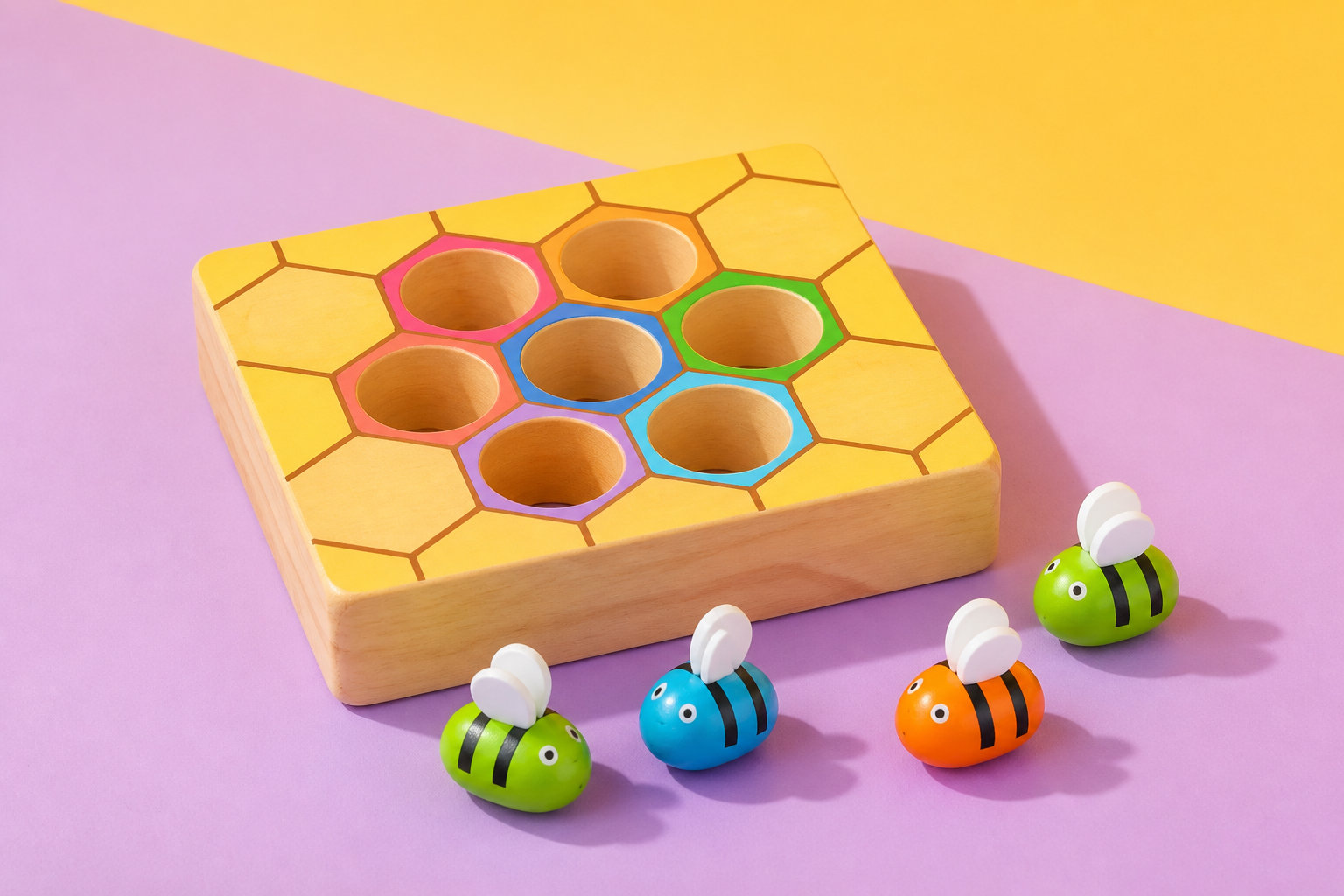
Ask your child to manipulate small colorful bees with ergonomic wooden tongs. This playful activity intensely engages the hand's musculature, preparing the strength necessary for future pen holding. You thus promote remarkable dexterity while capturing their attention.
| Activity | Targeted skill | Equipment |
|---|---|---|
| Color sorting | Visual analysis | Bees and cells |
| Using tongs | Muscular strength | Wooden tongs |
| Placement precision | Hand-eye coordination | Wooden hive |
The educational versatility of the Wooden Montessori Beehive allows you to naturally integrate fine motor activities for 4-year-olds into your daily life. By mastering the transfer gesture, your little one gains independence and confidence during each play session.
Magnetic Montessori Tangram for spatial creativity
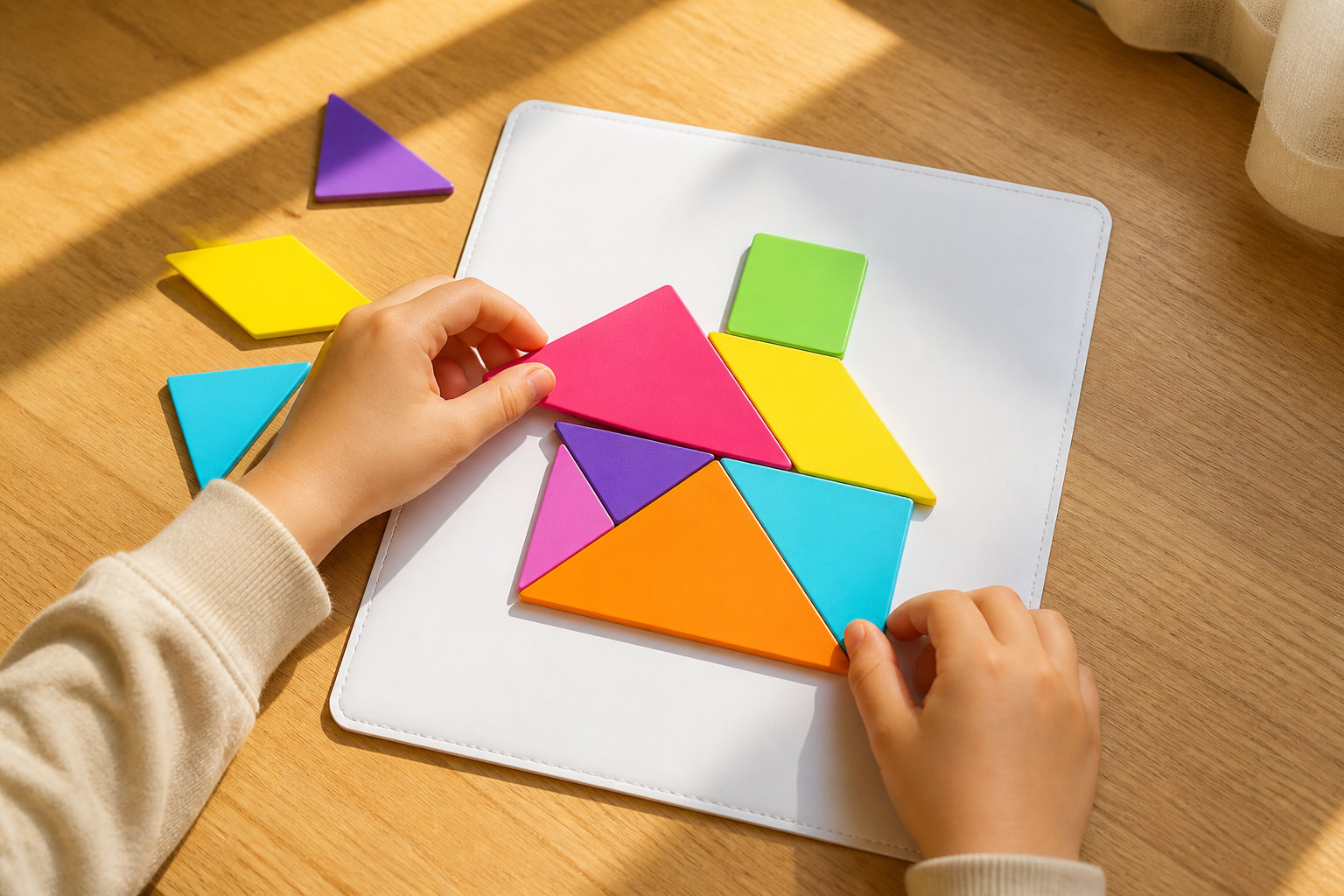
In fact, gesture precision is always accompanied by reflection on the arrangement of pieces. Magnetism helps your child fix their ideas without frustration. They manipulate triangles and squares to create complex silhouettes. This stimulates their geometric vision.
You thus foster their dexterity thanks to the Wooden Magnetic Montessori Tangram. This fun support reinforces hand-eye coordination. It is a valuable ally for fine motor activities for 4-year-olds.
Montessori Tangram for geometric logic
So, beyond pure creation, logic takes over. Breaking down shapes helps your child perceive that two triangles make a square. This mental exercise is inseparable from the millimeter-precise placement of the pieces. You thus stimulate their geometric logic through concrete and precise manipulation.
By practicing these fine motor activities for 4-year-olds, your little one explores fundamental notions:
- Symmetry
- Angles
- Rotation
- Juxtaposition
DIY Construction Toys for muscular strength
But let’s not forget that the hand also needs raw strength to stabilize what it has learned.
Pressing bricks together or snapping rigid elements into place engages the deep muscles of the palm. This muscular power becomes your ally in guaranteeing optimal endurance. It effectively prevents fatigue during future prolonged writing sessions. In this way, your child's fingers gain stability and control.
Squeezing construction pieces forges a strong and precise grip. This physical foundation is the bedrock of all manual academic success. It is a concrete investment in the future.
The grip strength acquired through play is the best defense against future writing difficulties.
How to promote writing and independence?
Ultimately, all these exercises converge toward a single goal: expression through drawing and independence.
Helping the child optimize their pencil grip
The tripod grip is your final objective. Strengthen their fingers with playdough or clothespins. These games effectively reinforce the pencil grip.

To learn more, discover How to stimulate your child's fine motor skills (3-5 years). These resources perfectly support fine motor activities for 4-year-olds.
Identifying warning signs for professional follow-up
Monitor for excessive fatigue or pain. A systematic refusal to draw is a cause for concern. The inability to handle simple scissors also constitutes a clear signal that should not be ignored.
Fatigue, pain, refusal to draw, or difficulty with scissors: stay attentive to these behaviors.
Consult an occupational therapist if you have persistent doubts. Early help resolves the situation quickly. This step ensures peaceful development and smooth progress for your child.
By consolidating trunk stability and finger dexterity through these exercises, you effectively prepare your child for writing. Adopting these fine motor activities for 4-year-olds ensures serene daily independence and optimal postural control. Give them the necessary tools now to turn every movement into a lasting victory.
FAQ
What are the concrete benefits of hand-eye coordination for my child?
Hand-eye coordination, this synergy between vision and movement, is the foundation of daily independence. It allows your child to master fundamental movements like eating alone, buttoning clothes, or tying shoelaces with confidence. Beyond daily life, it is a major lever for academic success, as it conditions the precision of lines during the learning of writing.
By manipulating their environment, your child also develops their geometric logic and problem-solving ability. This skill strengthens their sense of competence and self-confidence, offering them the keys to explore the world efficiently and calmly.
How do fine manipulation skills evolve during childhood?
The development of dexterity is a fascinating progression that refines itself from the very first months. Around age 4, a pivotal stage is reached: your child begins to show a clear hand preference and gains precision in coloring within the lines or cutting out simple shapes. This is the moment when the intrinsic muscles of the hand strengthen to prepare for future alphabetical strokes.
Between 6 and 8 years old, this evolution reaches its peak with the mastery of cursive writing and the combined use of complex tools like a knife and fork. Every stage achieved is a victory for their hand-eye coordination, ensuring total physical ease during sports or artistic activities.
What playful activities should be prioritized to stimulate dexterity at age 4?
To build strength in your little explorer's hands, manipulation games are your best allies. We particularly recommend the use of playdough to strengthen finger power, or stringing beads, which engages the thumb-index grip. Pouring activities and the use of clothespins are also excellent exercises to refine motor control.
Do not hesitate to vary the activities by offering puzzles or construction games that require precise placement. These play moments are not mere entertainment; they constitute a truly indispensable preparatory gymnastics to avoid fatigue during prolonged writing.
Why is posture so important for finger precision?
We often forget it, but digital precision relies above all on the stability of the torso. Without a solid seating position and a toned shoulder girdle, the wrist cannot work freely. Posture is the foundation upon which the hand rests to perform delicate and precise movements.
This is why encouraging gross motor games, such as climbing or obstacle courses, directly impacts fine motor skills. A child who perfectly controls their body and balance will have a better base to stabilize their arm and anticipate their graphic gestures.
How can I effectively support my child with their pencil grip?
To promote an optimal pencil grip, prefer tools that offer slight resistance, such as wax or wooden crayons, rather than felt-tip pens. Triangular-shaped crayons are particularly recommended, as they naturally guide the fingers toward the tripod grip, ensuring superior control of the lines.
It is also beneficial to vary drawing surfaces: coloring on an easel or even lying on the stomach engages the muscles of the shoulder and wrist differently. This playful and multisensory approach transforms technical learning into a moment of fulfillment and shared pleasure.
Which signs should alert me to the need for professional follow-up?
If you observe excessive fatigue during manual activities, persistent pain, or a systematic refusal to draw in your child, it is important to be vigilant. A marked difficulty in using simple scissors or unusual clumsiness in daily gestures can be indicators of a need for specific support.
In these situations, consulting an occupational therapist is a reassuring and constructive step. Early intervention makes it possible to release tension, offer adapted tools, and guarantee your child a fluid and peaceful developmental path.