
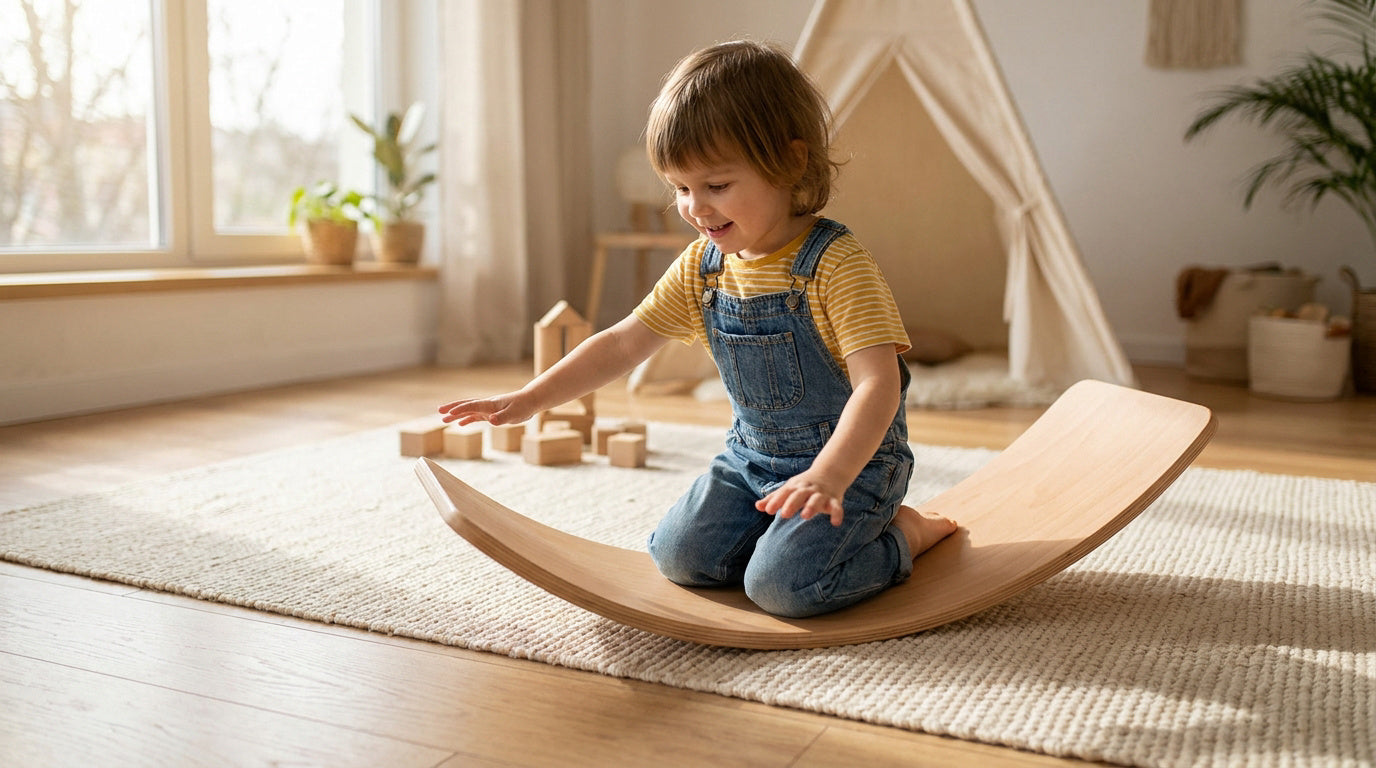
A solid wood curved board can support up to 150 kg while engaging deep stabilizing muscles from the age of 18 months. This versatile tool, inspired by the principles of free movement, radically transforms physical development by turning every movement into an experience of postural self-correction.
However, it is common to see this equipment underutilized or reduced to a simple decorative object in children's bedrooms. Here, we break down expert opinions and playful exercises to harness the full potential of your Montessori balance board to sustainably strengthen the coordination and confidence of your little explorers.
- Why the Montessori balance board transforms motor development
- Montessori balance game: stimulating imagination through movement
- Montessori wooden board: learning numbers through touch
- How to practice fun exercises safely?
Why the Montessori balance board transforms motor development
The FSC-certified wooden balance board supports up to 150 kg and stimulates proprioception from 18 months. This equipment promotes the strengthening of stabilizing muscles through free movement and postural self-correction, thus durably anchoring autonomy.
The transition from a fixed support to this moving structure marks a major milestone in motor development.
The link between active pedagogy and free movement
The child explores their physical limits without assistance. The equipment becomes a tool for pure experimentation. The adult remains a simple, supportive observer.

Successfully completing a complex movement on a Montessori balance board: reviews and fun exercises strengthens self-esteem. Physical mastery precedes confidence.
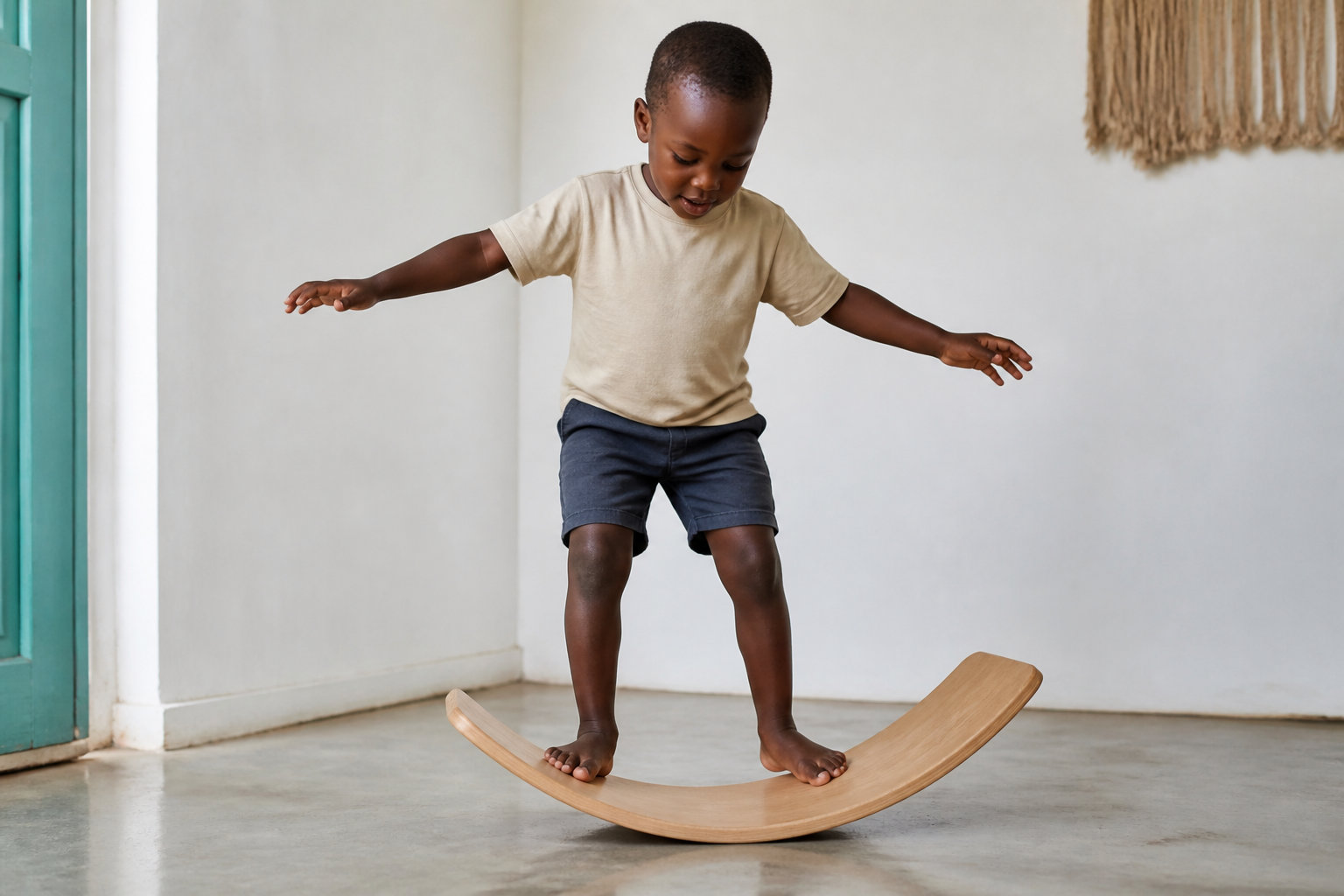
There is no forced instruction manual for the object. The child decides on its use alone. This develops confidence in their motor skills.
Physiological benefits for posture and coordination
Balancing intensely engages the abdominal core. Deep muscles work to maintain the center of gravity. It is a complete exercise.
Proprioception is the sixth sense that allows the child to perceive the position of their body in space with precision.
Eye-foot coordination is refined with every session. The child learns to adjust their balance instinctively and fluidly.
Montessori balance game: stimulating imagination through movement
Beyond simple motor development, this wooden object transforms according to your children's creative desires.
A versatile support for overflowing creativity
The board becomes, in turn, a bridge or a slide. It can also serve as a cradle for dolls. The possibilities are endless and surprising.
- Bridge for cars
- Miniature slide
- Reading seat
- Tunnel to crawl through
- Shop counter
Discover this Montessori balance game for your little ones. This minimalist toy avoids unnecessary clutter in bedrooms. Your child gains real autonomy.
Manufacturing quality and sustainability of natural wood
Solid wood ensures rugged durability. It withstands jumping and rough play. It is an investment for several generations.
Check out the best wooden toys for early childhood. The natural grain adds a warm touch. The raw look reassures parents.
The clean aesthetic fits perfectly into any interior. Wood remains a noble, healthy, and sustainable material. You are making an ecological choice.
Montessori wooden board: learning numbers through touch
While movement is essential, manipulating structured objects also allows for engaging with abstract concepts such as mathematics.
A sensory approach to fundamental mathematics
Touching raised numbers helps memorize their shape. The child associates the quantity with the physical symbol. Additions become concrete and visual.
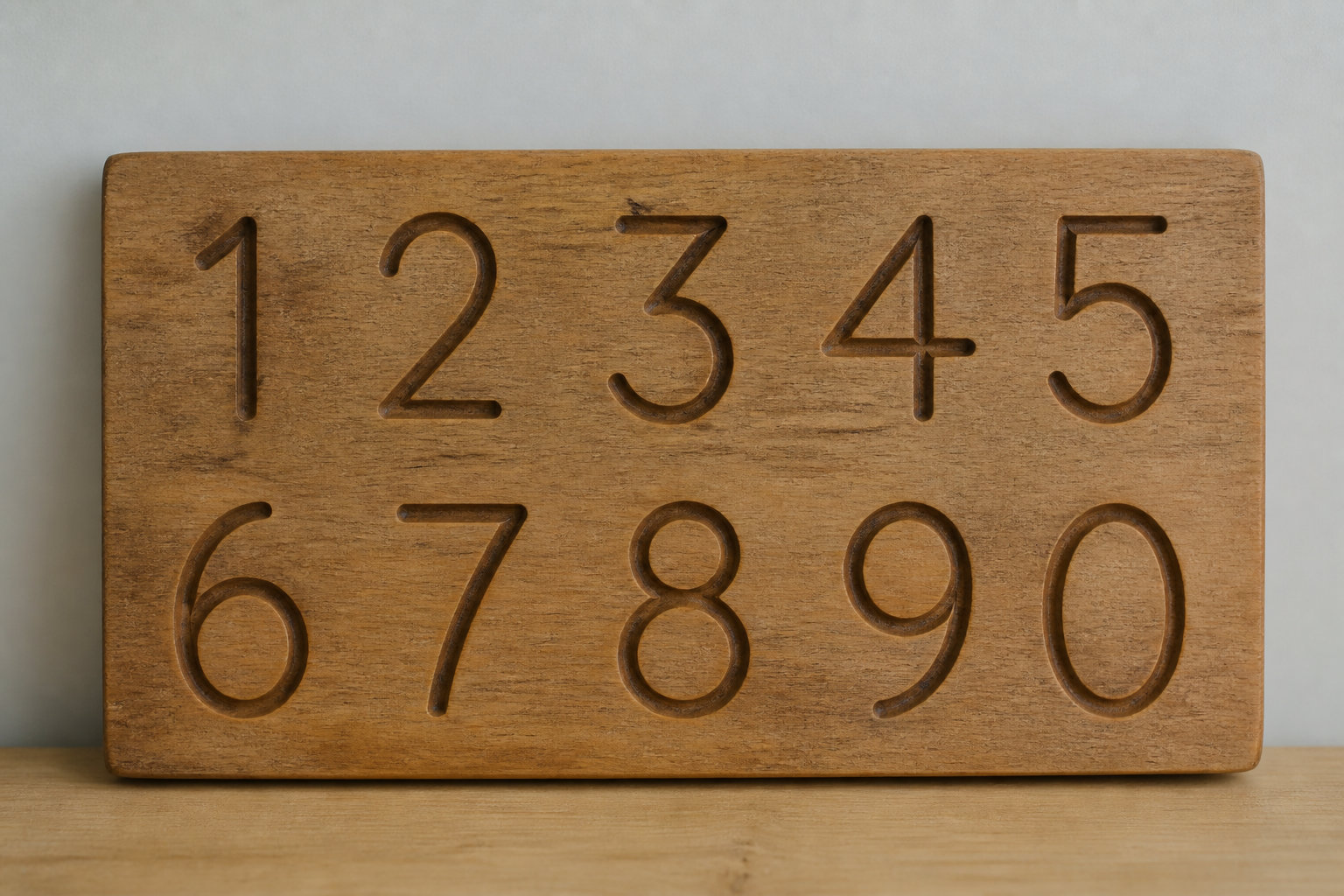
Using a Montessori wooden board turns calculation into a game. You can also introduce the Montessori monkey balance game for added fun.

The hand is the instrument of intelligence. Manipulating wooden pieces encourages concentration. Learning occurs through direct experience.
Safety and manufacturing standards for the youngest
The EN71 standard guarantees the absence of toxic substances. The wood must be smooth and free of splinters. Safety is your absolute priority.
| Criteria | Standard / Advice | Importance |
|---|---|---|
| FSC Certification | Responsible management | Eco-responsibility |
| EN71 Standard | Toy safety | Toxin-free |
| Oiled finish | Natural protection | Child health |
| Max weight supported | Load limit | Structural stability |
A damp cloth is sufficient for daily maintenance. Avoid harsh chemicals on natural wood.
How to practice fun exercises safely?
To get the most out of your equipment, here are some concrete ideas for supporting your child's development.
Progressive activity guide based on the child's age
The little ones enjoy sitting and rocking. This gently stimulates their inner ear. It is a reassuring approach.
Older children try balancing while standing on this Montessori sensory balance board. They thereby strengthen their overall stability.
Pair the board with a climbing triangle. This creates a real motor skills course at home.

Criteria for choosing between raw wood and felt covering
Felt protects your floors from scratches. It reduces impact noise. It is ideal for apartments.
Raw wood offers a perfect glide. It is easy to clean. Choose according to your type of flooring.
Always check the maximum authorized load. Use the board on a flat, non-slip surface.
- Flat and non-slip surface.
- Stable support at the beginning.
- Barefoot practice recommended.
- Slow and controlled rocking.
By investing in a Montessori balance board, you are providing your child with a durable tool that enhances their proprioception and boundless creativity. Adopt a routine of regular rocking on a non-slip surface now to anchor their postural stability. Transform every movement into a brilliant victory for their motor autonomy.
FAQ
From what age can my child use a Montessori balance board?
Introduction to free movement on this equipment is generally recommended from 18 months, when the child begins to stabilize their walking. However, some models adapted for the youngest allow for an initial sensory approach from 12 months, always under your caring supervision.
Thanks to its robustness and evolutionary design, the board supports your child's growth until about age 10. It even supports the weight of adults, making it a durable accessory for your own yoga or relaxation sessions.
What are the concrete benefits for my child's motor development?
Regular use intensely engages proprioception, allowing your child to better perceive their body's position in space. This balance work strengthens the deep muscles of the core and legs, while instinctively refining overall coordination.
Beyond the physical aspect, this equipment fosters sustained concentration and better stress management. By mastering their rocking movements, the child gains confidence and develops valuable autonomy that reinforces their self-esteem on a daily basis.
How to ensure safe use during exercises at home?
To start with peace of mind, place the board on a flat, non-slip surface. We advise placing your child near a stable support for their first attempts and favoring barefoot practice to ensure optimal grip and better sensory feedback.
Be sure to respect your child's fatigue limits and avoid excessive tension. A correct posture, with knees slightly bent and weight well-centered, is the key to fully enjoying the benefits of the exercise without risk of falling or overexertion.
Is it better to choose a raw wood board or one with a felt covering?
The choice mainly depends on your indoor environment. A felt covering is ideal if you live in an apartment, as it significantly reduces impact noise and protects your floors from scratches. It also offers an additional non-slip surface for increased safety.
Conversely, raw wood is appealing for its minimalist aesthetic and ease of maintenance, a simple damp cloth being sufficient for cleaning. It also offers a perfect glide to transform the board into a miniature slide, thus stimulating the overflowing creativity of your little explorers.
How does this equipment stimulate children's imagination?
The strength of the Montessori board lies in its lack of an imposed manual. This minimalist toy transforms according to their whims: it becomes, in turn, a bridge for cars, a mysterious tunnel, a cradle for dolls, or even an improvised store counter.
This versatility encourages free play and avoids unnecessary clutter in the room. By repurposing the object from its primary function of balancing, your child develops their cognitive abilities and creativity, transforming every movement session into a unique imaginary adventure.