
Awakening & Materials
Sensory awakening: Why wooden toys are essential for development
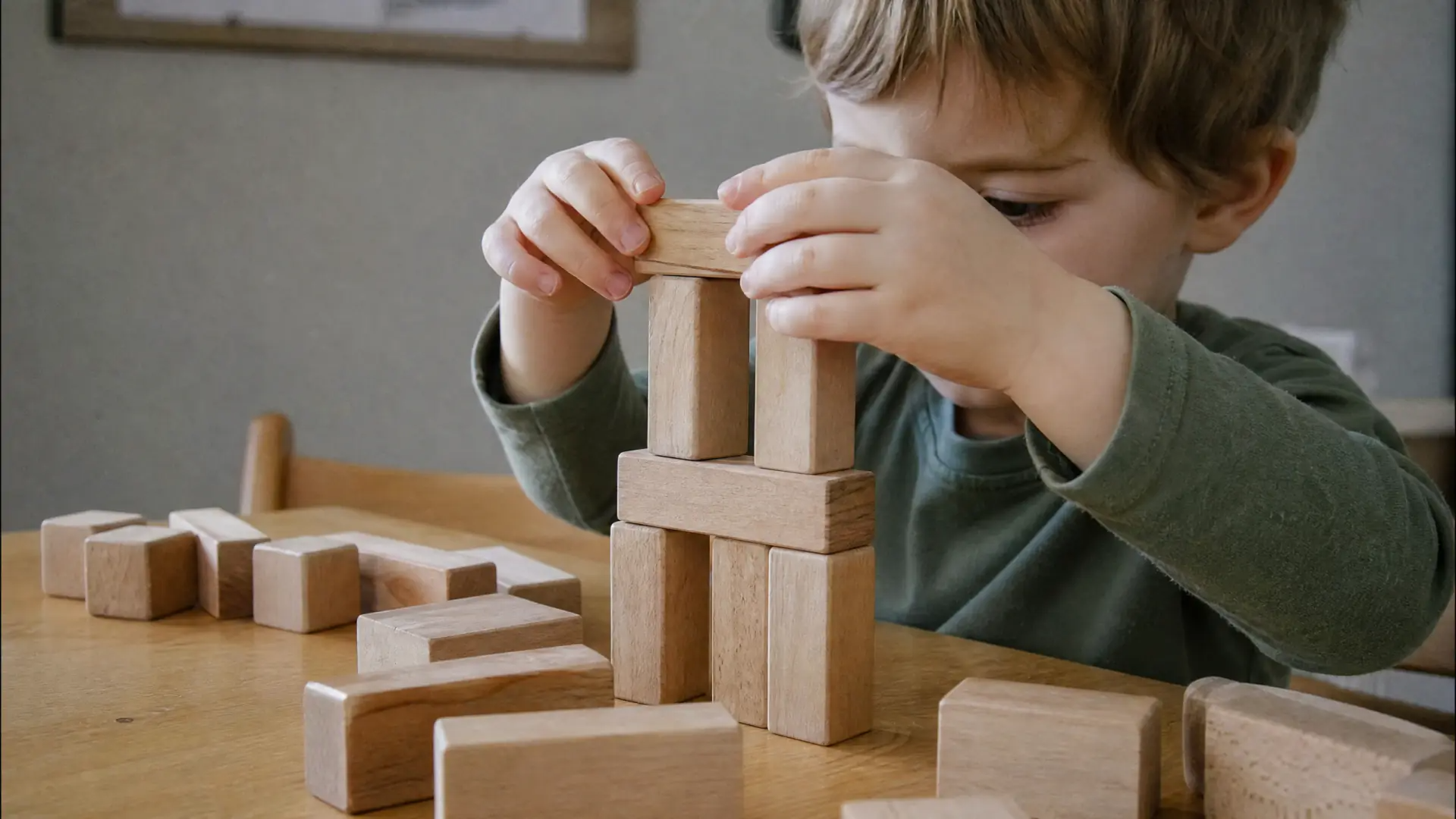
In a world saturated with screens and noisy plastic toys, returning to natural materials is much more than a simple aesthetic trend. For Maria Montessori, materials are the "food of the mind." Wood, through its texture, weight, and warmth, offers a unique sensory experience that supports a child's cognitive development.
1. Unparalleled sensory richness
Unlike plastic, which always has the same temperature and a smooth, uniform texture, wood is alive. It is sometimes rough, sometimes smooth, and always warm to the touch. This variety of sensations helps the child refine their tactile sense. Touching Montessori wooden toys allows the child to connect with the real world in an authentic way.
The weight of wood is crucial information for a child's brain. By manipulating wooden objects, they naturally learn the laws of gravity and balance—fundamental concepts that overly light plastic toys struggle to convey.
2. Durability and respect for the child
A wooden toy does not break easily. If it wears down, it develops a patina, telling a story. This durability teaches the child to respect objects. This is the case with our complex play structures, which stand the test of time without losing their beauty.
To provide your child with tools that respect their thirst for discovery and the nobility of natural materials, explore our dedicated selection.
Discover the 3-5 Year Collection →3. Fostering concentration and calm
Wooden toys are generally understated. No flashing lights or aggressive electronic sounds. This simplicity is intentional: it allows the child to concentrate on their own actions rather than being a mere passive spectator of a technological spectacle.
As we saw in our guide on games for 3-year-olds, a decluttered environment with a few beautiful wooden objects fosters a state of calm and serenity conducive to deep learning.
4. An investment for the future
Choosing wood also means making an ecological and sustainable choice. It means offering the child tools that will accompany them for a long time, from their first sensory discoveries to the learning of more complex concepts, as we discussed for learning how to tell time.
FAQ: Your questions about wooden toys
A simple damp cloth is usually enough. For raw wood, a drop of vegetable oil from time to time helps maintain its luster and natural protection.
On the contrary, weight is educational information. The child adapts their strength and movements according to the object's resistance, which refines their gross and fine motor skills.