
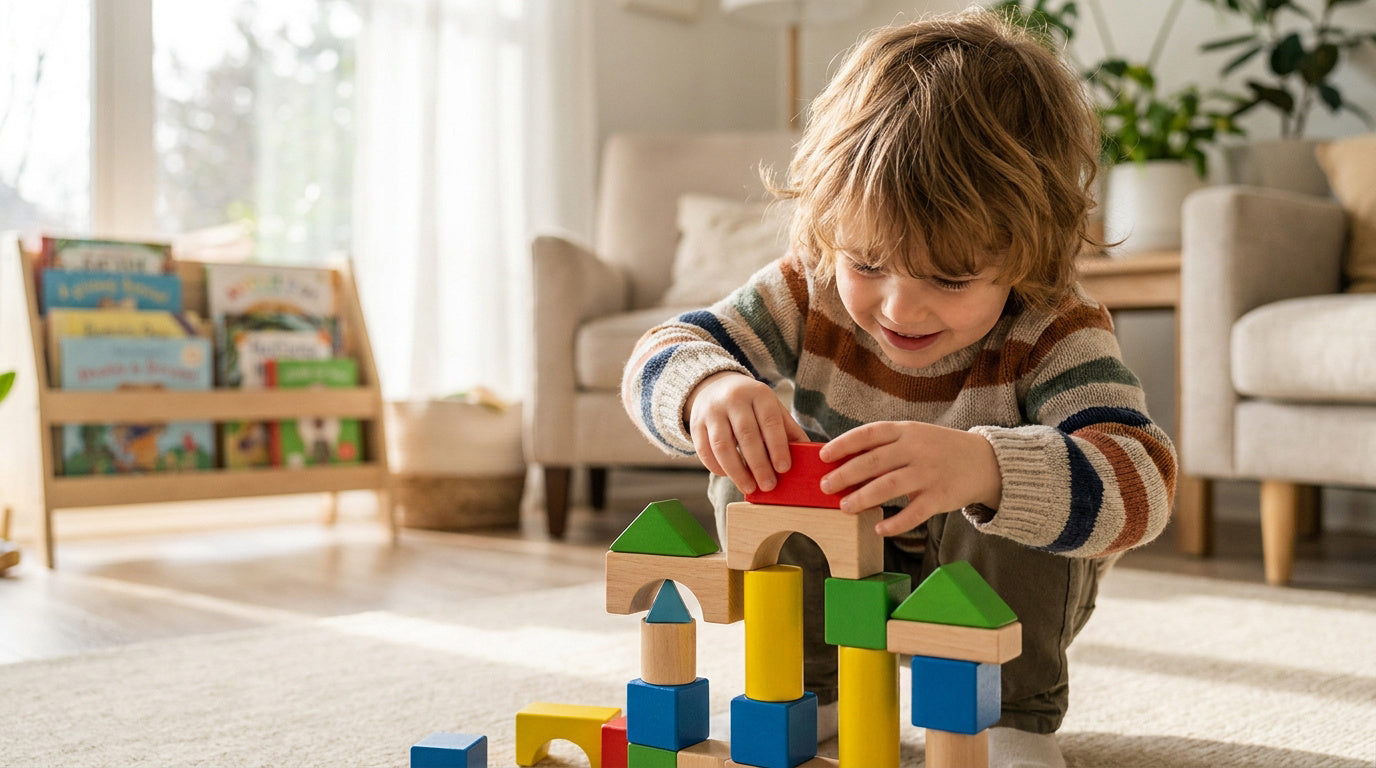

Wooden toys represent a durable market whose robustness ensures they can be passed down through generations without deteriorating. These natural materials serve as a major lever for refining your children's fine motor skills and hand-eye coordination from an early age. However, in the face of an increasing number of screens, it is becoming difficult to maintain their attention on tangible and structured activities.
Using wooden building blocks allows you to turn this challenge into a unique opportunity for cognitive and sensory awakening. Here, we analyze how these educational tools stimulate the spatial logic and creativity of your little builders.
- The major benefits of wooden building blocks for early development
- Montessori magnetic building block: stimulating ingenuity
- Minecraft-style magnetic building block: building in three dimensions
- Montessori DIY construction game: psychomotricity and creation
- Montessori balancing game: unleashing imagination through challenge
- Wooden Montessori magnetic tangram: mastering shapes and colors
- Montessori tangram: developing intelligence and coordination
- Inset puzzle: a grip adapted for the youngest children
- Montessori bolt and screwdriver game: precision and motor skills
- Montessori wooden board: learning the basics of mathematics
- Wooden Montessori beehive: captivating chromatic learning
- Montessori wooden memory game: strengthening intellectual faculties
- Montessori car circuit: concentration and space management
- Practical guide for your purchases and the longevity of wood
The major benefits of wooden building blocks for early development
Wooden blocks stimulate fine motor skills and spatial logic from 12 months. Their natural textures outperform plastic, fostering increased concentration and precise hand-eye coordination during daily play.
These objects have a lasting influence on your children's physical and cognitive abilities.
Refining fine motor skills and the senses
Grabbing and stacking the pieces refines finger precision. Coordination between the eyes and the hands becomes fluid. It is a fundamental physical exercise.
Wood offers a unique warmth and roughness to the touch. These organic sensations awaken the senses far more than synthetic materials.
These actions prepare for complex mental structuring.
Developing logic and imagination
Free play forces the child to solve balance problems. They must anticipate the falling of structures. This forges structured logical thinking from a very young age.
Creating imaginary worlds develops creativity without limits. These spatial foundations effectively prepare children for the future geometric concepts addressed at school.
Montessori magnetic building block: stimulating ingenuity
After exploring the benefits of classic blocks, let's discover how magnetism transforms the building experience.

These magnetic modules allow for assemblies that would be impossible with gravity alone. Your child understands invisible forces while having fun. It is a perfect introduction to modern and playful physics via the Montessori magnetic building block.

Structures gain height and stability. Ingenuity is called upon with every new magnetic connection.
Minecraft-style magnetic building block: building in three dimensions
For fans of virtual worlds, the transition to physical play becomes concrete thanks to magnetic cubes.
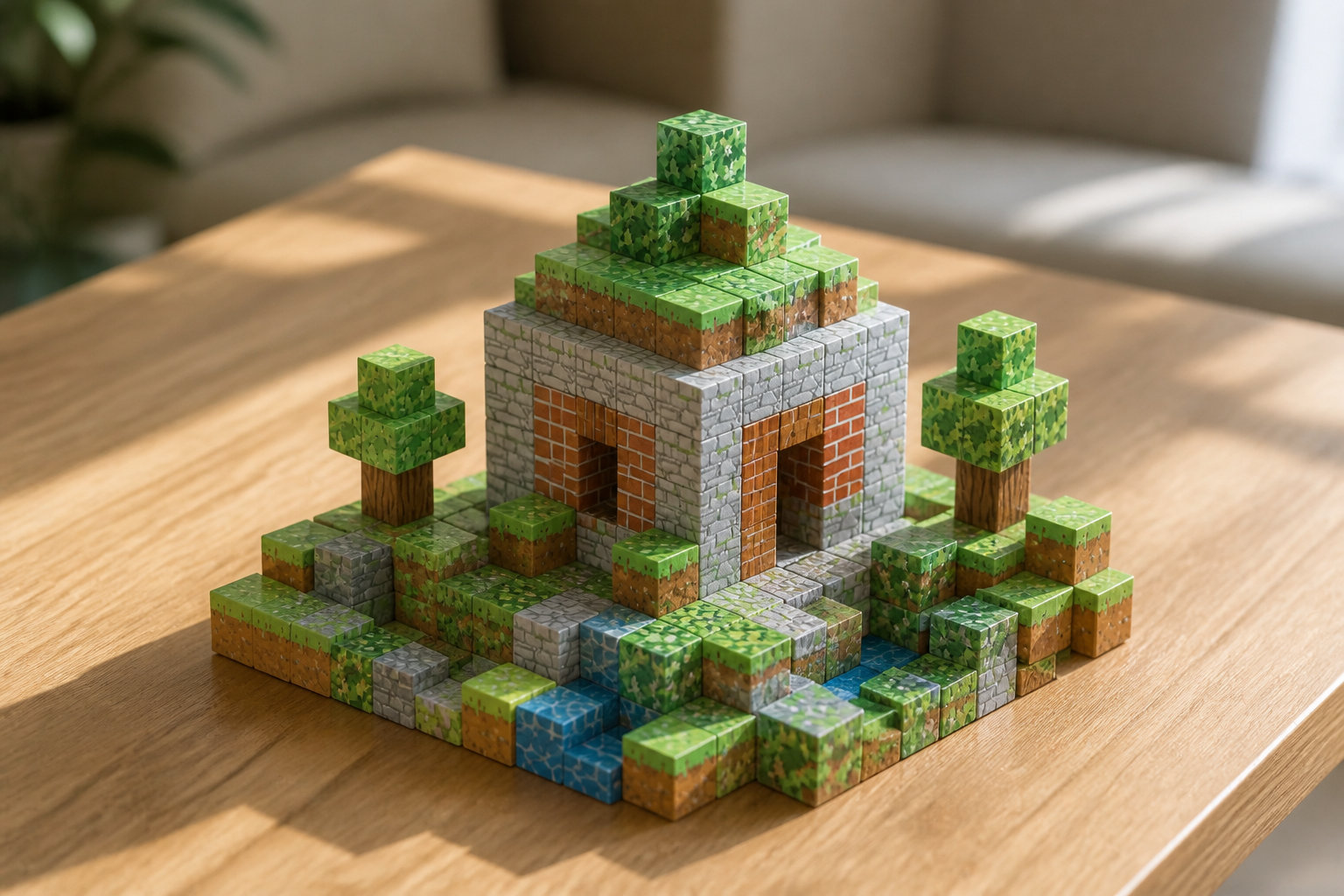
The cubic aesthetic recalls children's favorite video games. They reproduce their digital universes in the real world with enthusiasm.

3D manipulation reinforces the perception of depth. Each Minecraft-style magnetic building block adjusts perfectly to create tangible and solid pixelated landscapes.
Montessori DIY construction game: psychomotricity and creation
Beyond stacking, mechanical assembly offers an additional technical challenge for little artisans.
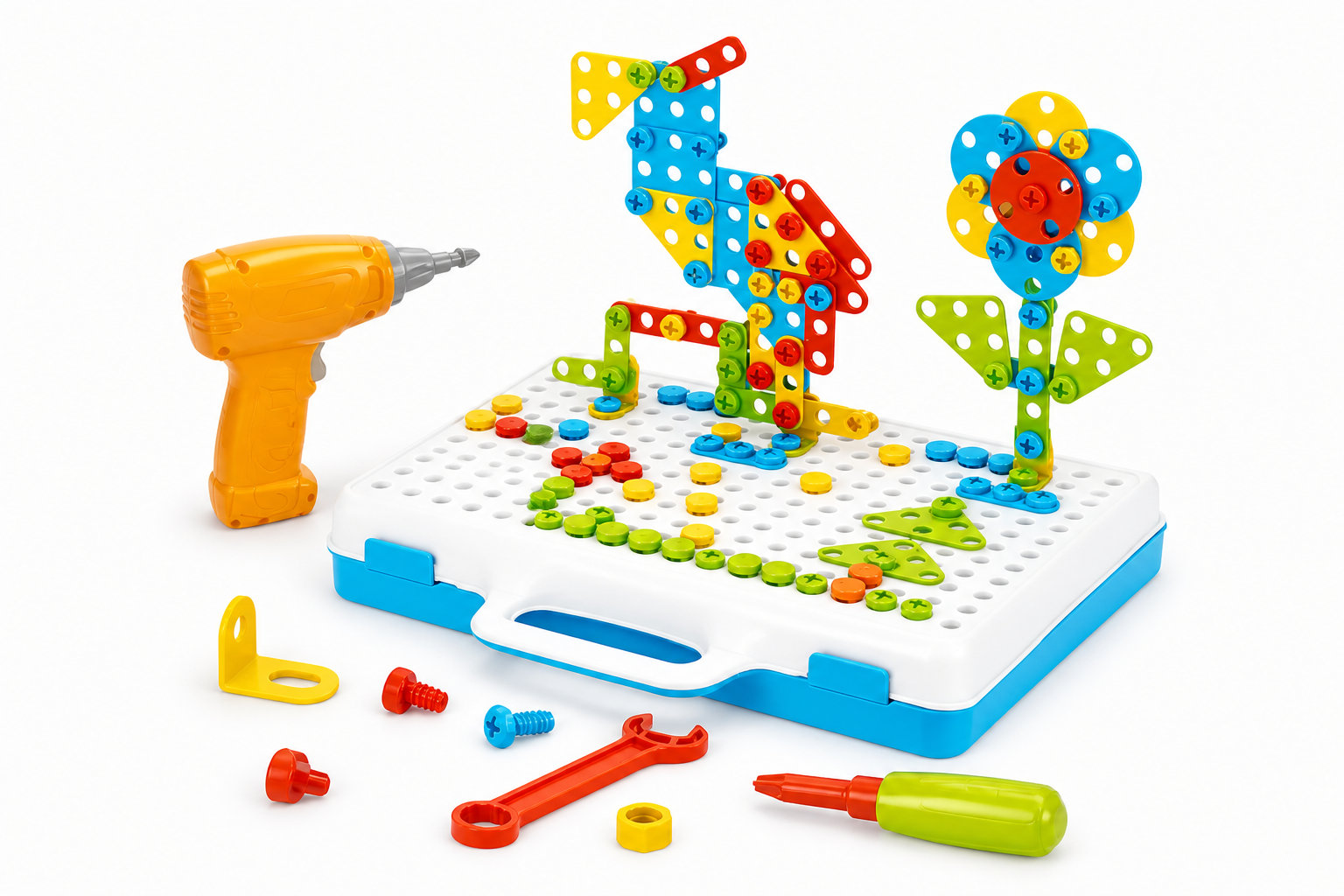
Screwing and bolting requires extreme concentration and precise movements. This Montessori DIY construction game turns your child into a real little engineer. They learn to use tools safely.

Encourage your child to name the tools (screw, bolt) to enrich their vocabulary while they practice the mechanical movement.
Psychomotricity is pushed to its maximum here. Creation becomes technical and rewarding.
Montessori balancing game: unleashing imagination through challenge
While technique is essential, mastering gravity remains the ultimate challenge for a builder.
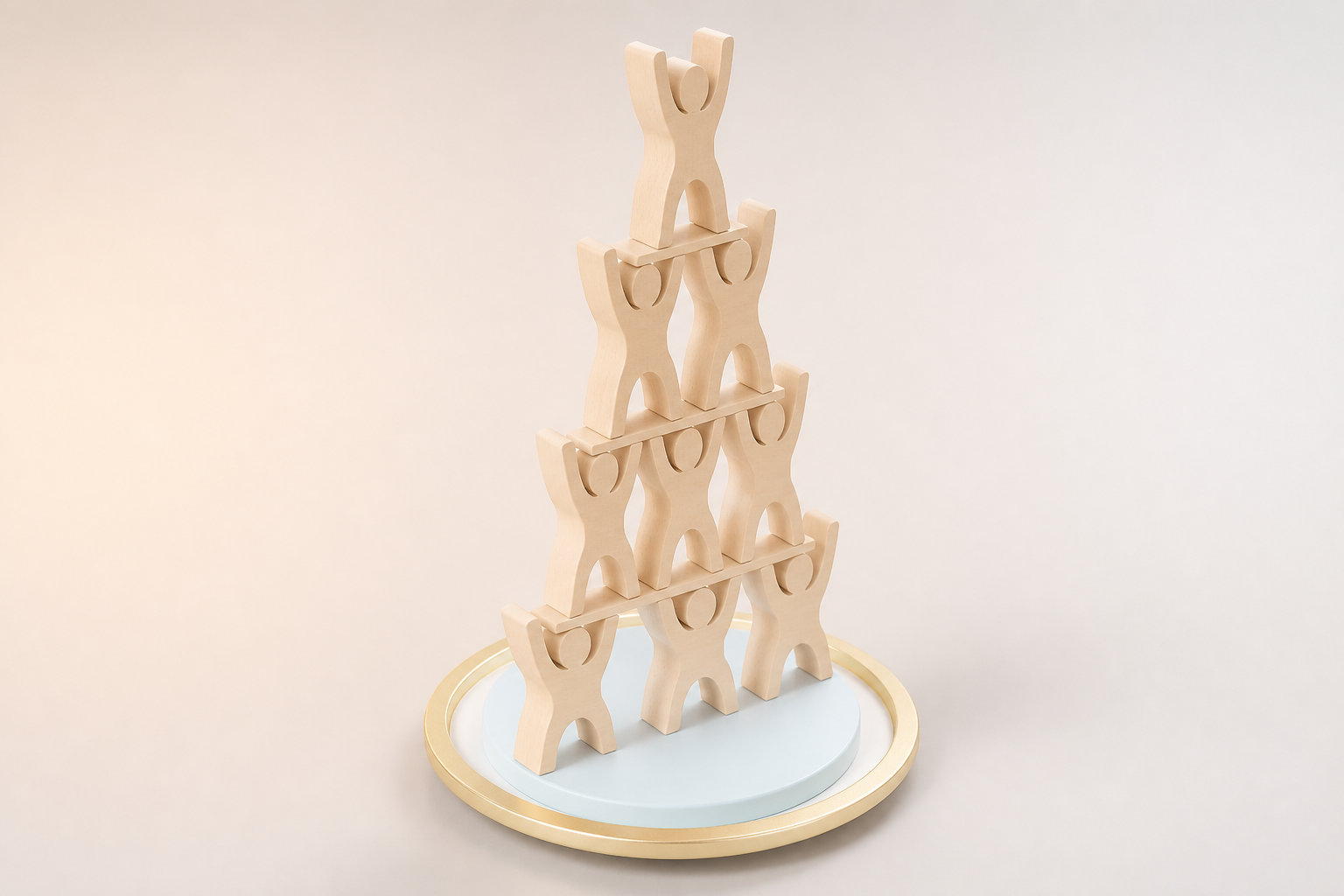
Placing the final piece without knocking everything over requires real composure. This Montessori balancing game tests the patience and emotional stability of the youngest players.

Irregular shapes force the player to rethink every movement. Why offer wooden building blocks to your child? Imagination is activated to find entirely novel support solutions.
Wooden Montessori magnetic tangram: mastering shapes and colors
Balance is also achieved on a geometric level with revisited ancestral puzzles.
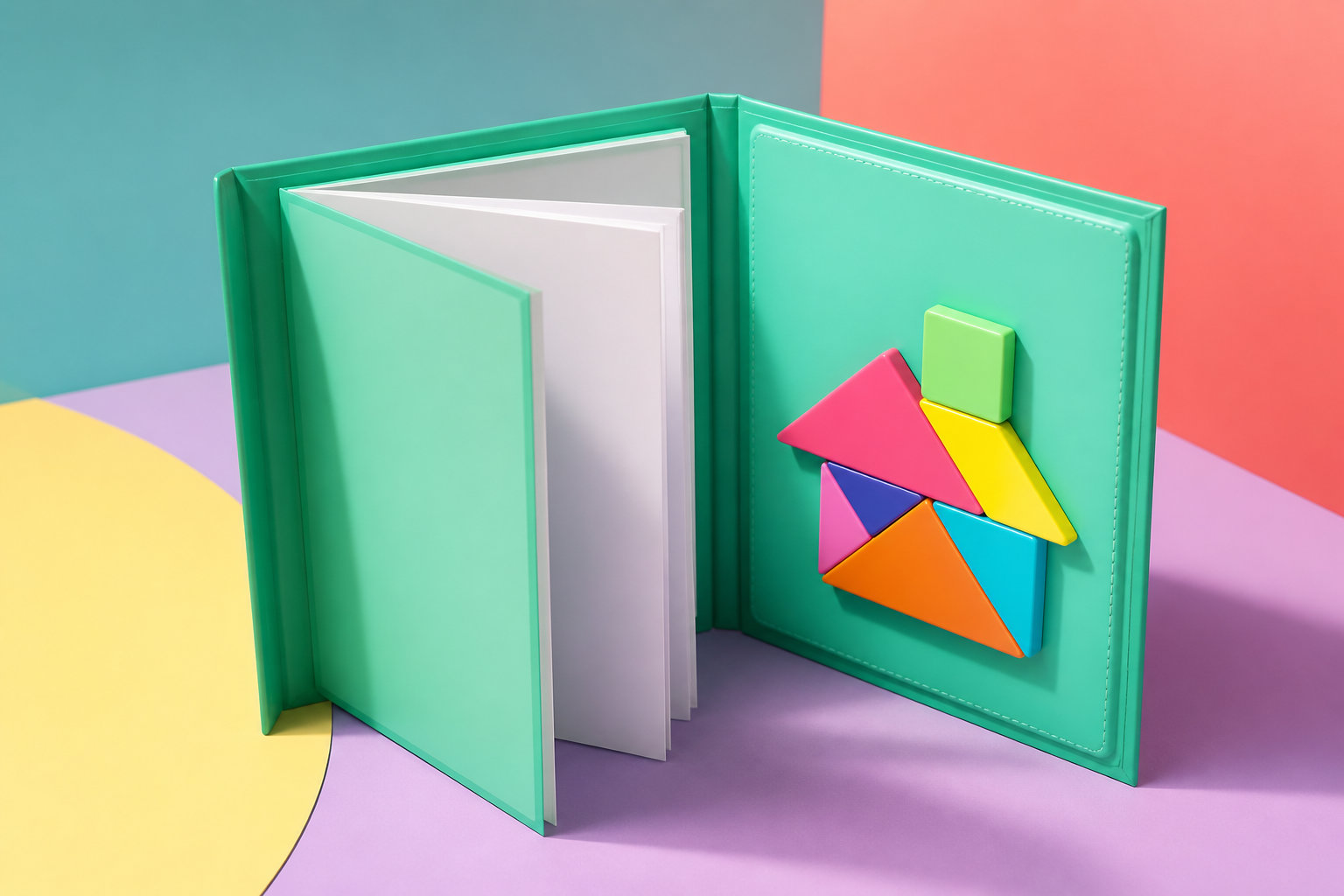
Seven simple shapes are enough to create thousands of different silhouettes. Your child gets comfortable with plane geometry by manipulating triangles and squares. Colors make visual identification easier.

The base of this wooden Montessori magnetic tangram prevents the frustration of sliding pieces. Learning thus becomes fluid.
Montessori tangram: developing intelligence and coordination
The classic version of the puzzle focuses on pure reflection and precise placement.
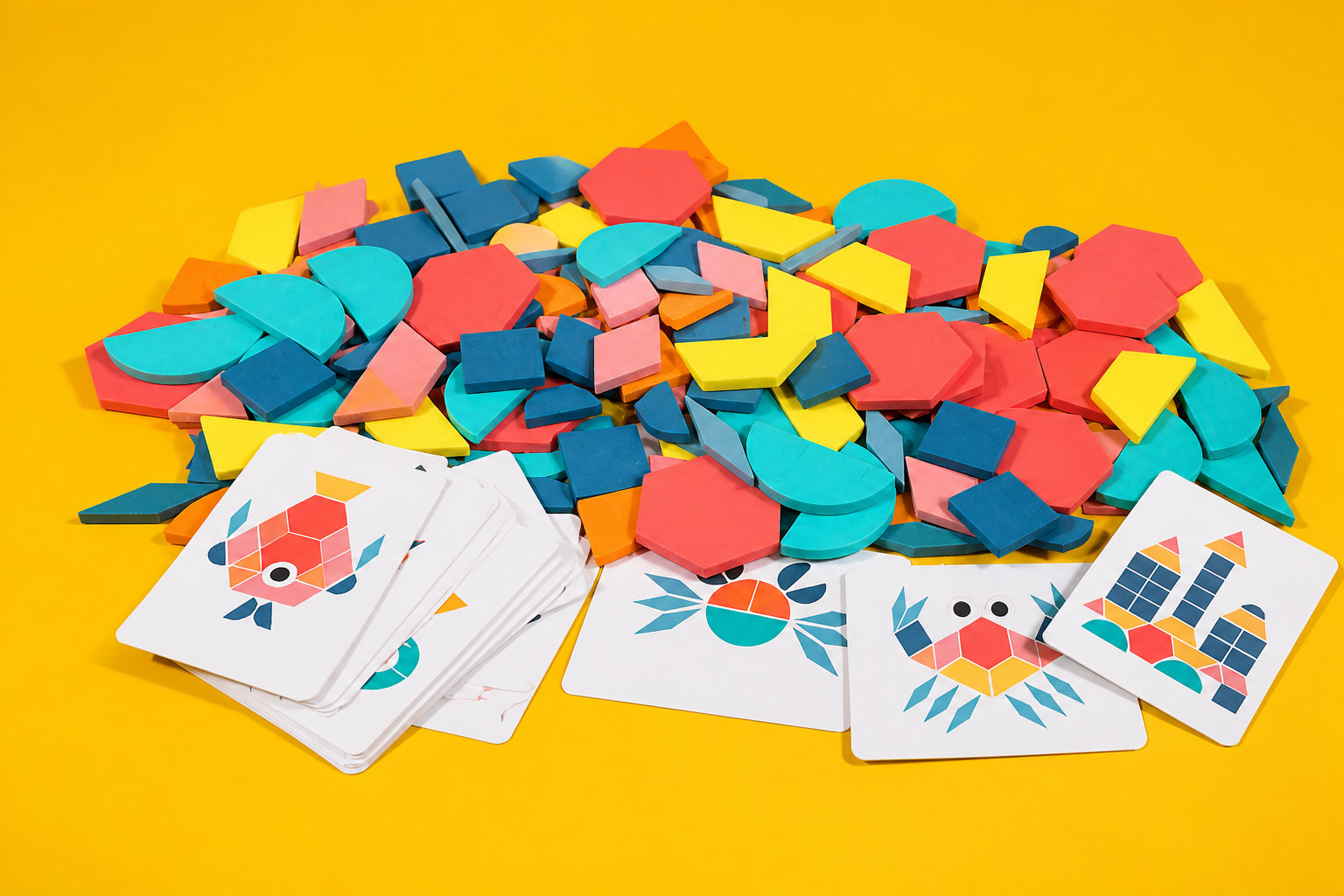
Solving these visual puzzles stimulates the cognitive areas related to logic. Your child must mentally rotate the shapes before placing them.

Hand-eye coordination is refined during the millimeter adjustment of the pieces. It is an excellent exercise for intellectual patience.
Inlay puzzle: a grip adapted for the little ones
For still-hesitant hands, inlay models offer a rewarding first victory.
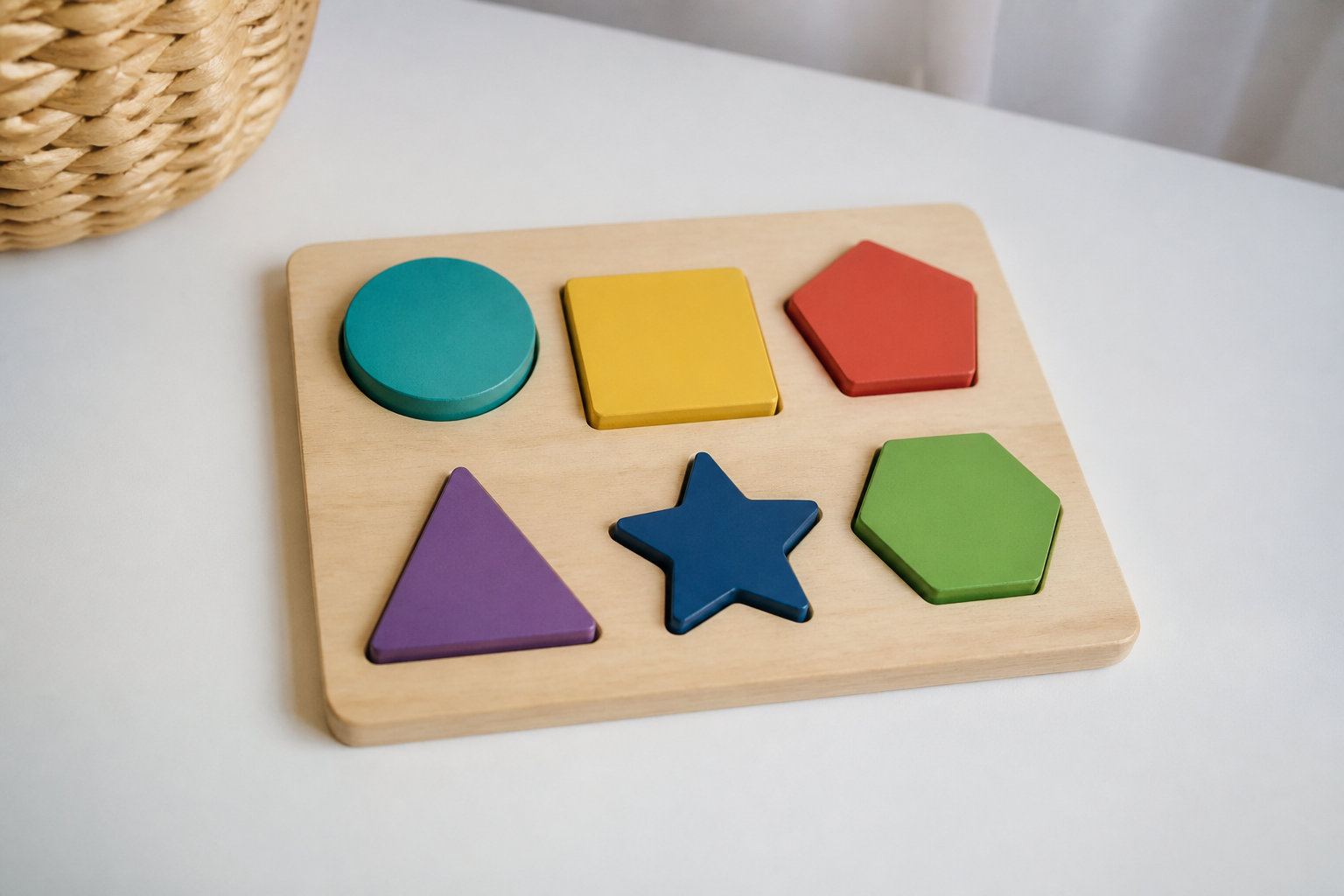
Large knobs make grasping easy for your babies. They learn to recognize familiar silhouettes like animals. Each successful inlay lastingly boosts their self-confidence.

It is the ideal gateway to logic games. Handling is simplified.
Montessori bolt and screwdriver game: precision and motor skills
As they grow, the child seeks to imitate the precise gestures of adult daily life.
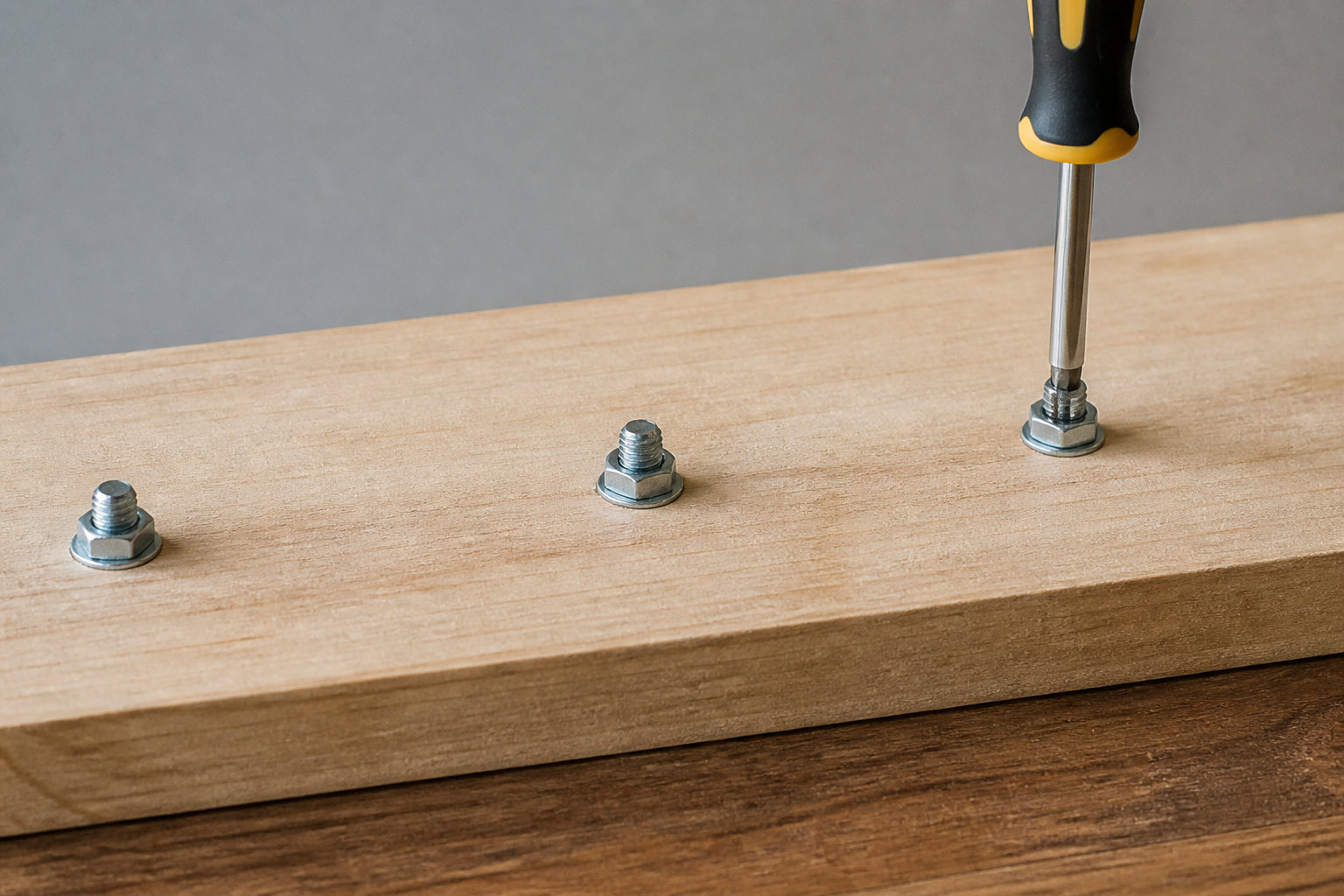
Screwing requires a complex rotational movement of the wrist. This exercise directly prepares the hand for holding a pen.

The precision required calms restlessness and fosters a state of deep concentration. The child focuses on perfectly aligning the thread and the tool.
Montessori wooden board: introducing the basics of mathematics
Motor skills also serve as a support for understanding numbers and quantities.
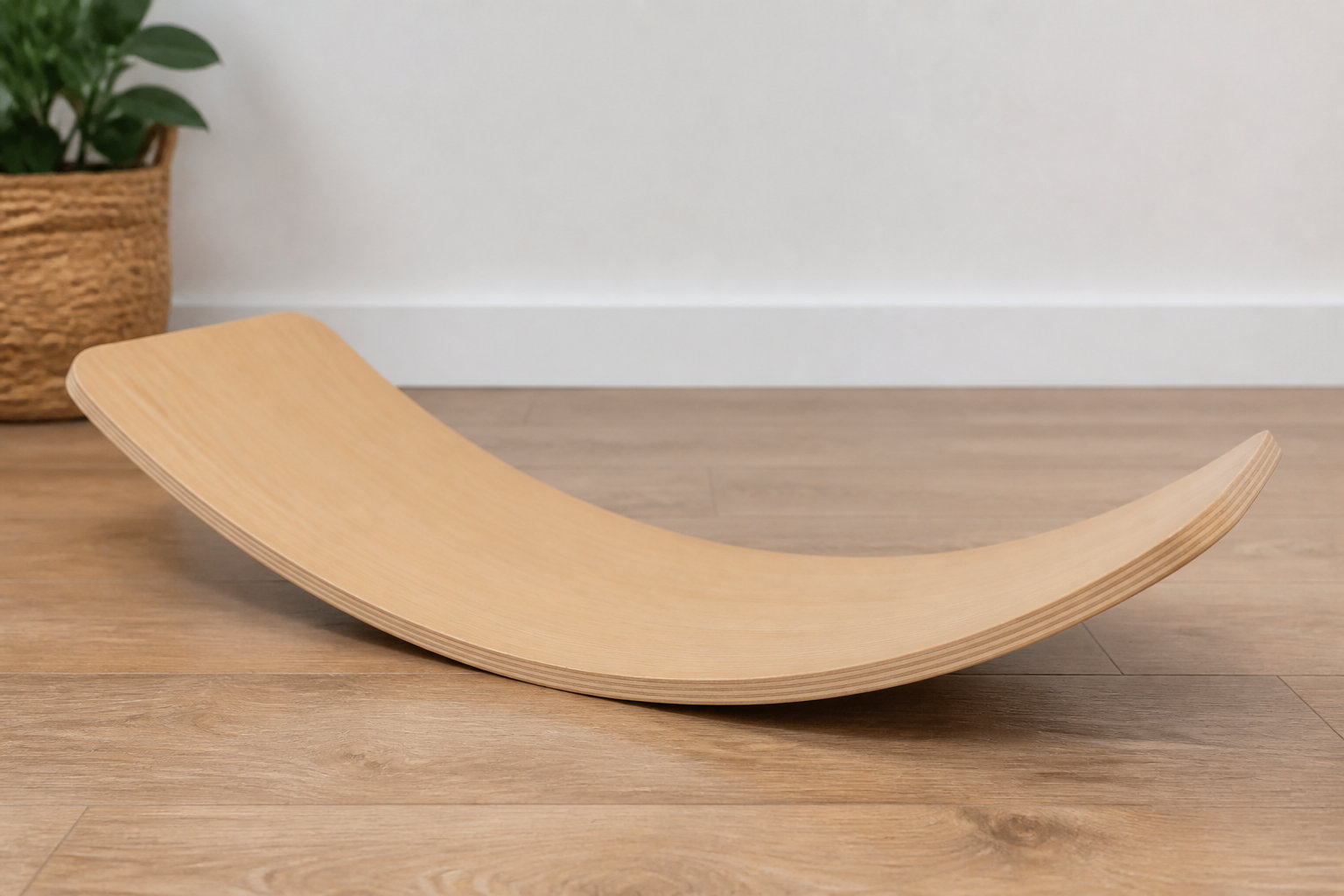
Counting rings or placing numbers on a Montessori wooden board makes mathematics concrete. Your child physically visualizes what a unit or a ten represents. Abstraction then becomes child's play.

Geometric shapes complete this comprehensive mathematical awakening. The wood makes this exercise sensory-based and facilitates the understanding of volumes.
Wooden Montessori beehive: a captivating chromatic learning experience
Sorting and classifying are pillars of logical thinking that can be found in colorful games.
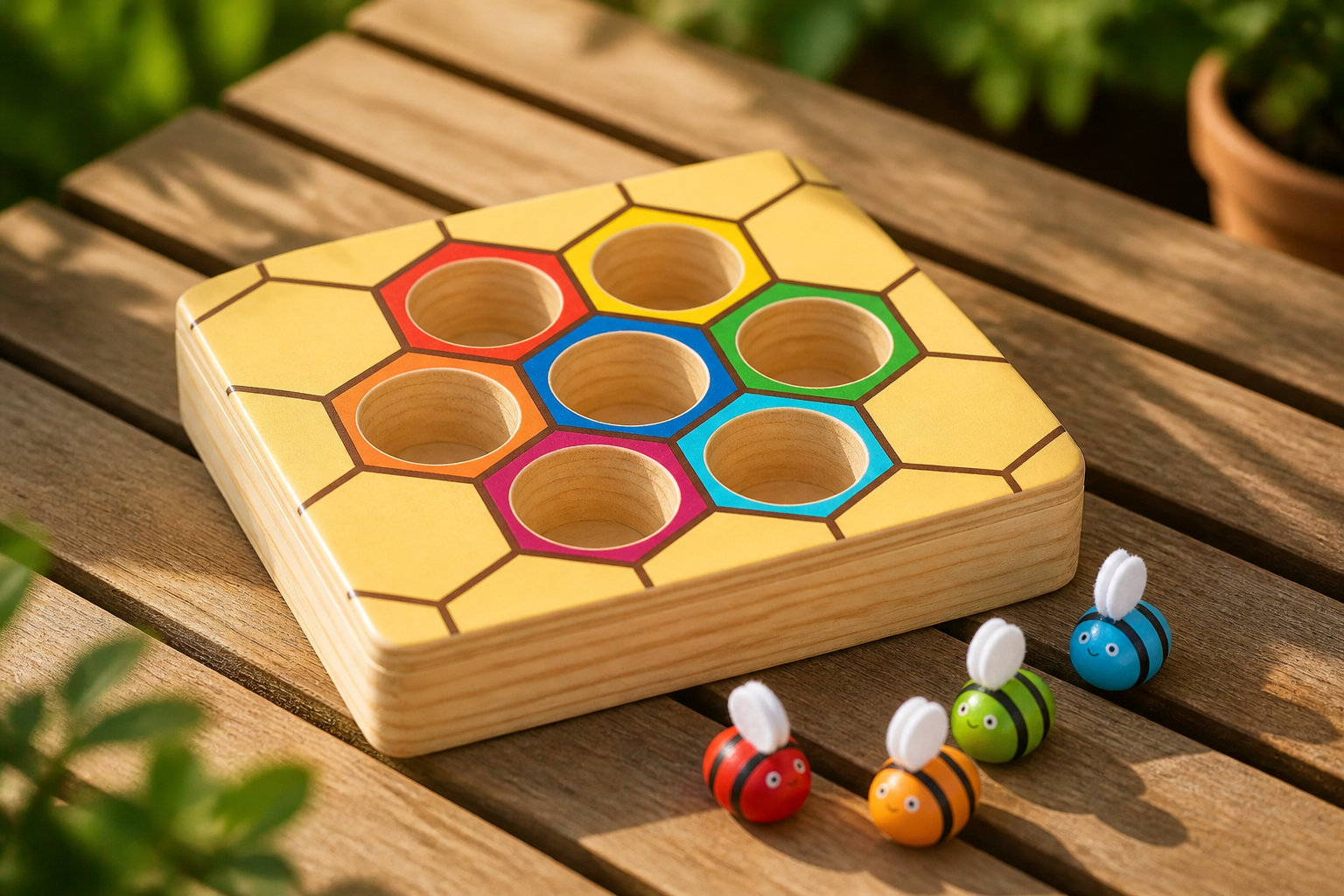
Using tweezers to move colorful bees builds finger strength. The child matches each insect to its corresponding honeycomb by color.

This game develops visual discrimination and patience. The precision of the gesture is rewarded here by an organized wooden Montessori beehive.
Wooden Montessori memory game: strengthening intellectual faculties
Physical manipulation also helps to structure memory and visual attention.
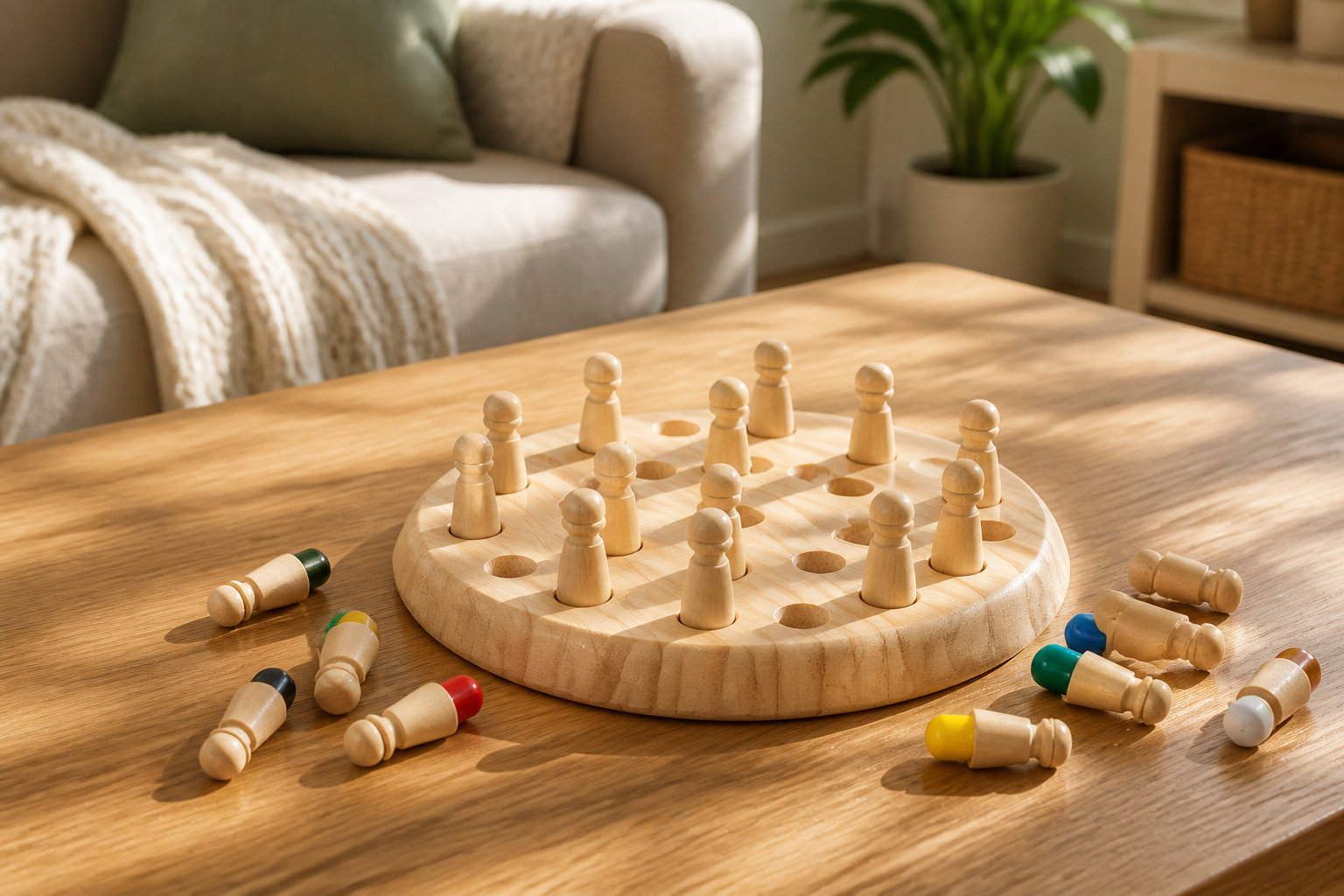
Finding matching pairs engages your working memory in a fun way. The wooden base offers superior durability compared to classic cardboard cards. The images stay sharp for a long time.

It is an excellent way to play as a family. Social bonding strengthens cognitive learning.
Montessori car track: concentration and space management
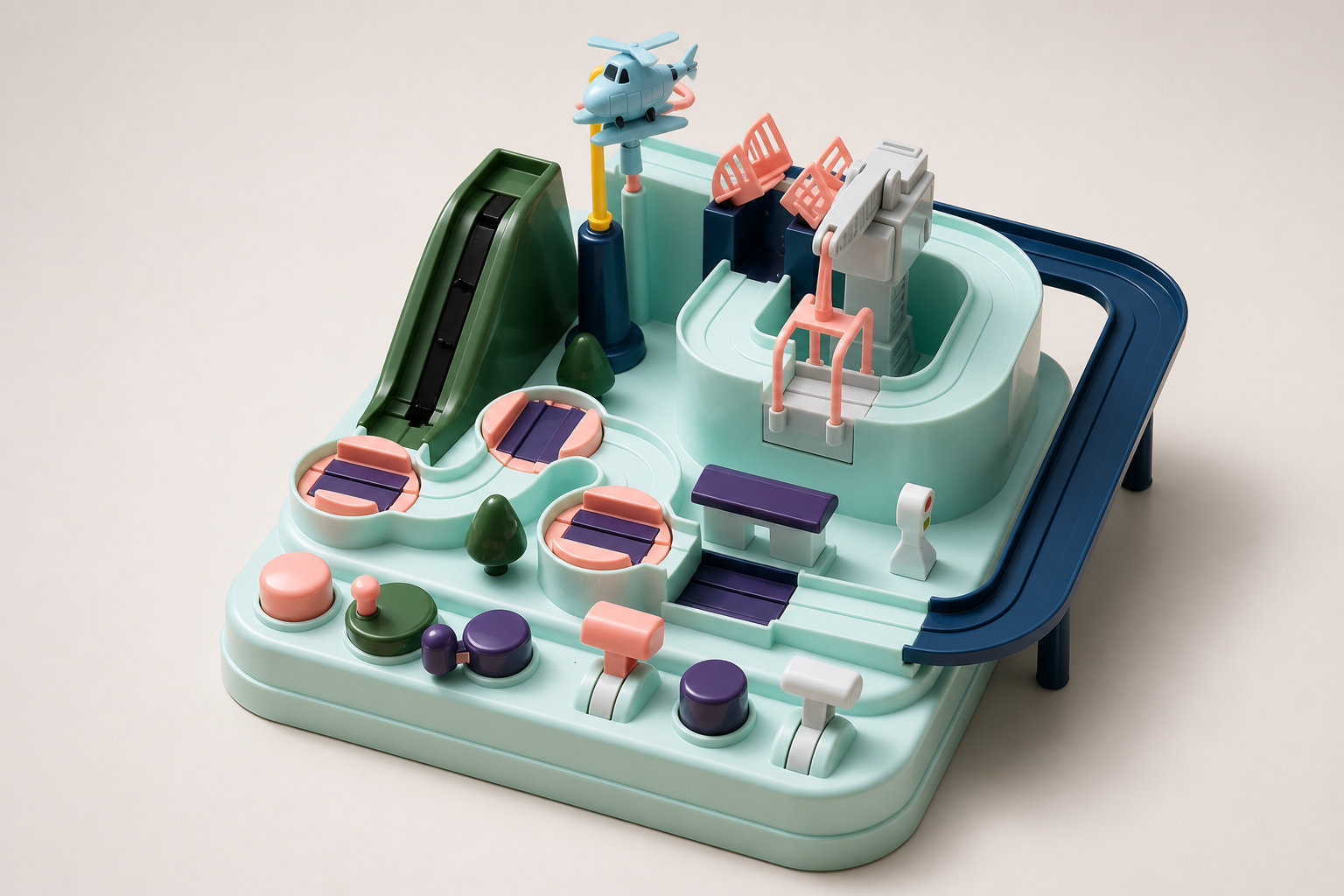
Finally, dynamic movement allows applying all these spatial notions in a frantic race. Anticipating vehicle trajectories requires quick analysis of space. Your child must assemble the tracks to create a coherent path. Their concentration is focused on continuous movement.

Managing speed and turns refines their reflexes. The joy of driving is total with this Montessori car track.
Practical guide for your purchases and the longevity of wood
To enjoy these educational treasures for a long time, a few selection and maintenance precautions are necessary.
Selecting blocks adapted for safety
Always check for CE markings on the packaging. Choose non-toxic water-based paints for the youngest ones. The size of the pieces must prevent any risk of ingestion.
- European safety standards.
- Minimum block dimensions.
Maintaining wood for lasting transmission
A simple damp cloth is enough to clean natural surfaces. Avoid soaking wood in water to prevent it from warping. A vegetable oil can revive its original luster.
A well-maintained wooden toy is a precious heirloom that spans generations without losing its soul or its solidity.
Investing in wooden building blocks ensures your child a lasting sensory awakening and accomplished fine motor skills. By manipulating these natural structures, they forge their spatial logic and creativity right now. Give them this fundamental foundation today to build their intelligence for tomorrow.
FAQ
Why choose wooden blocks over plastic models?
Wood offers an incomparable sensory and ecological experience. Unlike plastic, it is a natural, durable, and biodegradable material that ensures optimal safety thanks to the use of non-toxic water-based paints. Its robustness allows these toys to survive generations while retaining their luster.
Beyond the environmental aspect, the texture and weight of wooden blocks stimulate touch and spatial perception in a much richer way. It is a responsible investment for your child's health and for the preservation of our planet.
From what age can my child start playing with wooden cubes?
Introduction can begin as early as 12 to 18 months with adapted models. At this age, your child primarily explores textures, shapes, and sounds by clacking pieces together. It is a fundamental step for sensory awakening and the discovery of the first notions of volume.
As children grow, play evolves: toddlers focus on stacking and fine motor skills, while preschoolers create complex structures and engage in pretend play. Wooden blocks are developmental toys that adapt perfectly to each stage of cognitive growth.
How do these construction toys foster math learning?
Handling blocks makes abstract concepts completely concrete. While playing, your child becomes familiar with plane and spatial geometry, learns to recognize shapes, and physically understands concepts of quantity, units, and tens. It is ideal preparation for future school lessons.
Using aids like the Montessori wooden board also allows for the visualization of numbers and operations. The child develops their logical thinking and ability to solve complex problems by anticipating the balance and stability of their constructions.
What are the concrete benefits for my child's motor skills?
Handling, aligning, and fitting pieces together intensely engages fine motor skills. These precision exercises strengthen hand and finger muscles while refining hand-eye coordination. These skills are essential for later mastering daily tasks like writing or buttoning clothes.
Using specific tools, such as in the Montessori bolt and screwdriver set, pushes this dexterity to its maximum. Your child learns to control their force and the fluidity of their movements, which also promotes a state of deep concentration and inner calm.
How should I maintain wooden toys to ensure their longevity?
To preserve the quality of the wood, simple and regular maintenance is recommended. A slightly damp cloth is enough to clean the surfaces. It is crucial never to immerse the blocks in water to avoid any warping of the natural material.
To restore the luster of the pieces after several years of use, you can apply a natural vegetable oil. As we often emphasize, a well-maintained wooden toy is a precious heirloom, capable of lasting for decades without losing its durability or educational value.
Pour passer à la pratique
Les jouets qui vont avec cet article
 Construction game
DIY Montessori 36,90 €
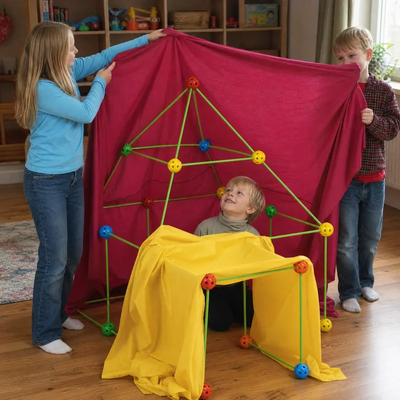 Children's cabin kit to build Montessori 17,90 €
 Livraison offerte dès 50 € · Retour 20 jours